Cardamom (Elettaria cardamomum)
Formerly Amomum cardamomum, Alpinia cardamomum, Matonia cardamomum
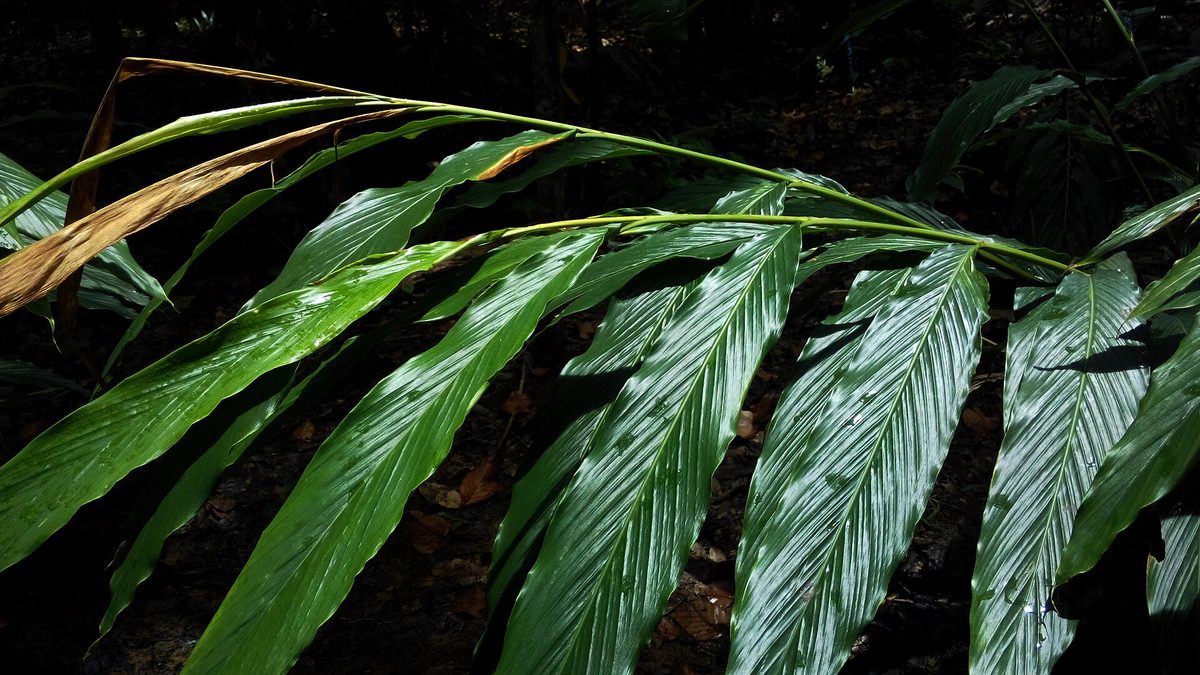
Photo: Aviatorjk, CC BY-SA 4.0 via Wikimedia Commons

Quick facts
| Soil: | Well drained, moist and occasionally wet; pH 5.5–6.811 source |
|---|---|
| Minimum temperature: | 50 °F (10 °C)11 source |
| Size: | 6–15 ft (1.83–4.57 m) × 4–10 ft (1.22–3.05 m)11 source |
| Growth rate: | Rapid11 source |
| Bloom: | Yellow and white13 |
| Cats: | Not documented by major sources |
| Dogs: | Not documented by major sources |
| Family: | Zingiberaceae |
Best soil for a Cardamom
The soil cardamom needs is loamy in texture, drains well, and stays consistently moist most of the time. That same soil is allowed to turn occasionally wet without causing harm, so a small amount of standing moisture is not a problem. Keep the soil pH in a mildly acidic range of 5.5 to 6.8, matching what cardamom is reported to need.
Temperature and humidity
Cardamom suffers damage once temperatures drop below 50 °F (10 °C), so keep it well clear of that mark. It grows best in warmer conditions, with daytime temperatures reported between about 65 °F and 95 °F (18-35 °C). Pair that warmth with high humidity, since cardamom is reported to need levels around 75%. Outdoors, cardamom is hardy in USDA zones 10a through 13b.
Fertilizing a Cardamom
Feed cardamom with a fertilizer made for houseplants that is high in nitrogen and low in potassium. Apply it about every two weeks, which is twice a month, through the growing season. Outside the growing season, hold off on this twice-a-month schedule.
- Fertilizer: Every two weeks in the growing season1
How to propagate a Cardamom
For cardamom, division of its rhizomes is the only propagation method found in the available record for this species. You propagate it by splitting apart the rhizomes it grows from. Those rhizomes are fleshy and knobby, which is the part of the plant this method relies on.
- Propagation: Division1
Common problems
Spodoptera littoralis is a pest recorded for cardamom. Its larvae are reported to cause heavy defoliation of the plant. That heavy defoliation is the specific damage this pest causes. No other pest is named for cardamom. It is the larval stage that is reported to cause this damage. Defoliation caused by this pest is classified as heavy in degree. No disease is documented for cardamom on this page.
- Common pests: spodoptera littoralis2
| Problem | Kind |
|---|---|
| Spodoptera littoralis | Pest |
Is Cardamom toxic to cats and dogs?
Recommended supplies
- Soil: a free-draining mix, and a pot with a drainage hole.
- Humidity: it wants humid air; a pebble tray or a humidifier is the usual fix.
Questions and answers
- How often should you fertilize cardamom?
- Feed cardamom with a fertilizer that is high in nitrogen and low in potassium about every two weeks during its growing season, not through the rest of the year.
- How do you propagate cardamom?
- Division is the method recorded for cardamom, done by splitting apart its fleshy, knobby rhizomes into separate pieces. No other propagation method is listed for this plant.
- What temperature does cardamom need?
- Cardamom suffers damage once temperatures drop below 50 °F (10 °C), so keep it warmer than that. It grows best with daytime temperatures between about 65 °F and 95 °F (18-35 °C) and humidity around 75%. Outdoors, it is hardy only in USDA zones 10a to 13b.
Sources
- NC State Extension Gardener Plant Toolbox. https://plants.ces.ncsu.edu/plants/elettaria-cardamomum/. Accessed 15 November 2026.
- EPPO Global Database. https://gd.eppo.int/reporting/article-8273. Accessed 15 November 2026.
- Chicago Botanic Garden. https://www.chicagobotanic.org/plant-information/plant-finder/elettaria-cardamomum-cardamom. Accessed 15 November 2026.
How this page was made
- Written with AI assistance from the sources listed on this page. AI is never the source of a fact.