Cayenne Pepper (Capsicum annuum)
Formerly Capsicum grossum, Capsicum longum, Capsicum angulosum
Cayenne pepper grows best outdoors in full sun with medium, steady moisture and well-drained soil. Indoors, it still needs strong light to fruit well. Feed it monthly during the growing season to support strong growth. This plant is toxic to cats and to dogs, so keep it away from pets.
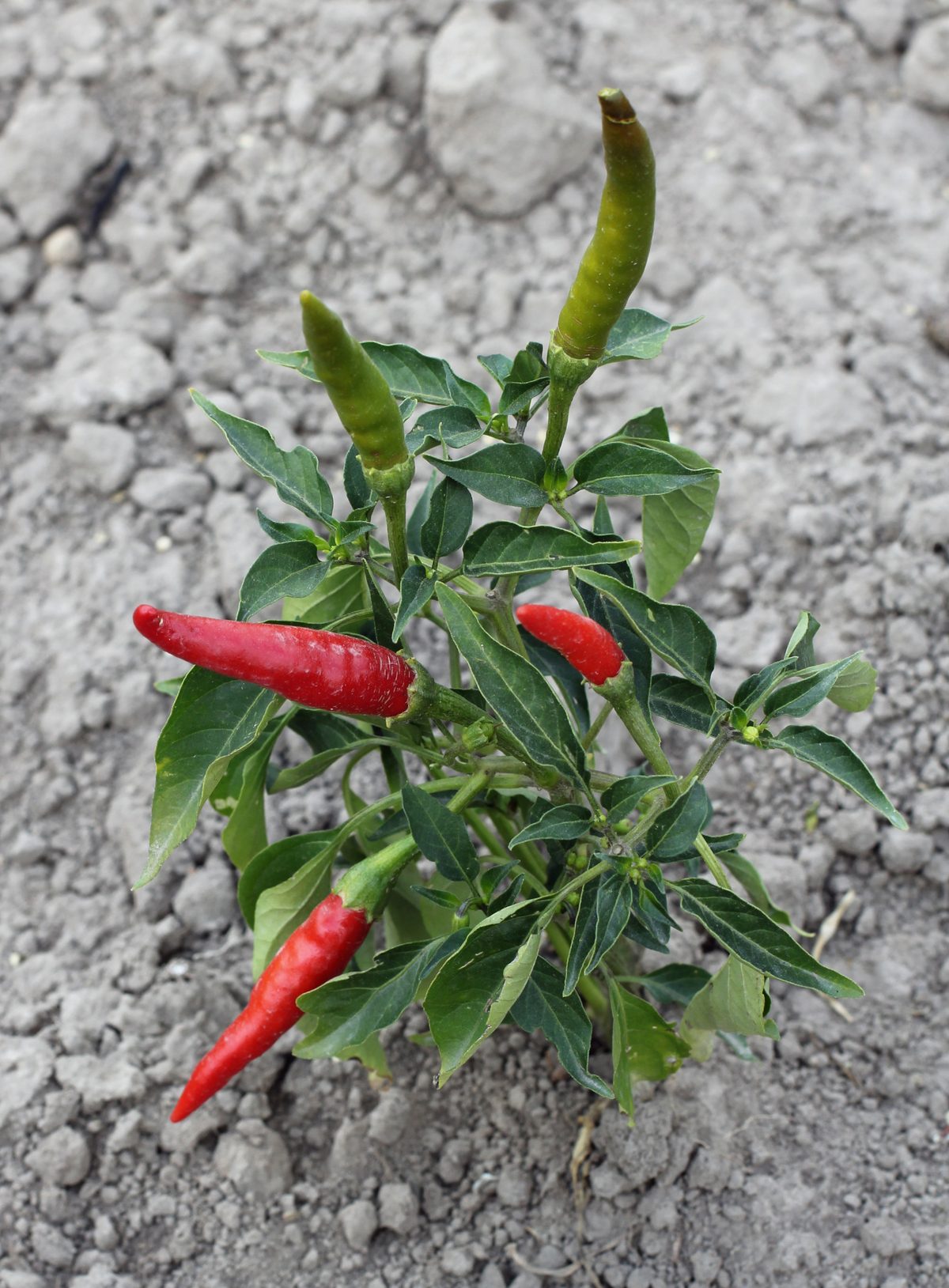
Photo: George Chernilevsky, Public domain via Wikimedia Commons

Quick facts
| Light: | Full sun123 |
|---|---|
| Water: | Medium13 |
| Soil: | Well drained; pH 5.8–714356 |
| Hardiness: | Zones 4a–11b11 source |
| Size: | 1–4 ft (0.3–1.22 m) × 0.5–1 ft (0.15–0.3 m)12 |
| Growth rate: | Moderate121 |
| Bloom: | Purple and white12 |
| Cats: | Toxic to cats Severity reported: Mild 1314 |
| Dogs: | Toxic to dogs 1314 |
| Native range: | ALA, ARI, BAH, BLZ, BOL, BZE, BZN, CAY, CLM, COS, CUB, DOM, ECU, ELS, FLA, GUA, GUY, HAI, HON, JAM, LEE, LOU, MXC, MXE, MXG, MXN, MXS, MXT, NIC, NLA, PAN, PER, PUE, SUR, SWC, TCI, TEX, TRT, VEN, WIN15 |
| Family: | Solanaceae |
How much light does a Cayenne Pepper need?
Outdoors, cayenne pepper needs full sun to grow and fruit well. Pick a spot that gets direct sun for most of the day, with as little shade as possible. Indoors, this plant wants high, direct light to fruit, such as a spot in a south-facing window. It can tolerate bright, indirect light for a while, but growth and fruiting slow down without stronger light. If your indoor space can't supply enough direct sun, a grow light placed close to the plant helps make up the difference.
How often to water a Cayenne Pepper
Keep cayenne pepper's soil evenly moist, since it needs medium water through the growing season. Water when the top inch or two of soil starts to feel dry, rather than on a fixed schedule. The soil must drain well, since standing water around the roots invites problems. A container or bed that drains well, paired with medium watering, keeps the roots from sitting wet. Uneven watering, swinging between dry and soaked soil, can stress the plant and affect fruit set. Checking the soil with a finger before you water is a more reliable guide than counting days.
Best soil for a Cayenne Pepper
Well-drained soil is essential for cayenne pepper, since wet, heavy ground around the roots leads to problems. Aim for a soil pH between 5.8 and 7.0, which is slightly acidic to neutral. Raised beds or containers with a loose potting mix make drainage easier to control. Mixing in compost before planting improves both drainage and the soil's ability to hold the right amount of moisture.
Hardiness and temperature
This pepper grows well in USDA hardiness zones 4a through 11b. Outside that range, cold can damage or kill the plant, so treat it as an annual there. In the warmer part of that range, it can act as a perennial instead of dying back each winter. No cited source for this page records a specific minimum temperature the plant can survive. Because it comes from warm, humid parts of the Americas, it prefers warm air and steady moisture over dry heat. Bring any container plants indoors once nights turn cold, especially outside the plant's hardiness range. Steady, medium moisture also helps the plant handle brief swings in temperature.
Fertilizing a Cayenne Pepper
Feed cayenne pepper about once a month during the growing season. Regular feeding supports steady growth and a good fruit set through summer. Pair feeding with medium, even watering so nutrients can reach the roots. Hold off on feeding once the weather cools and growth slows down.
- Fertilizer: Monthly in the growing season8
Pruning a Cayenne Pepper
This plant mostly needs light shaping rather than heavy cuts. Pinch off the growing tips early in the season to encourage bushier growth. Remove any damaged, yellowing, or crossing stems as you see them. Keeping the plant open to light and air also supports the full sun it needs outdoors.
- Pruning: Light shaping9
How to plant a Cayenne Pepper
Plant cayenne pepper outdoors once your region sits within USDA zones 4a to 11b and the soil has warmed. Pick a site in full sun, since this pepper fruits best with direct light most of the day. Work well-drained soil with a pH between 5.8 and 7.0 before you set plants in the ground. Space plants so air can move around the leaves, which helps lower the risk of diseases like bacterial leaf spot. Move transplants out about two weeks after your last frost, once soil temperature reaches about 65°F (18.3°C). Water at planting time, then keep the soil at medium, even moisture as roots establish.
- Hardiness: Zones 4a–11b1
Winter care
In zones below about 4a, expect cold to kill this plant outdoors each winter. In the warmer part of its range, near zone 11b, it can survive outdoors as a perennial. No cited source here gives a specific minimum temperature the plant can take before damage sets in. If you grow it in a container, bring it indoors before nights turn cold. Give it a spot with strong, direct light once it's inside for the season. Hold off on fertilizing while the plant rests over winter. Keep the soil at medium moisture rather than letting it dry out completely indoors.
When to plant Cayenne Pepper
Move transplants out about two weeks after last frost. Wait until soil hits about 65°F (18.3°C). This timing holds across zones 4a to 11b. Full sun helps seedlings establish quickly once moved outside. Keep soil medium moist right after transplant. Well-drained soil also matters at this stage.
| Step | When |
|---|---|
| Start indoors | 6–8 weeks before last frost |
| Direct sow | 1–2 weeks after last spring frost |
| Transplant | 2 weeks before last spring frost, soil at least 64.9 °F (18.3 °C) |
When and how to harvest Cayenne Pepper
Check cayenne pepper fruit for full size and firm, taut walls before you pick. You can harvest peppers green, or leave them on the plant to ripen and change color for a sweeter flavor. Most plants reach that first harvest stage about 70 to 85 days after you set transplants in the ground.
How to propagate a Cayenne Pepper
Seed is the method documented for growing new cayenne pepper plants. Start seeds indoors under strong, direct light so seedlings grow sturdy rather than leggy. Move transplants outdoors about two weeks after your last frost date, once soil has warmed. Give seedlings well-drained soil from the start, since wet, heavy mix can rot young roots before they establish.
Common problems
Watch for aphids, whiteflies, cutworms, pepper maggots, Colorado potato beetles, flea beetles, and brown marmorated stink bugs on cayenne pepper. Among diseases, bacterial leaf spot, phytophthora blight, and anthracnose are the ones reported for this plant. Well-drained soil helps lower the risk of phytophthora blight, which thrives in wet, poorly drained ground.
| Problem | Kind |
|---|---|
| Aphids | Pest |
| Whiteflies | Pest |
| Cutworms | Pest |
| Pepper maggots | Pest |
| Colorado potato beetles | Pest |
| Flea beetles | Pest |
| Brown marmorated stink bug | Pest |
| Bacterial leaf spot | Disease |
| Phytophthora blight | Disease |
| Anthracnose | Disease |
Is Cayenne Pepper toxic to cats and dogs?
Cats face a toxic reaction if they chew or eat parts of this plant. Dogs are also listed as toxic to this plant. Keep the fruit, leaves, and stems out of reach of both cats and dogs. If a cat or dog eats any part of the plant, contact your vet or a pet poison line right away. Watching closely for any sign of trouble after exposure is a sensible step for either pet.
Pet-safe alternatives
Recommended supplies
- Soil: a free-draining mix, and a pot with a drainage hole.
- Humidity: it wants humid air; a pebble tray or a humidifier is the usual fix.
Questions and answers
- Is cayenne pepper poisonous to cats and dogs?
- Yes, cayenne pepper is listed as toxic to both cats and dogs. Keep the plant, including its fruit, away from pets, and contact your vet or a pet poison line if one eats any part of it.
- How much sun does cayenne pepper need?
- Cayenne pepper needs full sun outdoors, meaning direct light for most of the day. Indoors, give it the strongest, most direct light spot you have, such as a south-facing window.
- How long does it take cayenne pepper to produce fruit?
- After transplanting, cayenne pepper usually takes about 70 to 85 days to reach harvest size. You'll know fruit is ready when it reaches full size and the walls feel firm.
Sources
- NC State Extension Gardener Plant Toolbox. https://plants.ces.ncsu.edu/plants/capsicum-annuum/. Accessed 11 October 2026.
- University of Florida IFAS Extension (EDIS). https://ask.ifas.ufl.edu/publication/FP105. Accessed 11 October 2026.
- Oregon State University Extension Service. https://extension.oregonstate.edu/catalog/ec-1227-grow-your-own-peppers. Accessed 11 October 2026.
- Clemson Cooperative Extension HGIC. https://hgic.clemson.edu/factsheet/pepper/. Accessed 11 October 2026.
- Penn State Extension. https://extension.psu.edu/pepper-production. Accessed 12 October 2026.
- University of Minnesota Extension. https://extension.umn.edu/garden-and-home/yard-and-garden/gardening-in-minnesota/growing-peppers. Accessed 12 October 2026.
- University of Missouri Extension. https://extension.missouri.edu/publications/mg5. Accessed 27 October 2026.
- Brooklyn Botanic Garden. https://www.bbg.org/article/growing_chile_peppers. Accessed 12 October 2026.
- University of Florida IFAS Extension (EDIS). https://ask.ifas.ufl.edu/fp105. Accessed 11 October 2026.
- Iowa State University Extension and Outreach. https://yardandgarden.extension.iastate.edu/how-to/growing-peppers-home-garden. Accessed 28 October 2026.
- Utah State University Extension. https://extension.usu.edu/yardandgarden/research/peppers-in-the-garden. Accessed 28 October 2026.
- University of Maryland Extension. https://extension.umd.edu/resource/growing-peppers-home-garden. Accessed 11 October 2026.
- ASPCA Animal Poison Control Center. https://www.aspca.org/pet-care/aspca-poison-control/toxic-and-non-toxic-plants/ornamental-pepper. Accessed 24 September 2026.
- Pet Poison Helpline. https://www.petpoisonhelpline.com/poison/nightshade/. Accessed 24 September 2026.
- Royal Botanic Gardens, Kew (World Checklist of Vascular Plants). https://sftp.kew.org/pub/data-repositories/WCVP/wcvp.zip. Accessed 4 June 2026.
How this page was made
- Written with AI assistance from the sources listed on this page. AI is never the source of a fact.