Cultivated Garlic (Allium sativum)
Formerly Allium pekinense, Allium longicuspis, Allium controversum
Garlic grows best in full sun outdoors, with six or more hours of direct light each day. It needs medium moisture, watered to about one inch of depth each week during the growing season. Garlic is toxic to both cats and dogs, so keep it away from pets.
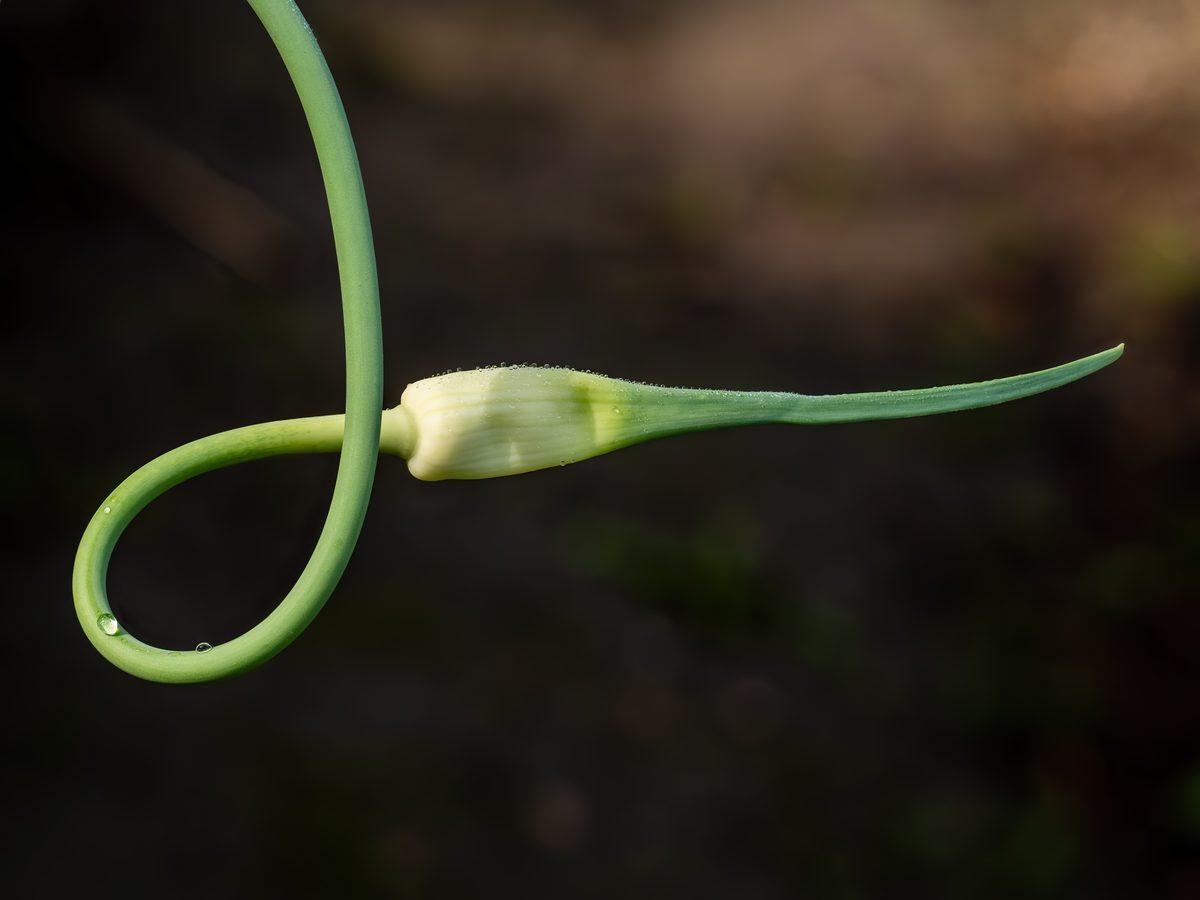
Photo: Ermell, CC BY-SA 4.0 via Wikimedia Commons

Quick facts
| Light: | Full sun11 source |
|---|---|
| Water: | Medium21 source |
| Soil: | Well drained and moist; pH 6–813 |
| Hardiness: | Zones 4a–9b11 source |
| Size: | 1–1.5 ft (0.3–0.46 m) × 0.7–1 ft (0.2–0.3 m)11 source |
| Growth rate: | Moderate11 source |
| Bloom: | Pink and white11 source |
| Cats: | Toxic to cats 1011 |
| Dogs: | Toxic to dogs 1011 |
| Native range: | IRN, KAZ, KGZ, TKM, TZK, UZB12 |
| Family: | Amaryllidaceae |
How much light does a Cultivated Garlic need?
Full sun outdoors is what this plant needs, at least six hours of direct sunlight a day. A spot that gets at least six hours of direct sun daily meets this need. Full sun is the only light level recorded for this plant growing outdoors.
- Light: Full sun1
How often to water a Cultivated Garlic
Garlic's water need is medium throughout its growing season. Soak the soil thoroughly whenever you water, reaching a depth of at least one inch. Plan on watering to this depth about once a week while the plant is actively growing, since that is when the one-inch guideline applies.
- Water: Medium2
Best soil for a Cultivated Garlic
Garlic does best in soil that drains well and still stays moist, not dry and not waterlogged. Good drainage is listed as a requirement for this crop. The soil's pH should sit somewhere in the neutral range of 6.0 to 8.0. A well-drained, moist bed with a pH in this range suits garlic. Both conditions are part of what this crop needs from its soil.
Hardiness and temperature
Garlic is hardy outdoors in USDA zones 4a through 9b. Garlic is a cool-season crop, growing best during cool weather. Below 20°F (-7°C), its foliage will likely take some damage. That is the specific cold threshold recorded for this plant's leaves. Zone 4a marks the coldest end of where it is listed as hardy outdoors, and zone 9b marks the warmest end of that same range.
Fertilizing a Cultivated Garlic
Garlic is described as a moderate to heavy feeder. Apply nitrogen fertilizer at planting, and again once the shoots reach about 4 to 6 inches tall. It's also recommended before fall planting, in April, and again in late May if needed.
Pruning a Cultivated Garlic
Garlic produces scapes, its flower stalks, that rise above the leaves in June. Growers typically cut off these scapes, a practice recorded for May and June. Removing the scape is the deadheading step listed for this plant. The scapes emerge through the top of the foliage as they grow.
- Pruning: Deadheading (May–Jun)8
How to plant a Cultivated Garlic
This crop can be planted outdoors anywhere within USDA hardiness zones 4a to 9b. Mature plants spread about 8 to 12 inches (20 to 30 cm) wide. Leave that much room between plants when you set them in the ground. Plant cloves outdoors about 7 to 14 days after the first killing frost.
- Hardiness: Zones 4a–9b1
Winter care
Cold hardiness for this crop runs from USDA zone 4a up to zone 9b. Its leaves are likely to show damage once temperatures fall under 20°F (-7°C). Outside that zone range, garlic is not listed as reliably hardy outdoors in winter. Garlic is also fertilized before this fall planting, as part of its feeding schedule. Garlic is classified as a cool-season crop.
When to plant Cultivated Garlic
Direct-sow garlic cloves outdoors one to two weeks after the first killing frost each fall. Allow about 90 to 100 days to maturity from transplanting. Harvest typically falls in late June or July.
- Direct sow: 1–2 weeks before first fall frost2
| Step | When |
|---|---|
| Direct sow | 1–2 weeks before first fall frost |
When and how to harvest Cultivated Garlic
Harvest garlic between late June and late July. Begin harvesting once the lower leaves have turned brown while about half or slightly more of the upper leaves are still green. Days to maturity for garlic run about 90 to 100 days after transplanting.
Care calendar
| Task | Jan | Feb | Mar | Apr | May | Jun | Jul | Aug | Sep | Oct | Nov | Dec |
|---|---|---|---|---|---|---|---|---|---|---|---|---|
| Fertilize | Fertilize in Mar | Fertilize in Apr | Fertilize in May | |||||||||
| Prune | Prune in May | Prune in Jun |
How to propagate a Cultivated Garlic
Garlic is propagated by planting individual cloves, called offsets, separated from the bulb. Space the cloves about 6 to 8 inches (15 to 20 cm) apart. Plant them about 2 to 3 inches (5 to 8 cm) deep. Offsets are the only propagation method recorded for this plant.
- Propagation: Offsets1
Common problems
Garlic can be affected by several pests, including bulb mites, onion maggot, onion thrips, allium leafminer, and stem and bulb nematode. Onion maggot bores into the stems, which can turn the plant yellow and make it wilt. Diseases recorded for garlic include bulb rot, white rot, basal rot, gray mold, and aster yellows. Bulb rot tends to occur when the soil stays too wet.
| Problem | Kind |
|---|---|
| Bulb mites | Pest |
| Onion maggot | Pest |
| Onion thrips | Pest |
| Allium leafminer | Pest |
| Stem and bulb nematode | Pest |
| Bulb rot | Disease |
| White rot | Disease |
| Basal rot | Disease |
| Gray mold | Disease |
| Aster yellows | Disease |
Is Cultivated Garlic toxic to cats and dogs?
Garlic is toxic to both cats and dogs. The ASPCA lists it as toxic to both animals. The Pet Poison Helpline places garlic in the allium family along with chives, onions, and leeks, and says all of them are poisonous to dogs and cats. Garlic is also flagged as a problem for cats specifically, though no severity level is stated for them.
Pet-safe alternatives
Recommended supplies
- Soil: a free-draining mix, and a pot with a drainage hole.
Questions and answers
- Is garlic toxic to cats and dogs?
- Yes, garlic is toxic to both cats and dogs. The ASPCA lists it as toxic to both animals. No severity level is stated for cats.
- How much sun and water does garlic need?
- Garlic needs full sun outdoors, meaning six or more hours of direct sunlight a day. Its water need is medium, with at least one inch of water each week during the growing season.
- When should you harvest garlic?
- Harvest garlic between late June and late July. Begin once the lower leaves have turned brown while about half or more of the upper leaves are still green.
Sources
- NC State Extension Gardener Plant Toolbox. https://plants.ces.ncsu.edu/plants/allium-sativum/. Accessed 23 September 2026.
- University of Minnesota Extension. https://extension.umn.edu/vegetables/growing-garlic. Accessed 23 September 2026.
- University of Minnesota Extension. https://extension.umn.edu/garden-and-home/yard-and-garden/gardening-in-minnesota/growing-garlic. Accessed 23 September 2026.
- Iowa State University Extension and Outreach. https://yardandgarden.extension.iastate.edu/how-to/growing-garlic-home-garden. Accessed 28 October 2026.
- University of Maryland Extension. https://extension.umd.edu/resource/growing-garlic-home-garden. Accessed 28 October 2026.
- Wisconsin Horticulture (University of Wisconsin-Madison Extension). https://hort.extension.wisc.edu/articles/garlic-allium-sativum/. Accessed 28 October 2026.
- Ohio State University Extension (CFAES / Ohioline). https://cfaes.osu.edu/fact-sheet/growing-garlic-garden. Accessed 28 October 2026.
- Penn State Extension. https://extension.psu.edu/growing-and-using-garlic. Accessed 23 September 2026.
- Oregon State University Extension Service. https://extension.oregonstate.edu/catalog/pub/em-9128-growing-vegetables-central-oregon. Accessed 23 September 2026.
- ASPCA. https://www.aspca.org/pet-care/aspca-poison-control/toxic-and-non-toxic-plants/garlic. Accessed 23 September 2026.
- Pet Poison Helpline. https://www.petpoisonhelpline.com/poison/garlic/. Accessed 23 September 2026.
- Royal Botanic Gardens, Kew (World Checklist of Vascular Plants). https://sftp.kew.org/pub/data-repositories/WCVP/wcvp.zip. Accessed 4 June 2026.
How this page was made
- Written with AI assistance from the sources listed on this page. AI is never the source of a fact.