Wild Celery (Apium graveolens)
Formerly Sium graveolens, Carum graveolens, Celeri graveolens
Wild celery grows best outdoors in full sun. It needs well-drained, evenly moist soil. Keep the soil pH between 6 and 8 for best results. It grows slowly, so expect steady rather than fast progress. Grow it from seed, since that's the only method documented. It's hardy outdoors in USDA zones 3a through 6b. No cited source lists its toxicity to cats or dogs, so that's not documented here.
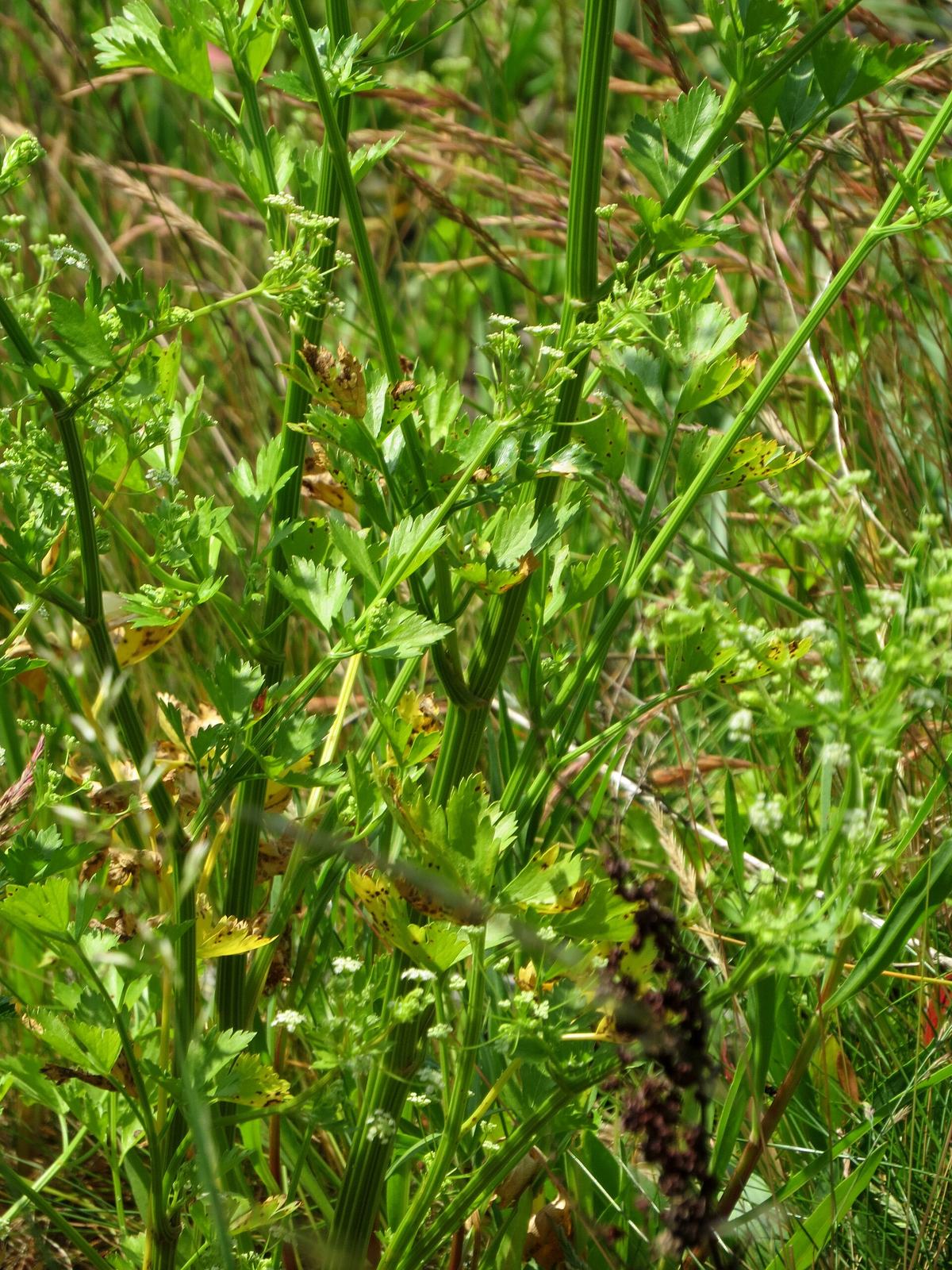
Photo: MPF, CC BY-SA 4.0 via Wikimedia Commons

Quick facts
| Light: | Full sun11 source |
|---|---|
| Soil: | Well drained and moist; pH 6–8211 source |
| Hardiness: | Zones 3a–6b11 source |
| Size: | 1.5–3 ft (0.46–0.91 m) × 1–1.5 ft (0.3–0.46 m)12 |
| Growth rate: | Slow221 source |
| Bloom: | White and green11 source |
| Cats: | Not documented by major sources |
| Dogs: | Not documented by major sources |
| Native range: | AFG, ALB, ALG, AUT, AZO, BAL, BGM, BUL, CNY, COR, CYP, DEN, FRA, GER, GRB, GRC, GST, IRE, IRN, IRQ, ITA, KAZ, KRI, KRY, LBS, LBY, MDR, MOR, NCS, NET, OMA, PAK, PAL, POL, POR, ROM, RUS, SAR, SAU, SIC, SPA, TCS, TKM, TUE, TUN, TUR, TZK, UKR, UZB, WHM, YEM, YUG3 |
| Family: | Apiaceae |
How much light does a Wild Celery need?
Full sun outdoors is what wild celery needs to grow well. Pick a spot that gets direct sunlight for most of the day. Full sun is the preferred exposure for this plant, so avoid shady beds or spots under trees. Consistent, bright light through the growing season supports steady growth outdoors.
- Light: Full sun1
Best soil for a Wild Celery
Give wild celery soil that drains well but stays moist. Soil that stays too wet raises the risk of root rot, so avoid soggy, waterlogged spots. Check the pH before you plant, since this species grows best between 6 and 8. A pH near the middle of that range, close to neutral, works well for this species. Work compost into heavy clay or fast-draining sandy soil to help it hold moisture without staying wet.
Hardiness and temperature
USDA zones 3a through 6b mark where wild celery can grow outdoors as a perennial. That range marks where winter cold stays mild enough for the roots to come back year after year. If you garden outside zones 3a to 6b, treat it as an annual instead and expect it not to survive the winter.
- Hardiness: Zones 3a–6b1
How to plant a Wild Celery
Plant wild celery outdoors where you garden in USDA zones 3a through 6b, since that's the hardiness range documented for it. Choose a bed in full sun, since this plant needs direct sunlight outdoors to grow well. Give it soil that drains well but stays moist, with a pH between 6 and 8, before you set plants out.
- Hardiness: Zones 3a–6b1
Winter care
Winters are survivable outdoors for wild celery only within its documented hardiness range of USDA zones 3a through 6b. Outside that range, treat it as an annual, since the facts here don't cover how it handles colder winters. Because seed is the documented way to grow this plant, replanting from seed each spring is the way to keep it going outside its hardy zones.
- Hardiness: Zones 3a–6b1
How to propagate a Wild Celery
Seed is the only propagation method documented for wild celery. Start seeds indoors or in a seedbed, then move young plants to their outdoor spot once they're sturdy. Give seedlings a sunny spot as they grow on, since this plant does best in full sun once it's outdoors.
- Propagation: Seed1
Common problems
Watch wild celery for aphids, earwigs, nematodes, celery worms, and slugs, the pests most often reported on this crop. Check leaves and stalks regularly, since catching these pests early makes them easier to manage. Root rot, blight, and fusarium wilt are the diseases most often documented on this plant. Keeping soil well-drained but moist, rather than soggy, helps limit the risk of root rot.
| Problem | Kind |
|---|---|
| Aphids | Pest |
| Earwigs | Pest |
| Nematodes | Pest |
| Celery worms | Pest |
| Slugs and snails | Pest |
| Root rot | Disease |
| Blight | Disease |
| Fusarium wilt | Disease |
Is Wild Celery toxic to cats and dogs?
Recommended supplies
- Soil: a free-draining mix, and a pot with a drainage hole.
Questions and answers
- Is wild celery toxic to cats or dogs?
- No cited source lists wild celery's toxicity to cats or dogs, so that's not documented in the sources checked for this page.
- How much sun does wild celery need?
- Wild celery needs full sun outdoors to grow well, since that's the preferred light level documented for it. Give it a spot with direct sun for most of the day. Full sun also supports steady growth through the season outdoors.
- What zones can I grow wild celery outdoors in?
- Wild celery is documented as hardy outdoors in USDA zones 3a through 6b. Outside that range, you can still grow it as an annual started from seed. Soil that drains well but stays moist also suits these zones.
Sources
- NC State Extension Gardener Plant Toolbox. https://plants.ces.ncsu.edu/plants/apium-graveolens/. Accessed 11 October 2026.
- Utah State University Extension. https://extension.usu.edu/yardandgarden/research/celery-in-the-garden. Accessed 14 October 2026.
- Royal Botanic Gardens, Kew (World Checklist of Vascular Plants). https://sftp.kew.org/pub/data-repositories/WCVP/wcvp.zip. Accessed 4 June 2026.
How this page was made
- Written with AI assistance from the sources listed on this page. AI is never the source of a fact.