Corn (Zea mays)
Formerly Zea japonica, Thalysia mays, Zea alba
Corn grows best outdoors in full sun. It is an annual that grows fast. Plant it in moist, well-drained soil. Corn also needs roughly 1 inch (2.5 cm) of water each week. It is a heavy feeder that needs regular fertilizer during the growing season. It grows in USDA zones 2a through 11b. No cited source lists corn's toxicity to cats or dogs.
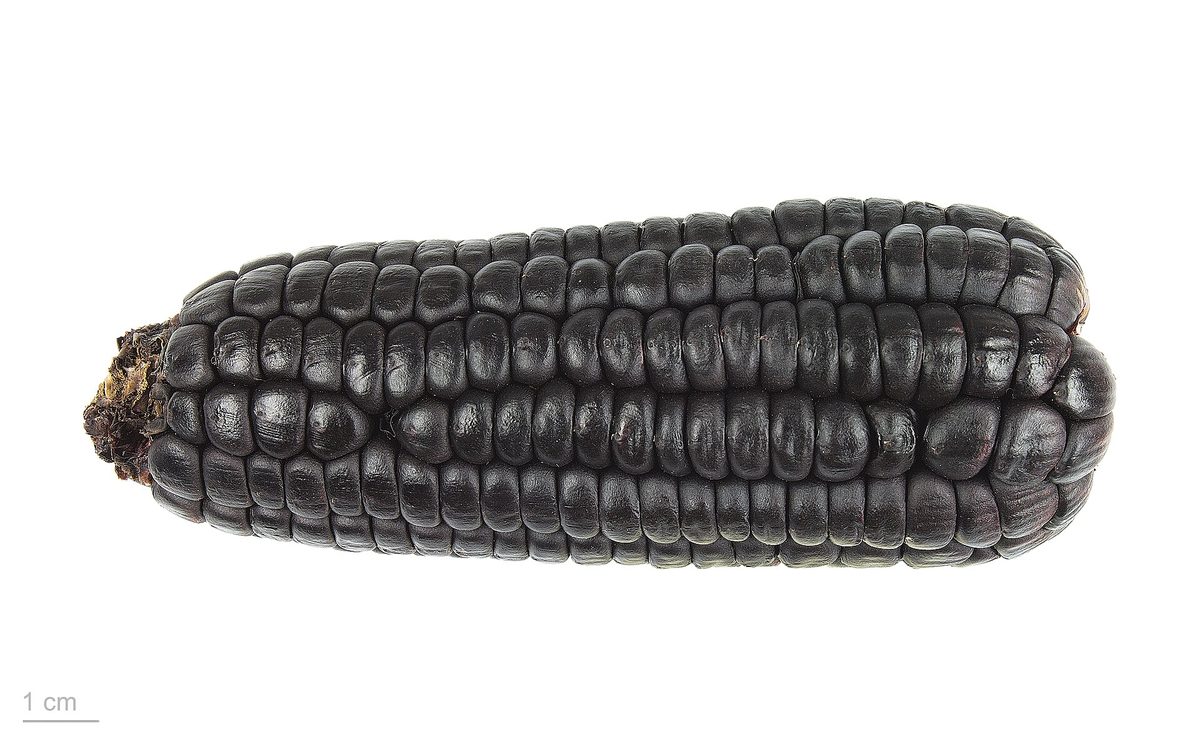
Photo: Roger Culos, CC BY-SA 3.0 via Wikimedia Commons

Quick facts
| Light: | Full sun12 |
|---|---|
| Water: | Medium to wet21 source |
| Soil: | Well drained and moist; pH 5.8–713 |
| Hardiness: | Zones 2a–11b11 source |
| Size: | 5–8 ft (1.52–2.44 m) × 1–2 ft (0.3–0.61 m)11 source |
| Growth rate: | Rapid111 source |
| Bloom: | Yellow11 source |
| Cats: | Not documented by major sources |
| Dogs: | Not documented by major sources |
| Native range: | GUA, MXC, MXS8 |
| Family: | Poaceae |
How much light does a Corn need?
Full sun outdoors keeps corn productive, and it needs six or more hours of direct light a day. Without that much light, this crop will not reach its best yield. It is an annual with a rapid growth rate, growing from seed to harvest in one season. In that sunny spot, also keep the soil moist and well-drained, and give the plant roughly 1 inch (2.5 cm) of water every week. It also demands plenty of food, since this is a heavy feeder needing regular fertilizer.
How often to water a Corn
Corn needs at least 1 inch (2.5 cm) of water a week for normal growth. Overall water needs for this crop run from medium to medium-wet. It also prefers ground that holds some moisture while still letting excess water drain away, with organic matter worked in. Full sun outdoors also suits it best; aim for six-plus hours of direct light daily. This heavy feeder also needs regular fertilizer while it grows.
- Water: Medium to wet2
Best soil for a Corn
Corn grows best in soil that drains well but still holds moisture, with organic matter mixed through it. Fertile, well-drained ground is what this crop needs to grow well. Aim for a soil pH between 5.8 and 7.0. Along with the right pH, corn also calls for a weekly inch (2.5 cm) of water. Give it full sun as well, meaning at least six hours of direct sunlight each day. Corn counts as a heavy feeder too, and benefits from regular fertilizer across the season.
Hardiness and temperature
Corn's USDA hardiness range runs from zone 2a to zone 11b. It typically spreads 1 to 2 feet (0.3 to 0.6 m) wide as it matures. It is native to Guatemala and parts of Mexico. Within the continental US and Puerto Rico, it is grown as an introduced crop rather than a native one. It is an annual that grows at a rapid pace, from seed to harvest in a single season. Full sun and a weekly 1 inch (2.5 cm) of water carry it through its growing zones. As a heavy feeder, it also needs regular fertilizer across the growing season.
- Hardiness: Zones 2a–11b1
Fertilizing a Corn
Corn is a heavy feeder and needs steady fertilizing through the growing season. Side-dress it monthly with calcium nitrate at 2 pounds per 100 feet (0.9 kg per 30 m) of row. This crop also prefers ground that sheds extra water but still holds some moisture, with organic matter mixed in. It is a fast-growing annual that reaches maturity in one season. Corn grows well across USDA zones 2a through 11b, as an annual completing its cycle in one season.
- Fertilizer: Heavy feeder2
How to plant a Corn
You can grow corn as an annual in USDA zones 2a through 11b. Plant it where it gets full sun, needing six hours of direct light a day at minimum. Use ground that drains well yet holds some moisture, with a pH between 5.8 and 7.0. Mature plants spread about 1 to 2 feet (0.3 to 0.6 m) wide. Give it steady water too, about 1 inch (2.5 cm) each week, along with a heavy feeding schedule through the season.
- Hardiness: Zones 2a–11b1
Winter care
Corn is an annual, so its whole life cycle finishes within one growing season. The USDA hardiness range for corn spans zones 2a to 11b. Because it is an annual, you start new plants from seed again each growing season. Seed is the recommended way to start it, sown directly outdoors once the soil has warmed. Give it full sun through its growing season, with direct light for six hours or more daily.
- Hardiness: Zones 2a–11b1
When to plant Corn
Direct sow corn outdoors from the time of your last frost date up to 2 weeks after it. Wait until the soil reaches at least 60°F (15.6°C) before you plant. Sowing a bit later, 1 to 2 weeks after that date, is the safer choice.
- Direct sow: 0–2 weeks before last spring frost, soil at least 60.1 °F (15.6 °C)4
| Step | When |
|---|---|
| Direct sow | 0–2 weeks before last spring frost, soil at least 60.1 °F (15.6 °C) |
When and how to harvest Corn
Corn is ready to harvest when the husks are still green but the silks have turned brown and dried. Check that the kernels are full-size and release a milky liquid when you puncture one with a thumbnail. From seed, corn reaches maturity in 63 to 100 days. Harvest season for sweet corn generally runs from July through September. Regular fertilizer through the season also suits this heavy feeder.
How to propagate a Corn
Corn is grown from seed, which you sow directly into the garden. Wait until the soil has warmed before you sow it outdoors. Seed is the only propagation method recommended for this crop. Direct sow it 0 to 2 weeks after your last frost date, once soil reaches 60°F (15.6°C). Corn also needs full sun outdoors, taking in direct light for about six hours or more each day, while it grows from that seed.
Common problems
Corn can face several insect pests, including the European corn borer, corn earworm, and fall armyworm. Western corn rootworm and several kinds of nematodes, such as lesion, root-knot, stubby-root, and sting nematodes, can also attack it. Diseases to watch for include gray leaf spot, common smut, corn rust, corn ear rot, Stewart's wilt, and Goss's wilt.
| Problem | Kind |
|---|---|
| European corn borer | Pest |
| Corn earworm | Pest |
| Fall armyworm | Pest |
| Western corn rootworm | Pest |
| Lesion nematode | Pest |
| Root knot nematode | Pest |
| Stubby root nematode | Pest |
| Sting nematode | Pest |
| Gray leaf spot | Disease |
| Common smut | Disease |
| Corn rust | Disease |
| Corn ear rot | Disease |
| Stewarts wilt | Disease |
| Goss wilt | Disease |
Is Corn toxic to cats and dogs?
Recommended supplies
- Soil: a free-draining mix, and a pot with a drainage hole.
Questions and answers
- Does corn need full sun?
- Corn needs full sun outdoors, meaning six or more hours of direct sunlight each day. This crop needs full sun to reach its best yield. It also grows in USDA hardiness zones from 2a up to 11b.
- Is corn toxic to cats or dogs?
- No cited source lists corn as toxic to cats or dogs, but if your pet eats a large amount of any plant, contact your vet or a pet poison line to be safe.
- When should you plant corn outside?
- Direct sow corn outdoors from your last frost date up to 2 weeks after it, once the soil reaches at least 60°F (15.6°C). Corn grows across USDA zones 2a through 11b. It also needs full sun, with direct light for at least six hours daily.
Sources
- NC State Extension. https://plants.ces.ncsu.edu/plants/zea-mays/. Accessed 14 October 2026.
- Clemson Cooperative Extension HGIC. https://hgic.clemson.edu/factsheet/sweet-corn/. Accessed 14 October 2026.
- University of Minnesota Extension. https://extension.umn.edu/garden-and-home/yard-and-garden/gardening-in-minnesota/growing-sweet-corn. Accessed 14 October 2026.
- Purdue University Extension. https://extension.purdue.edu/foodlink/food.php?food=sweet+corn. Accessed 14 October 2026.
- Ohio State University Extension (Ohioline). https://ohioline.osu.edu/factsheet/hyg-5516. Accessed 14 October 2026.
- University of Maryland Extension. https://extension.umd.edu/resource/growing-sweet-corn-home-garden. Accessed 14 October 2026.
- EPPO Global Database. https://gd.eppo.int/taxon/ZEAMX/pests. Accessed 14 October 2026.
- Royal Botanic Gardens, Kew (World Checklist of Vascular Plants). https://sftp.kew.org/pub/data-repositories/WCVP/wcvp.zip. Accessed 4 June 2026.
How this page was made
- Written with AI assistance from the sources listed on this page. AI is never the source of a fact.