Kidney Bean (Phaseolus vulgaris)
Formerly Phaseolus oblongus, Phaseolus sphaericus, Phaseolus compressus
Full sun outdoors keeps kidney bean plants healthy. They need medium, steady moisture all season. Moisture needs peak during flowering and pod set. Fertile, well-drained soil works best for this plant. Keep soil pH between 5.8 and 6.5. Growth is rapid under these conditions. No cited source lists a pet-toxicity position for cats or dogs.
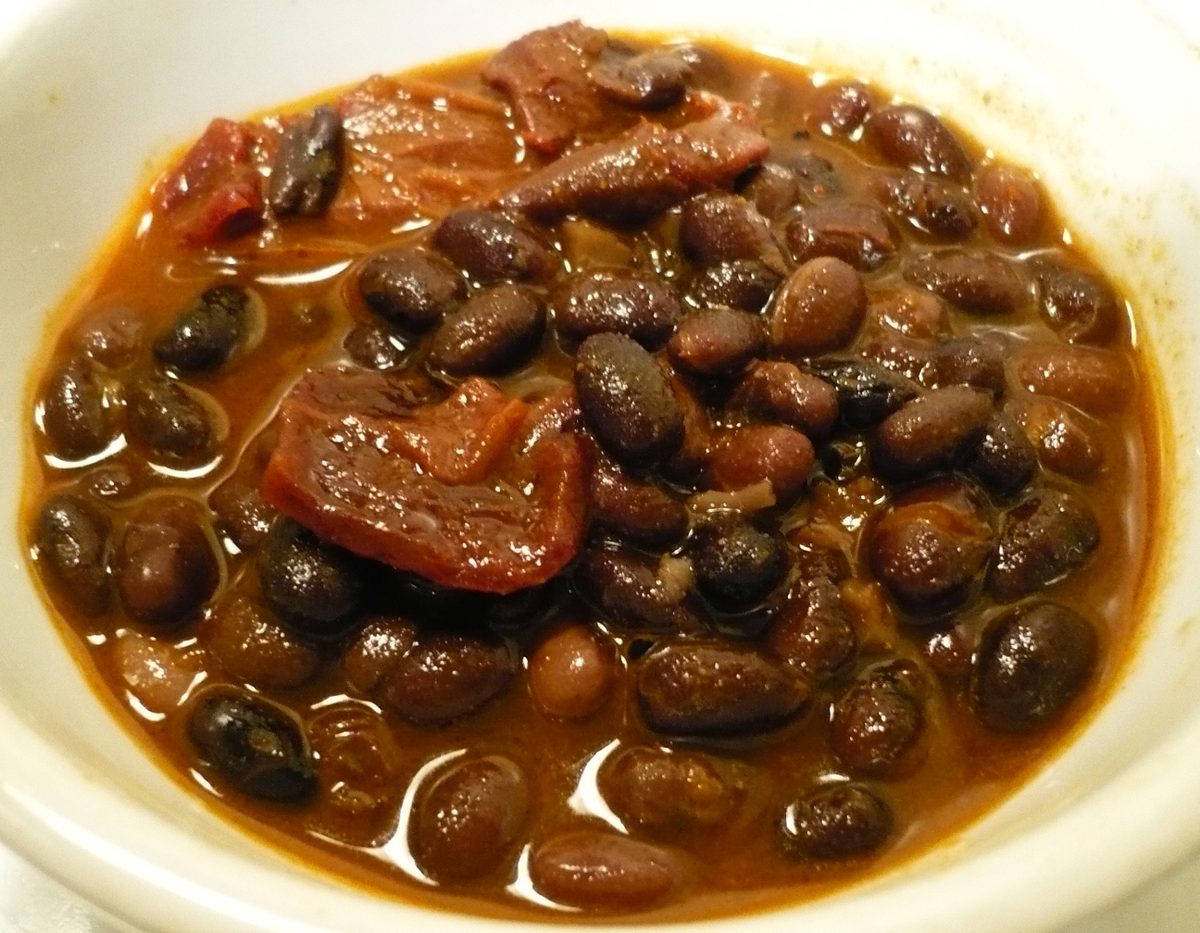
Photo: Badagnani, CC BY 3.0 via Wikimedia Commons

Quick facts
| Light: | Full sun11 source |
|---|---|
| Water: | Medium21 source |
| Soil: | Well drained; pH 5.8–6.531 source |
| Hardiness: | Zones 2a–11b11 source |
| Size: | 2–6 ft (0.61–1.83 m) × 0.5–3 ft (0.15–0.91 m)911 source |
| Growth rate: | Rapid13 |
| Bloom: | Yellow, white, pink and red11 source |
| Cats: | Not documented by major sources |
| Dogs: | Not documented by major sources |
| Native range: | AGE, AGW, BOL, CLM, COS, ECU, ELS, GUA, HON, MXC, MXE, MXG, MXN, MXS, MXT, NIC, PAN, PER, VEN10 |
| Family: | Fabaceae |
How much light does a Kidney Bean need?
Full sun outdoors is what keeps kidney bean plants growing well. That same guidance pairs full sun with fertile, well-drained soil for the best results. Given a sunny spot, kidney bean grows at a rapid pace. It can produce large yields while requiring little extra attention. Bush types stay about 2 ft (0.6 m) tall, while pole types climb as high as 6 ft (1.8 m). Flowers on this plant can be yellow, white, pink, or red. Plants also need medium, steady moisture through the growing season. It also tolerates a wide hardiness range outdoors, from USDA zone 2a to 11b.
- Light: Full sun1
How often to water a Kidney Bean
This plant needs medium, steady moisture through the growing season. Give them about 1 inch (2.5 cm) of water a week, counting rain and irrigation together. That need is greatest while the plants are blooming and while pods are forming. The soil should also be well-drained. A soil pH between 5.8 and 6.5 is also recommended for these plants. Outdoors, give kidney bean full sun along with that moisture. Growth happens quickly under good conditions. This plant is also a rapid grower that yields heavily with little upkeep. The plant's USDA hardiness spans zones 2a to 11b outdoors.
- Water: Medium2
Best soil for a Kidney Bean
Fertile, well-drained soil suits kidney bean plants best. Aim for a soil pH between 5.8 and 6.5, and test your soil to check it. A soil test also helps you track overall fertility levels for the bed. The plant also needs full sun outdoors. It needs medium, steady moisture through the season, especially during bloom and pod set. Growth is rapid under these conditions. In the continental US and Puerto Rico, kidney bean is grown as an introduced plant rather than a native one. Bush types stay about 2 ft (0.6 m) tall, while pole types can climb up to 6 ft (1.8 m).
Hardiness and temperature
This plant's growing range spans USDA zones 2a to 11b. No cited source gives a minimum temperature in degrees for this plant. Soil should reach at least 60°F (15.6°C) before you plant seeds outdoors, regardless of zone. Kidney bean is also a rapid grower. Zone 11b is its upper limit; zone 2a is its lower limit. In the continental US, this species is treated as introduced rather than native. It typically reaches harvest 50 to 60 days after you sow the seed.
How to plant a Kidney Bean
Garden beds across USDA zones 2a to 11b can host kidney bean during the warm season. Within that range, give it full sun and fertile, well-drained soil. Bush types stay about 2 ft (0.6 m) tall, while pole types climb as high as 6 ft (1.8 m). Aim for a soil pH between 5.8 and 6.5 wherever you plant it. Seed is the recommended way to start new plants. Direct sow one to two weeks after your last frost date, once soil reaches at least 60°F (15.6°C). Or start seed indoors two to four weeks before that date. Flowers appear in shades of yellow, white, pink, or red. Plants also need medium, steady moisture through the season once they're in the ground.
- Hardiness: Zones 2a–11b1
Winter care
USDA zones 2a through 11b make up kidney bean's documented range. No cited source lists a minimum temperature this plant can survive. Soil should reach at least 60°F (15.6°C) before you sow outdoors. Kidney bean is also a rapid grower. Its hardiness extends from zone 2a up to zone 11b, based on NC State's listing. It is grown as an introduced plant in the continental US and Puerto Rico, not a native one. Seed stays the recommended way to start new plants each season.
When to plant Kidney Bean
Indoors, sow seed two to four weeks before your last frost date. Outdoors, direct sow one to two weeks after that date, once soil is at least 60°F (15.6°C). Either way, kidney bean reaches harvest in about 50 to 60 days from seed. Seed is the method used for both approaches.
| Step | When |
|---|---|
| Start indoors | 2–4 weeks before last frost |
| Direct sow | 1–2 weeks before last spring frost, soil at least 60.1 °F (15.6 °C) |
When and how to harvest Kidney Bean
Harvest kidney bean pods while they are still tender, snapping easily when the seeds inside are young and small. Pick them before the enlarging seeds can be seen through the pod wall. Most varieties reach that stage 50 to 60 days after you sow the seed. Bush types and pole types both produce pods you harvest the same way. Kidney bean is a rapid grower overall. Seed is the way these plants are started before you reach harvest.
How to propagate a Kidney Bean
Seed is the recommended way to propagate kidney bean. You can sow seed directly outdoors once your soil is warm enough, or start it indoors first. Direct sowing works one to two weeks after your last frost date, once soil hits at least 60°F (15.6°C). If you prefer to start indoors, sow seed two to four weeks before your last frost date. However you start it, kidney bean reaches harvest in about 50 to 60 days.
- Propagation: Seed1
Common problems
Several common pests can show up on kidney bean, including aphids, spider mites, whiteflies, and stink bugs. Cutworms, leafhoppers, thrips, wireworms, cucumber beetles, grasshoppers, bean weevils, and seedcorn maggots are also reported on this crop. Diseases documented for kidney bean include bean rust, curly top, damping-off, and fusarium root rot. Mosaic viruses, powdery mildew, and white mold are also recorded on this plant.
| Problem | Kind |
|---|---|
| Aphids | Pest |
| Spider mites | Pest |
| Stink bugs | Pest |
| Whiteflies | Pest |
| Cutworms | Pest |
| Leafhoppers | Pest |
| Thrips | Pest |
| Wireworms | Pest |
| Cucumber beetles | Pest |
| Grasshoppers | Pest |
| Bean weevils | Pest |
| Seedcorn maggot | Pest |
| Bean rust | Disease |
| Curly top | Disease |
| Damping off | Disease |
| Fusarium root rot | Disease |
| Mosaic viruses | Disease |
| Powdery mildew | Disease |
| White mold | Disease |
Is Kidney Bean toxic to cats and dogs?
Recommended supplies
- Soil: a free-draining mix, and a pot with a drainage hole.
Questions and answers
- How much sun do kidney bean plants need?
- Kidney bean plants need full sun outdoors to grow well. Sources that recommend full sun for this plant also call for fertile, well-drained soil.
- How much water do kidney bean plants need?
- Kidney bean plants need medium, steady moisture, about 1 inch (2.5 cm) a week from rain or irrigation. That need is greatest while the plants are blooming and setting pods.
- When should you plant kidney bean seeds?
- Sow seed indoors two to four weeks before your last frost date, or direct sow one to two weeks after it. Either way, soil should be at least 60°F (15.6°C) before seeds go in the ground.
Sources
- NC State Extension Gardener Plant Toolbox. https://plants.ces.ncsu.edu/plants/phaseolus-vulgaris/. Accessed 12 October 2026.
- Iowa State University Extension and Outreach (Yard and Garden). https://yardandgarden.extension.iastate.edu/how-to/growing-green-beans. Accessed 12 October 2026.
- Clemson Cooperative Extension Home & Garden Information Center. https://hgic.clemson.edu/factsheet/bush-pole-type-snap-beans/. Accessed 12 October 2026.
- Oregon State University Extension Service. https://extension.oregonstate.edu/catalog/em-9305-vegetable-degree-day-models-introduction-farmers-gardeners. Accessed 30 October 2026.
- University of Maryland Extension. https://extension.umd.edu/resource/starting-vegetable-seeds-indoors. Accessed 12 October 2026.
- Purdue University Extension (FoodLink). https://extension.purdue.edu/foodlink/food.php?food=snap+bean. Accessed 12 October 2026.
- University of Maryland Extension. https://extension.umd.edu/resource/growing-beans-home-garden. Accessed 12 October 2026.
- UC Statewide Integrated Pest Management Program (UC IPM). https://ipm.ucanr.edu/home-and-landscape/beans/. Accessed 12 October 2026.
- University of Minnesota Extension. https://extension.umn.edu/vegetables/growing-beans. Accessed 12 October 2026.
- Royal Botanic Gardens, Kew (World Checklist of Vascular Plants). https://sftp.kew.org/pub/data-repositories/WCVP/wcvp.zip. Accessed 4 June 2026.
How this page was made
- Written with AI assistance from the sources listed on this page. AI is never the source of a fact.