Pride-of-Barbados (Caesalpinia pulcherrima)
Formerly Poinciana pulcherrima, Poinciana alata, Poinciana hispida
Pride of Barbados is an evergreen shrub or small tree that grows at a rapid pace once established. Outdoors, it does best in full sun but also tolerates part shade. It typically reaches 10 to 20 ft (3 to 6.1 m) tall and 6 to 12 ft (1.8 to 3.7 m) wide. Both cats and dogs are listed as toxic by the ASPCA if they eat this plant.
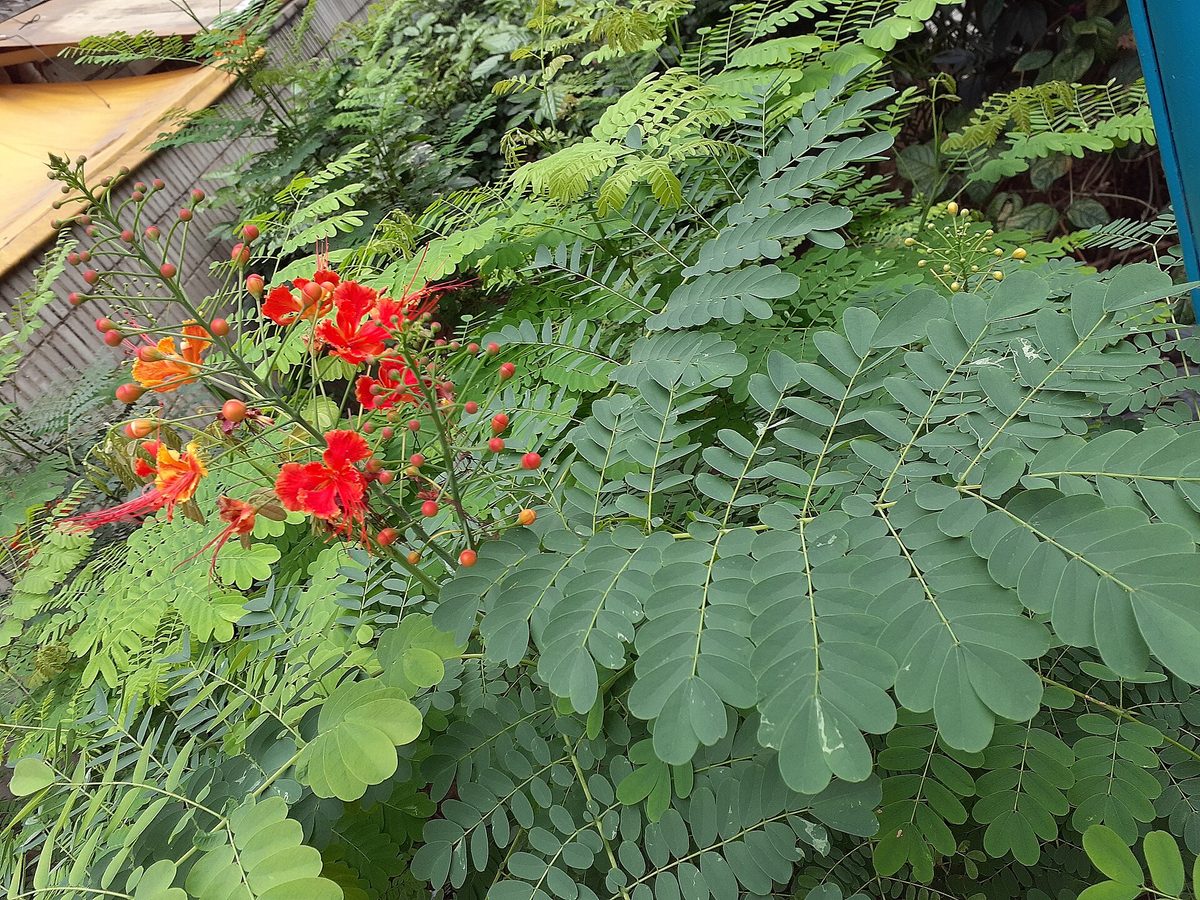
Photo: Bdaize Holgooa, CC BY-SA 4.0 via Wikimedia Commons

Quick facts
| Soil: | Well drained and occasionally dry11 source |
|---|---|
| Size: | 10–20 ft (3.05–6.1 m) × 6–12 ft (1.83–3.66 m)11 source |
| Growth rate: | Rapid11 source |
| Bloom: | Orange, red and yellow41 |
| Cats: | Toxic to cats (1 source) 3 |
| Dogs: | Toxic to dogs (1 source) 3 |
| Native range: | BLZ, COS, GUA, MXT, NIC5 |
| Family: | Fabaceae |
Best soil for a Pride-of-Barbados
This plant needs soil that drains well and tolerates some dry spells between waterings. It does not do well in soil that stays wet or poorly drained. Pride of Barbados is native to parts of Belize, Costa Rica, Guatemala, Mexico, and Nicaragua. In the continental United States and Puerto Rico, it is considered an introduced species rather than a native one. Outdoors, it grows best in full sun, though it also tolerates part shade. It is suited to USDA hardiness zones 9a through 11b.
- Soil drainage: Well drained and occasionally dry1
Pruning a Pride-of-Barbados
Light pruning helps keep Pride of Barbados in a tidy shape. This kind of pruning focuses on shaping the plant rather than heavy cutting back. This shrub or small tree also has a rapid growth rate. Left alone, it can still grow into a shrub or small tree 10 to 20 ft (3 to 6.1 m) tall and 6 to 12 ft (1.8 to 3.7 m) wide.
- Pruning: Light shaping1
How to propagate a Pride-of-Barbados
You can propagate Pride of Barbados from seed. Seed is the propagation method listed for this plant. Once established, this shrub or small tree grows at a rapid pace. It produces blooms in shades of orange, red, or yellow. It grows outdoors year-round in USDA hardiness zones 9a to 11b. It can grow 10 to 20 ft (3 to 6.1 m) tall and 6 to 12 ft (1.8 to 3.7 m) wide once mature.
- Propagation: Seed1
Common problems
Scale insects are one pest that can affect Pride of Barbados. The glassy-winged sharpshooter and coffee berry borer are other pests reported on this plant. In poorly drained soil, it may become susceptible to mushroom root rot. This evergreen shrub or small tree also grows quickly once established.
| Problem | Kind |
|---|---|
| Scale insects | Pest |
| Glassy winged sharpshooter | Pest |
| Coffee berry borer | Pest |
| Mushroom root rot | Disease |
Is Pride-of-Barbados toxic to cats and dogs?
The ASPCA lists Pride of Barbados as toxic to cats. The same ASPCA source also lists it as toxic to dogs. This plant is an evergreen shrub or small tree that can reach 10 to 20 ft (3 to 6.1 m) in height. Its flowers come in shades of orange, red, or yellow, and it is grown outdoors in USDA zones 9a to 11b. The recommended way to propagate it is from seed, and it may need light pruning now and then to keep its shape.
Pet-safe alternatives
Recommended supplies
- Soil: a free-draining mix, and a pot with a drainage hole.
Questions and answers
- Is Pride of Barbados toxic to pets?
- Yes, the ASPCA lists Pride of Barbados as toxic to both cats and dogs. It may also need occasional light pruning to keep its shape, and it can be affected by pests such as scale insects.
- How fast does Pride of Barbados grow?
- Pride of Barbados has a rapid growth rate once it is established in the garden. It typically reaches 10 to 20 ft (3 to 6.1 m) tall and 6 to 12 ft (1.8 to 3.7 m) wide. It is also hardy outdoors in USDA zones 9a to 11b.
- How do you propagate Pride of Barbados?
- You can propagate Pride of Barbados from seed, which is the method listed for this plant. It grows outdoors year-round in USDA hardiness zones 9a to 11b. It is also toxic to both cats and dogs, according to the ASPCA.
Sources
- NC State Extension. https://plants.ces.ncsu.edu/plants/caesalpinia-pulcherrima/. Accessed 21 October 2026.
- EPPO Global Database. https://gd.eppo.int/taxon/CAEPU/pests. Accessed 14 October 2026.
- ASPCA Animal Poison Control Center. https://www.aspca.org/pet-care/aspca-poison-control/toxic-and-non-toxic-plants/barbados-pride. Accessed 14 October 2026.
- UC Statewide Integrated Pest Management Program. https://ipm.ucanr.edu/home-and-landscape/caesalpinia/. Accessed 28 October 2026.
- Royal Botanic Gardens, Kew (World Checklist of Vascular Plants). https://sftp.kew.org/pub/data-repositories/WCVP/wcvp.zip. Accessed 4 June 2026.
How this page was made
- Written with AI assistance from the sources listed on this page. AI is never the source of a fact.