Paperflower (Bougainvillea glabra)
Formerly Bougainvillea formosa, Bougainvillea rubicunda, Bougainvillea sanderiana
Give paperflower direct sun and water it deeply, letting it dry out between waterings. It is a woody, evergreen climber with curved thorns that sprawls and grows rapidly. Its hardiness range is zones 9a to 11b. Toxicity to cats and to dogs is not documented for this plant.
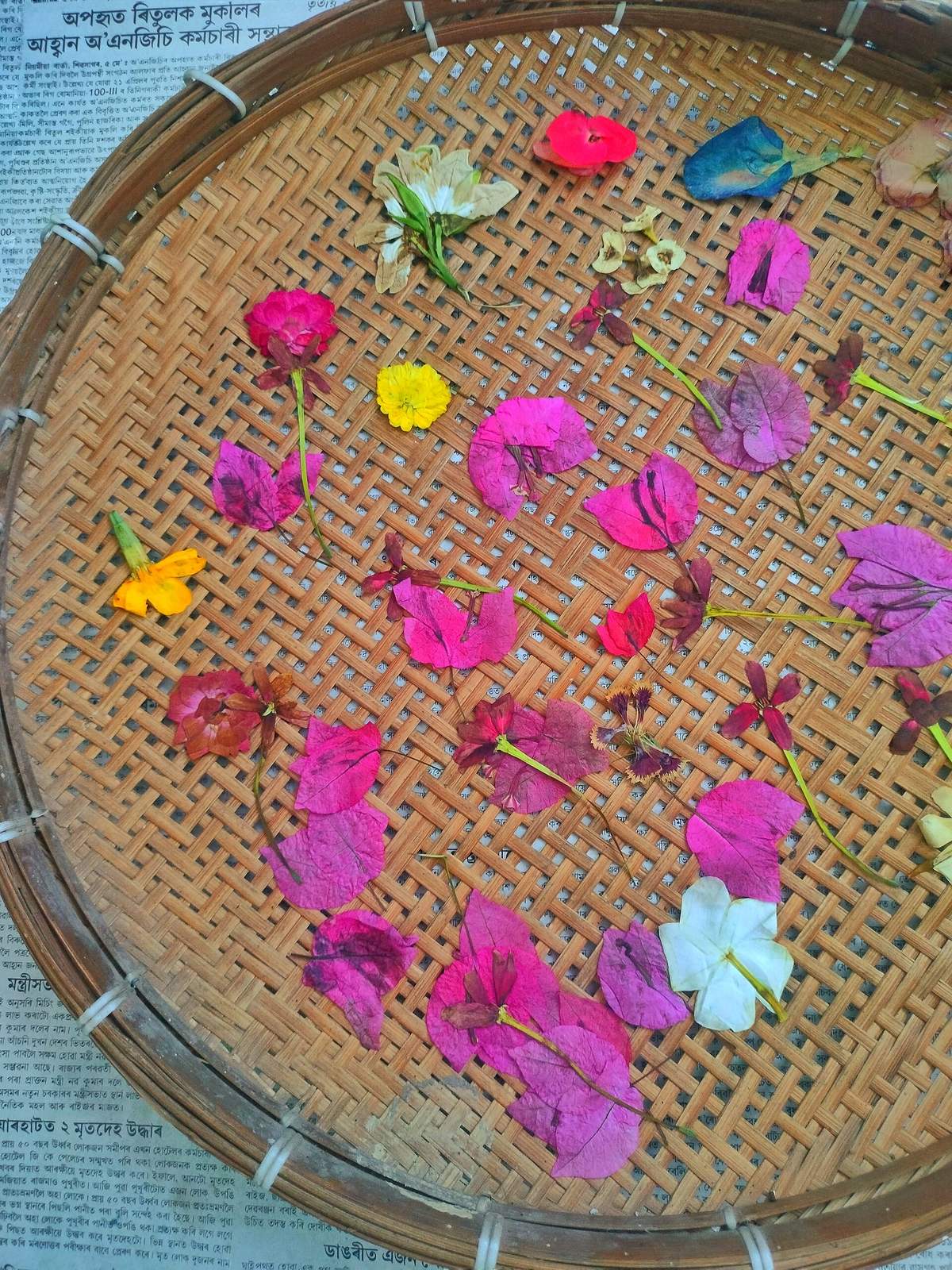
Photo: পাপৰি বৰা, CC BY-SA 4.0 via Wikimedia Commons

Quick facts
| Light: | Direct sun111 source |
|---|---|
| Water: | Dry to medium21 source |
| Soil: | Well drained and occasionally dry; pH 6–821 |
| Size: | 10–20 ft (3.05–6.1 m) × 6–10 ft (1.83–3.05 m)21 source |
| Growth rate: | Rapid21 source |
| Bloom: | White, yellow, orange, red, pink and purple21 |
| Cats: | Not documented by major sources |
| Dogs: | Not documented by major sources |
| Native range: | BZE, BZL, BZS5 |
| Family: | Nyctaginaceae |
How much light does a Paperflower need?
Indoors, paperflower needs direct sun. It flowers sooner and more profusely when exposed to high light intensities. Outdoors, full sun is preferred, meaning six or more hours of direct sunlight a day. Part shade is also listed outdoors, although one extension source says bougainvilleas should be in full sun with no shade.
How often to water a Paperflower
Water paperflower deeply, then let it dry out between waterings. The recorded range runs from dry to medium. That range stops at medium. Good drainage is listed for this plant, and its soil is described as well drained and occasionally dry. Check that the soil has dried before you water again.
- Water: Dry to medium2
Best soil for a Paperflower
Plant paperflower in soil that drains well. Sources list the drainage as well drained and occasionally dry. One extension source places it in a well-drained soil with a pH of just over 6.0. The recorded pH range is 6 to 8, which that source labels neutral. Soil below pH 6.0 is classed as acid in the same source. Its water range also runs from dry to medium.
Fertilizing a Paperflower
A general-purpose fertilizer at half the recommended rate is the guidance on file. Apply it once a month. The recorded frequency is monthly during the growing season. That means half of whatever rate the label recommends for the product. Skip the full label rate and use half.
Pruning a Paperflower
Plan severe pruning for after summer flowering, in late fall or very early spring. The pruning types on record are hard renewal, light shaping and removing dead growth only. Wait for summer flowering to finish before any severe cutting. These are the three pruning types on record.
- Pruning: Hard renewal pruning, Light shaping and Remove dead growth only (Feb, Nov)3
Care calendar
| Task | Jan | Feb | Mar | Apr | May | Jun | Jul | Aug | Sep | Oct | Nov | Dec |
|---|---|---|---|---|---|---|---|---|---|---|---|---|
| Fertilize | Fertilize in Mar | Fertilize in Jul | ||||||||||
| Prune | Prune in Feb | Prune in Nov |
How to propagate a Paperflower
Two propagation methods are on record: seed and stem cuttings. One extension source says cuttings from the current year's growth can be rooted in a sand and peat mix during summer. Seed is the other listed method, and NC State Extension is the source for it. Summer is the season that source gives for rooting cuttings.
Common problems
The pests on record for paperflower are aphids, bougainvillea looper, giant whitefly, mealybugs, scales, whiteflies and Phenacoccus peruvianus. The UC Statewide Integrated Pest Management Program lists aphids among them. Both whiteflies and giant whitefly are listed separately. No diseases are documented for this plant in the facts on file.
- Common pests: aphids, bougainvillea looper, giant whitefly, mealybugs, scales, whiteflies and phenacoccus peruvianus4
| Problem | Kind |
|---|---|
| Aphids | Pest |
| Bougainvillea looper | Pest |
| Giant whitefly | Pest |
| Mealybugs | Pest |
| Scales | Pest |
| Whiteflies | Pest |
| Phenacoccus peruvianus | Pest |
Is Paperflower toxic to cats and dogs?
Recommended supplies
- Light: direct sun for several hours; indoors that means an unobstructed south window or a grow light.
- Soil: a free-draining mix, and a pot with a drainage hole.
Questions and answers
- How much sun does paperflower need?
- Indoors it needs direct sun, and it flowers sooner and more profusely in high light. Outdoors, full sun of six or more hours of direct sunlight a day is preferred. Part shade is also listed.
- How big does paperflower grow?
- Mature height is 10–20 ft (3.05–6.1 m). Mature spread is 6–10 ft (1.83–3.05 m). It is a woody climber with curved thorns that sprawls.
- Which hardiness zones suit paperflower?
- Its recorded hardiness zones run from 9a to 11b. It is an evergreen vine. The native-status register lists it as introduced in the lower 48 US states and in Puerto Rico.
Sources
- Clemson Cooperative Extension HGIC. https://hgic.clemson.edu/factsheet/bougainvillea-2/. Accessed 14 October 2026.
- NC State Extension. https://plants.ces.ncsu.edu/plants/bougainvillea-glabra/. Accessed 14 October 2026.
- Clemson Cooperative Extension HGIC. https://hgic.clemson.edu/factsheet/bougainvillea/. Accessed 21 October 2026.
- UC Statewide Integrated Pest Management Program. https://ipm.ucanr.edu/home-and-landscape/bougainvillea/. Accessed 14 October 2026.
- Royal Botanic Gardens, Kew (World Checklist of Vascular Plants). https://sftp.kew.org/pub/data-repositories/WCVP/wcvp.zip. Accessed 4 June 2026.
How this page was made
- Written with AI assistance from the sources listed on this page. AI is never the source of a fact.