Nightblooming Cactus (Selenicereus undatus)
Formerly Hylocereus undatus, Cereus undatus, Harrisia undata
Give this nightblooming cactus direct sun indoors, and water it when the soil is almost completely dry. The ASPCA lists it as non-toxic to cats and non-toxic to dogs. Plan for a rapid grower that can reach 8–20 ft (2.44–6.1 m) tall.
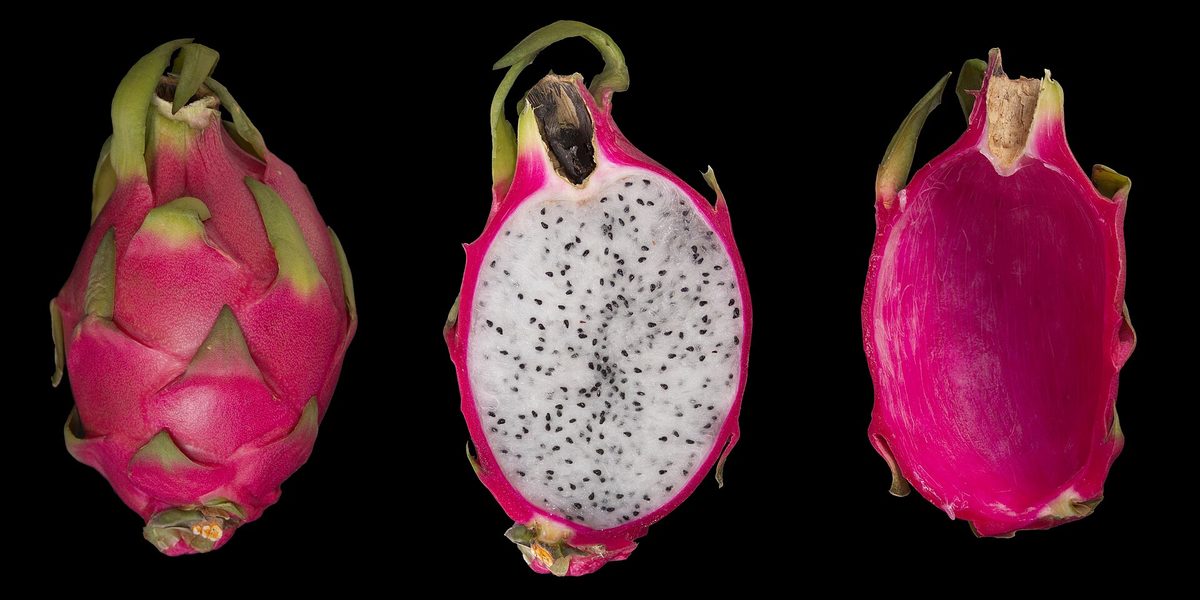
Photo: Bff, CC BY-SA 4.0 via Wikimedia Commons

Quick facts
| Light: | Direct sun11 source |
|---|---|
| Water: | Dry to wet11 source |
| Soil: | Well drained, moist and occasionally dry21 source |
| Minimum temperature: | 28.4 °F (-2 °C)21 source |
| Size: | 8–20 ft (2.44–6.1 m) × 3–10 ft (0.91–3.05 m)11 source |
| Growth rate: | Rapid12 |
| Bloom: | Jan–Feb and Mar–Apr, White, yellow and green4151 source |
| Cats: | Non-toxic to cats 31 |
| Dogs: | Non-toxic to dogs 31 |
| Native range: | ELS, GUA, HON, MXC, MXE, MXG, MXS, MXT6 |
| Family: | Cactaceae |
How much light does a Nightblooming Cactus need?
Direct sunlight is what this plant prefers indoors, along with warm temperatures. Outdoors, it does best in full sun, which means six or more hours of direct sunlight a day. Part shade is also listed outdoors, but full sun is the preferred setting. Planting in full or almost full sun, with only very light shade, is the advice for outdoor planting.
- Light: Direct sun1
How often to water a Nightblooming Cactus
Let the soil dry almost completely before each watering. Water needs are recorded as ranging from dry to wet. Overwatering or too much rainfall can lead to stem and root rot. Soil that drains well suits it, and it is adapted to a wide range of soils provided they are well drained.
- Water: Dry to wet1
Best soil for a Nightblooming Cactus
Soil for this plant should be well drained. It is adapted to a wide range of soils, provided they are well drained. The recorded drainage conditions are well drained, moist and occasionally dry. No cited source records a preferred soil pH for this plant. The plant is recorded as an epiphyte. Water it when the soil is almost completely dry. The water range recorded for this plant runs from dry to wet.
- Soil drainage: Well drained, moist and occasionally dry2
Temperature and humidity
This plant prefers warm temperatures and moderate humidity, and its humidity need is recorded as average. Bright, direct sunlight is part of the same set of preferences. Long exposure to below-freezing temperatures, given as 28.4 °F (-2 °C), may damage the plant. The USDA hardiness zones recorded for it run from 10a to 11b. A rating of 10a is the coldest zone recorded, and 11b is the warmest.
Pruning a Nightblooming Cactus
Pruning may be needed to remove dead or damaged stems or to shape the plant. The pruning types on record are removal of dead growth and light shaping. Mature plants are 8–20 ft (2.44–6.1 m) tall and 3–10 ft (0.91–3.05 m) wide.
- Pruning: Remove dead growth only and Light shaping1
Repotting a Nightblooming Cactus
Repotting is suggested every 2 to 3 years, or when the plant outgrows its container. Growth is rated rapid, and a rate of 1.2 inches (3 cm) per day is on record. Whatever mix you use, it should be well drained.
- Repotting: Every 2–3 years1
How to propagate a Nightblooming Cactus
Three propagation methods are on record for this plant: seed, stem cuttings and grafting. Seeds and stem cuttings are both named as ways to propagate it. Grafting is also on record, but the practice is described as not common. Propagation by seed, stem cuttings or grafting is the full list recorded here.
Common problems
Mites, thrips, ants, scale insects, leaf-footed bugs, mealybugs and slugs have all been reported to cause some damage. Ants, scale and mealybugs are the ones to monitor for. The diseases on record are anthracnose, stem and root rot, stem and fruit canker, and fruit and stem rot. Too much water or too much rainfall can lead to stem and root rot.
| Problem | Kind |
|---|---|
| Mites | Pest |
| Thrips | Pest |
| Ants | Pest |
| Scale insects | Pest |
| Leaf footed bugs | Pest |
| Mealybugs | Pest |
| Slugs and snails | Pest |
| Anthracnose | Disease |
| Stem and root rot | Disease |
| Stem and fruit canker | Disease |
| Fruit and stem rot | Disease |
Is Nightblooming Cactus toxic to cats and dogs?
For cats, the ASPCA lists this plant as non-toxic. For dogs, the ASPCA also lists it as non-toxic. A second listing, in the NC State Extension plant database, tags it as non-toxic for cats. That database gives the same tag for dogs. The records cover cats and dogs separately, and each one reads non-toxic. The ASPCA entry covers both animals, with one position recorded for cats and another for dogs.
Recommended supplies
- Light: direct sun for several hours; indoors that means an unobstructed south window or a grow light.
- Soil: a free-draining mix, and a pot with a drainage hole.
Questions and answers
- Is nightblooming cactus toxic to cats or dogs?
- The ASPCA lists it as non-toxic to cats and non-toxic to dogs. The NC State Extension plant database also tags it as non-toxic for both animals. The two listings are recorded separately for each animal.
- How much light does a nightblooming cactus need?
- Indoors, it prefers direct sunlight. Outdoors, full sun, meaning six or more hours of direct sunlight a day, is preferred, and part shade is also listed.
- How cold can it get before the plant is damaged?
- Long exposure to below-freezing temperatures, given as 28.4 °F (-2 °C), may damage it. It is rated for USDA zones 10a through 11b.
Sources
- NC State Extension Gardener Plant Toolbox. https://plants.ces.ncsu.edu/plants/selenicereus-undatus/. Accessed 14 October 2026.
- University of Florida IFAS Extension (EDIS). https://ask.ifas.ufl.edu/publication/HS303. Accessed 14 October 2026.
- ASPCA Animal Poison Control Center. https://www.aspca.org/pet-care/aspca-poison-control/toxic-and-non-toxic-plants/pitaya. Accessed 14 October 2026.
- Chicago Botanic Garden. https://www.chicagobotanic.org/plant-information/plant-finder/hylocereus-undatus-dragon-fruit. Accessed 21 October 2026.
- University of Florida IFAS Extension (EDIS). https://ask.ifas.ufl.edu/publication/hs303. Accessed 28 October 2026.
- Royal Botanic Gardens, Kew (World Checklist of Vascular Plants). https://sftp.kew.org/pub/data-repositories/WCVP/wcvp.zip. Accessed 4 June 2026.
How this page was made
- Written with AI assistance from the sources listed on this page. AI is never the source of a fact.