Balsam Fir (Abies balsamea)
Formerly Picea balsamea, Pinus balsamea, Abies minor
To keep balsam fir healthy outdoors, give it full sun to part shade and a medium amount of water. It also tolerates full shade and soil that ranges from well drained to occasionally wet. This tree is toxic to cats and toxic to dogs, with ingestion usually causing mild drooling and vomiting.
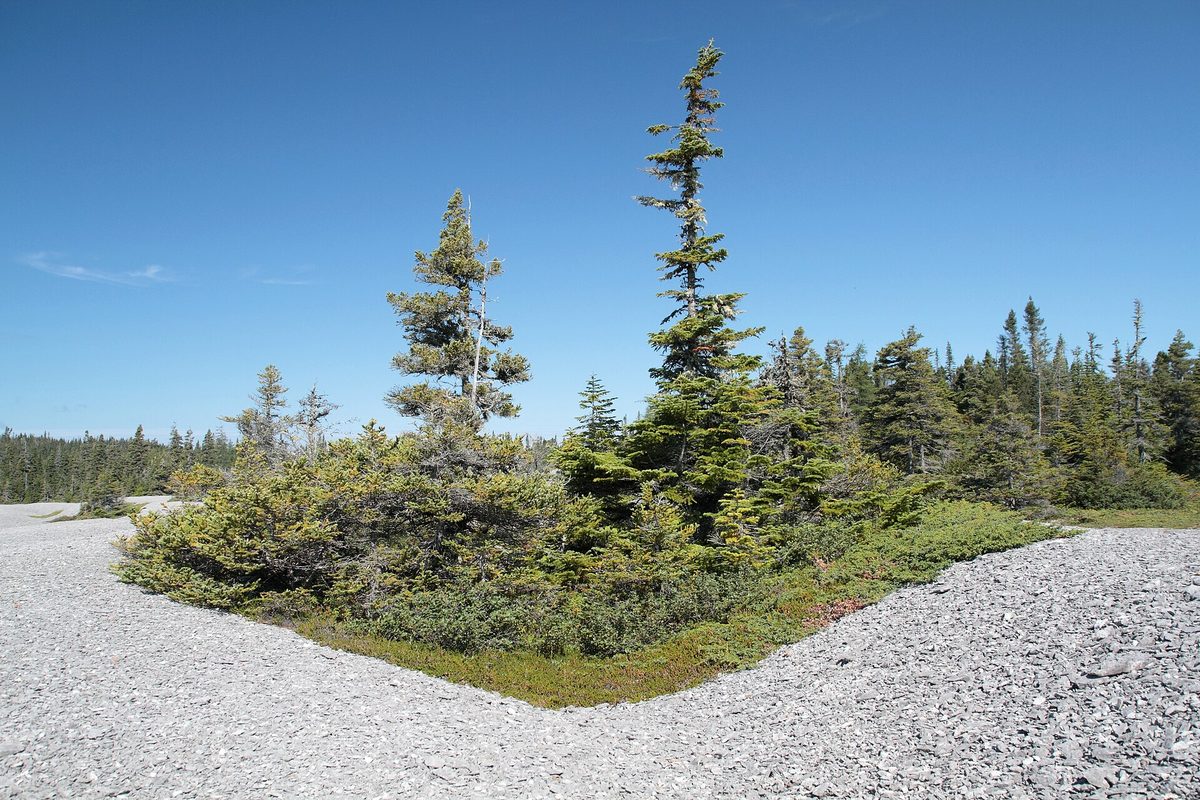
Photo: Cephas, CC BY-SA 3.0 via Wikimedia Commons

Quick facts
| Light: | Full sun, part shade and full shade (full sun preferred)12 |
|---|---|
| Water: | Medium11 source |
| Soil: | Well drained, moist and occasionally wet213 |
| Hardiness: | Zones 3a–7b21 source |
| Size: | 40–70 ft (12.19–21.34 m) × 15–25 ft (4.57–7.62 m)21 source |
| Growth rate: | Moderate21 source |
| Bloom: | Sep–Nov, Yellow, green, purple and brown11 source |
| Cats: | Toxic to cats (1 source) 4 |
| Dogs: | Toxic to dogs (1 source) 4 |
| Family: | Pinaceae |
How much light does a Balsam Fir need?
Full sun is the preferred outdoor light condition for balsam fir, though part shade and full shade are also listed as acceptable. Full sun means six or more hours of direct sunlight a day, while part shade and full shade give the tree less direct light.
How often to water a Balsam Fir
Balsam fir needs a medium amount of water, not a lot and not a little, to stay healthy outdoors. It also grows in soil that stays moist, soil that is occasionally wet, and soil that drains well. Full sun combined with that kind of soil moisture is the outdoor growing condition this species is listed for.
- Water: Medium1
Best soil for a Balsam Fir
Well drained, moist, and occasionally wet soil types all suit balsam fir outdoors. All three conditions are listed as acceptable for this tree, from soil that drains quickly to soil that stays damp or holds extra water at times. Full sun combined with that kind of soil is the outdoor growing condition documented for this particular species of fir outdoors.
Hardiness and temperature
USDA zones 3a through 7b are the range where balsam fir is rated hardy outdoors. That range includes the specific zones 3a, 3b, 4a, 4b, 5a, 5b, 6a, 6b, 7a, and 7b, from the coldest winters it tolerates to the mildest winters within that span.
- Hardiness: Zones 3a–7b2
How to plant a Balsam Fir
Plant balsam fir outdoors in USDA zones 3a through 7b, where it is rated hardy. At maturity it reaches 40 to 70 ft (12.19 to 21.34 m) tall and spreads 15 to 25 ft (4.57 to 7.62 m) wide. Give it room to match that mature spread when you choose a planting spot.
- Hardiness: Zones 3a–7b2
Winter care
In winter, balsam fir's cold hardiness reaches down to USDA zone 3a, the lowest zone it is rated hardy for. That cold hardiness extends up through the specific zones 3a, 3b, 4a, 4b, 5a, 5b, 6a, 6b, 7a, and 7b, where the tree is rated to survive winter outdoors.
- Hardiness: Zones 3a–7b2
How to propagate a Balsam Fir
Seed and layering are the two ways to propagate balsam fir. For Abies, the genus balsam fir belongs to, seed sown in early spring is considered the best way to propagate new plants. Layering is listed as the other method for propagating this tree outdoors, alongside growing it from seed.
- Propagation: Seed and layering1
Common problems
Several pests and diseases are documented for balsam fir growing outdoors. Pests recorded include balsam woolly adelgids, bark beetles, spruce budworms, aphids, bagworms, scale, and spider mites. Diseases recorded include cankers, heart rot, root rot, needle rust, and twig blight.
| Problem | Kind |
|---|---|
| Balsam woolly adelgids | Pest |
| Bark beetles | Pest |
| Spruce budworms | Pest |
| Aphids | Pest |
| Bagworms | Pest |
| Scale insects | Pest |
| Spider mites | Pest |
| Cankers | Disease |
| Heart rot | Disease |
| Root rot | Disease |
| Needle rust | Disease |
| Twig blight | Disease |
Is Balsam Fir toxic to cats and dogs?
Cats face a toxicity risk from balsam fir, which is listed as toxic to cats. Ingestion usually causes mild and self-limiting drooling and vomiting in cats, caused by irritation. Balsam fir is also listed as toxic to dogs. In dogs, ingestion causes the same mild and self-limiting drooling and vomiting from irritation. Self-limiting means these signs usually clear up on their own in both cats and dogs.
Pet-safe alternatives
Recommended supplies
- Soil: a free-draining mix, and a pot with a drainage hole.
Questions and answers
- Is balsam fir toxic to cats and dogs?
- Yes, balsam fir is listed as toxic to both cats and dogs. Ingestion usually causes mild and self-limiting drooling and vomiting from irritation.
- How much sun does balsam fir need outdoors?
- Balsam fir grows best outdoors in full sun, which means six or more hours of direct sunlight a day. It also tolerates part shade and full shade.
- What pests and diseases affect balsam fir?
- Balsam fir can be affected by balsam woolly adelgids, bark beetles, spruce budworms, aphids, bagworms, scale, and spider mites. Disease problems recorded for this tree include cankers, heart rot, root rot, needle rust, and twig blight.
Sources
- Lady Bird Johnson Wildflower Center. https://www.wildflower.org/plants/result.php?id_plant=ABBA. Accessed 15 November 2026.
- NC State Extension Gardener Plant Toolbox. https://plants.ces.ncsu.edu/plants/abies-balsamea/. Accessed 15 November 2026.
- University of Minnesota Extension. https://extension.umn.edu/garden-and-home/yard-and-garden/lawns-and-landscapes-in-minnesota/trees-and-shrubs/choosing-evergreens-for-your-landscape. Accessed 15 November 2026.
- Pet Poison Helpline. https://www.petpoisonhelpline.com/pet-owner-blog/holiday-toxins/. Accessed 15 November 2026.
How this page was made
- Written with AI assistance from the sources listed on this page. AI is never the source of a fact.