Bur Oak (Quercus macrocarpa)
Formerly Cerris macrocarpa, Cerris oliviformis, Quercus mandanensis
Bur oak does best in full sun with medium water, though its toxicity to cats and dogs is not documented here. It is a deciduous tree that grows in zones 3a–8b. A mature tree stands 70–80 ft (21.34–24.38 m) tall. Its spread is 60–80 ft (18.29–24.38 m).
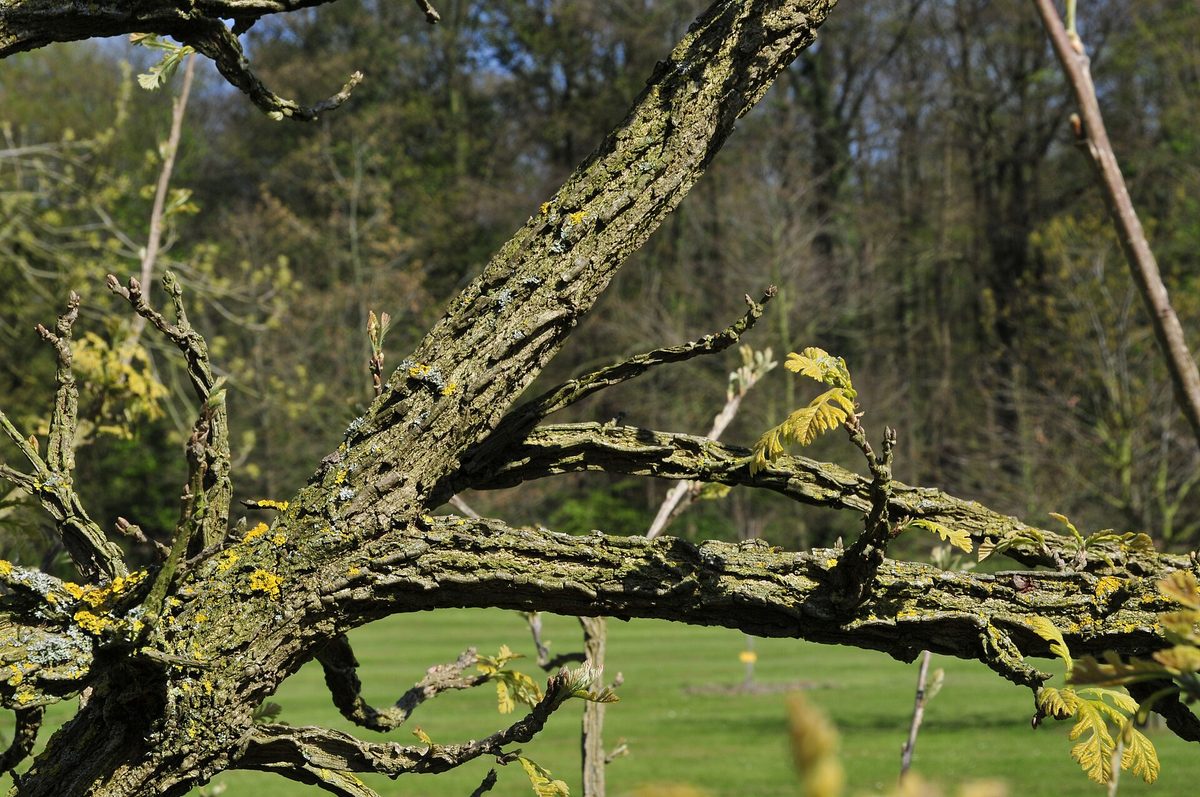
Photo: Homoarborea, CC0 via Wikimedia Commons

Quick facts
| Light: | Full sun, part shade and full shade (full sun preferred)12 |
|---|---|
| Water: | Medium11 source |
| Soil: | Well drained and occasionally dry; pH 5–8231 source |
| Hardiness: | Zones 3a–8b24 |
| Size: | 70–80 ft (21.34–24.38 m) × 60–80 ft (18.29–24.38 m)231 source |
| Growth rate: | Moderate21 source |
| Bloom: | Mar–Apr and May–Jun, Yellow, green and brown5211 source |
| Cats: | Not documented by major sources |
| Dogs: | Not documented by major sources |
| Native range: | ABT, ALA, ARK, CNT, ILL, INI, IOW, KAN, KTY, LOU, MAI, MAN, MAS, MIC, MIN, MNT, MRY, MSO, NBR, NDA, NEB, NWY, OHI, OKL, ONT, PEN, QUE, SAS, SDA, TEN, TEX, VER, VRG, WIS, WVA, WYO6 |
| Family: | Fagaceae |
How much light does a Bur Oak need?
Bur oak grows best in full sun, which means six or more hours of direct sunlight a day. It also tolerates part shade and full shade, but full sun is the preferred setting. Mature trees reach 70–80 ft (21.34–24.38 m) in height and 60–80 ft (18.29–24.38 m) in spread.
How often to water a Bur Oak
Bur oak has a medium water need. Its water requirement is listed as medium at both the low end and the high end of the range. The soil it grows in is described as well drained and occasionally dry. Medium is the only water level recorded for this tree, with no separate figure for a wetter or a drier site.
- Water: Medium1
Best soil for a Bur Oak
Bur oak grows in soil that is well drained and occasionally dry. Good drainage is the condition named for this tree. It tolerates soil from acid to alkaline, with a pH of 5.0 to 8.0. That range takes in both acidic and alkaline conditions. Together, the listings describe a tree for soil that drains well, is sometimes dry, and falls between pH 5 and pH 8.
Hardiness and temperature
Bur oak is rated for USDA hardiness zones 3a through 8b. That range starts at 3a, the cold end, and ends at 8b, the warm end. No cited source records a minimum temperature, and the zone range is the figure on record for cold. Whole-number zones 3 to 8 cover the same span. The tree is deciduous.
How to plant a Bur Oak
Check that your site falls in USDA zones 3a through 8b before you plant. Mature trees spread 60–80 ft (18.29–24.38 m), so allow room for that width. Mature height is 70–80 ft (21.34–24.38 m). Choose a site with full sun if you can, since full sun is the preferred exposure. The soil should drain well and may be occasionally dry, with a pH between 5 and 8. The tree grows at a moderate rate.
Winter care
Bur oak is a deciduous tree. It is rated hardy in USDA zones 3a through 8b, which is the cold-hardiness range on record. A minimum temperature is not documented in the cited sources, so go by the zone range of 3a–8b. Zone 3a sits at the cold end of that range, and zone 8b sits at the warm end.
How to propagate a Bur Oak
Bur oak is propagated from seed. Oaks are most often propagated from seed, and no pretreatment is necessary. Seed is the only propagation method recorded for this tree, and no other method is documented here. If you want a new bur oak, the route on record is to start it from seed.
Common problems
Three pests are recorded for bur oak: the two lined chestnut borer, the orange striped oakworm and the forest tent caterpillar. Two diseases are recorded as well: anthracnose and oak wilt. Bur oak is described as susceptible to anthracnose. The orange-striped oakworm shows an intermediate preference for it.
| Problem | Kind |
|---|---|
| Two lined chestnut borer | Pest |
| Orange striped oakworm | Pest |
| Forest tent caterpillar | Pest |
| Anthracnose | Disease |
| Oak wilt | Disease |
Is Bur Oak toxic to cats and dogs?
Recommended supplies
- Soil: a free-draining mix, and a pot with a drainage hole.
Questions and answers
- How much sun does a bur oak need?
- Bur oak prefers full sun, which means six or more hours of direct sunlight a day. It also tolerates part shade and full shade.
- How big does a bur oak get?
- A mature bur oak is 70–80 ft (21.34–24.38 m) tall. Its spread is 60–80 ft (18.29–24.38 m). It grows at a moderate rate.
- Which zones can grow a bur oak?
- Bur oak is rated for USDA zones 3a through 8b. It is a deciduous tree, and a minimum temperature is not documented.
Sources
- Lady Bird Johnson Wildflower Center. https://www.wildflower.org/plants/result.php?id_plant=quma2. Accessed 14 October 2026.
- NC State Extension Gardener Plant Toolbox. https://plants.ces.ncsu.edu/plants/quercus-macrocarpa/. Accessed 14 October 2026.
- Cornell University CALS Woody Plants Database. https://woodyplants.cals.cornell.edu/plant/206. Accessed 14 October 2026.
- Penn State Extension. https://extension.psu.edu/oak-trees-of-pennsylvania. Accessed 14 October 2026.
- Chicago Botanic Garden. https://www.chicagobotanic.org/plant-information/plant-finder/quercus-macrocarpa-bur-oak. Accessed 28 October 2026.
- Royal Botanic Gardens, Kew (World Checklist of Vascular Plants). https://sftp.kew.org/pub/data-repositories/WCVP/wcvp.zip. Accessed 4 June 2026.
How this page was made
- Written with AI assistance from the sources listed on this page. AI is never the source of a fact.