Arborvitae (Thuja occidentalis)
Formerly Thuja sibirica, Thuja hoveyi, Thuja obtusa
Outdoor care for arborvitae starts with full sun to part shade. It also needs soil in the medium to wet range. This evergreen keeps its foliage green all year. It grows as a tree. Its blooms come in yellow, green, and brown. It survives outdoors in USDA zones 3a through 7b. No cited source lists a toxicity position for cats or dogs.
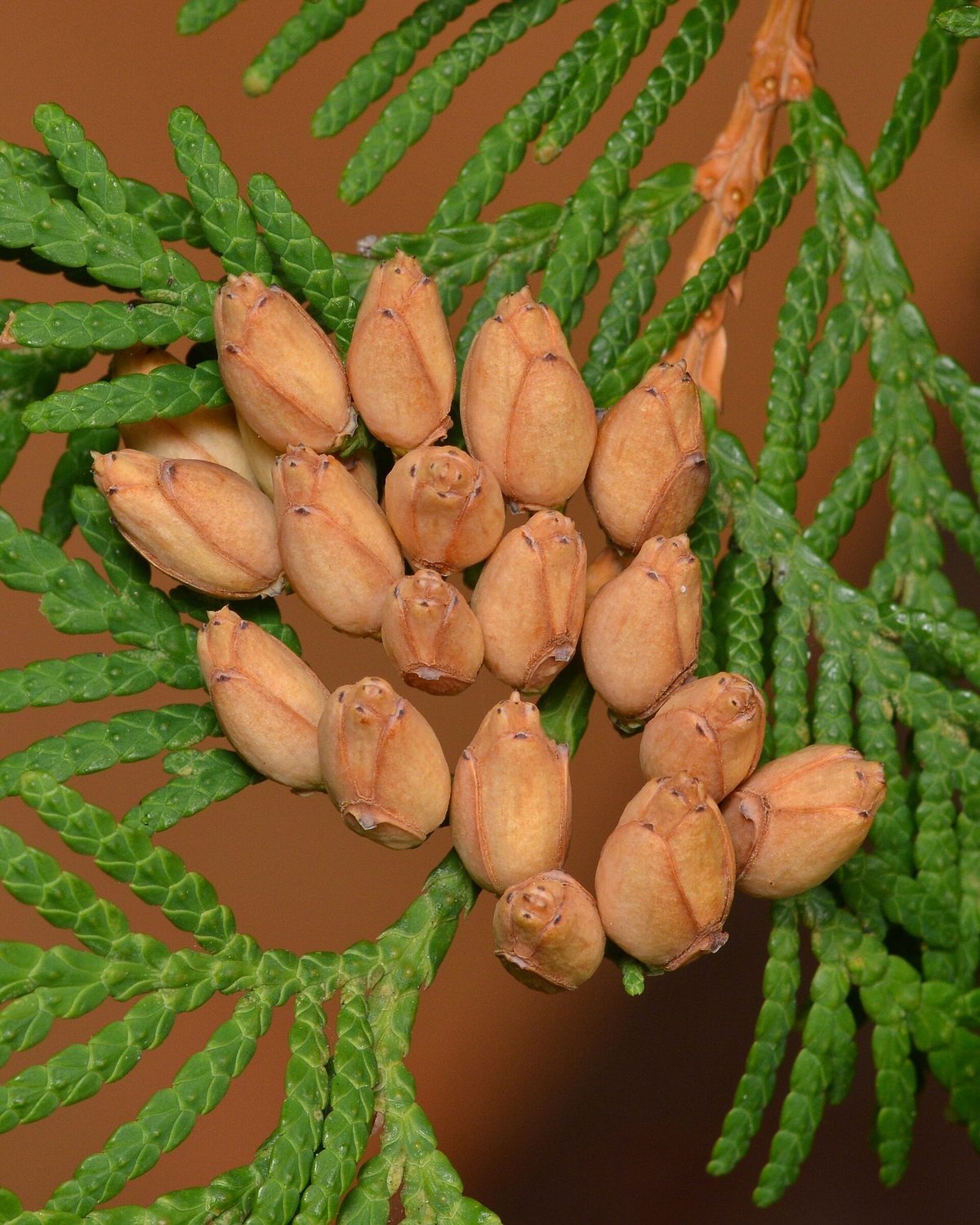
Photo: Ryan Hodnett, CC BY-SA 4.0 via Wikimedia Commons

Quick facts
| Light: | Full sun, part shade and full shade (full sun preferred)12 |
|---|---|
| Water: | Medium to wet11 source |
| Soil: | Well drained, moist and occasionally wet; pH 6–8131 source |
| Hardiness: | Zones 3a–7b11 source |
| Size: | 39.4–49.2 ft (12–15 m) × 10–15 ft (3.05–4.57 m)5671 source |
| Growth rate: | Sources differ: Utah State University Extension158Sources differ |
| Bloom: | Yellow, green and brown21 source |
| Cats: | Not documented by major sources |
| Dogs: | Not documented by major sources |
| Native range: | CNT, ILL, INI, KTY, MAI, MAN, MAS, MIC, MIN, MRY, NBR, NCA, NSC, NWH, NWJ, NWY, OHI, ONT, PEI, PEN, QUE, RHO, TEN, VER, VRG, WIS, WVA9 |
| Family: | Cupressaceae |
How much light does an Arborvitae need?
Arborvitae grows best with full sun, but it also handles part shade well. In full shade, its foliage thins out a lot. Give it a site with some direct sun each day rather than deep shade. The tree also prefers soil that stays medium to wet.
How often to water an Arborvitae
Arborvitae needs soil moisture in the medium to wet range to grow well outdoors. It also does best where both the soil and the surrounding air stay highly moist. The soil itself can be well-drained, moist, or occasionally wet. Its preferred soil pH runs from 6 to 8, slightly acidic to alkaline.
Layering, one of its propagation methods, happens naturally when moisture conditions favor roots forming where low branches touch the ground. This tree also grows hardy across USDA zones 3a through 7b outdoors.
- Water: Medium to wet1
Best soil for an Arborvitae
Give arborvitae soil that drains well but still holds moisture. It also grows fine in soil that turns occasionally wet. Aim for a pH between 6 and 8, which covers slightly acidic through alkaline ground. This range matches the medium to wet moisture the tree prefers in general.
At maturity, the tree spreads 10 to 15 ft (3.05-4.57 m) wide. It also grows into a tree 40 to 50 ft (12-15 m) tall. This tree also prefers full sun outdoors, though it tolerates part shade too. It survives in USDA zones 3a through 7b.
Hardiness and temperature
USDA hardiness zones 3a through 7b mark where this tree survives outdoors. No cited source here gives a minimum temperature for arborvitae. It does best in areas with high moisture in the air, not just the soil. It also keeps its foliage green all year as an evergreen tree.
The tree also tolerates full sun to part shade outdoors in these zones. At maturity, it reaches 40 to 50 ft (12-15 m) tall. Soil there should stay well-drained, moist, or occasionally wet.
- Hardiness: Zones 3a–7b1
Fertilizing an Arborvitae
Fertilize arborvitae sparingly in early spring, around March and April, if growth looks weak. Too much fertilizer pushes the tree into leggy, loose growth instead of a tight shape. This matches a light annual feeding schedule, used at most once a year. Soil pH for this tree runs from 6 to 8, slightly acidic to alkaline.
- Fertilizer: Light, once a year (Mar–Apr)4
Pruning an Arborvitae
An annual light shearing keeps arborvitae's size in check if you want a tighter form. This is the only shaping the tree generally needs each year. Left alone, it grows into a tree 40 to 50 ft (12-15 m) tall and 10 to 15 ft (3.05-4.57 m) wide. It also stays evergreen, keeping its foliage green year-round. Fertilize only sparingly in early spring, around March and April, if growth looks weak.
- Pruning: Light shaping3
How to plant an Arborvitae
Arborvitae grows outdoors in USDA zones 3a through 7b. Choose a spot with full sun to part shade, since full shade thins the foliage. The soil there should drain well while staying moist, and it can tolerate spots that turn occasionally wet. Aim for a pH between 6 and 8 in that same spot.
At maturity, it reaches 40 to 50 ft (12-15 m) tall and 10 to 15 ft (3.05-4.57 m) wide. Keep soil there in the medium to wet range the tree prefers.
- Hardiness: Zones 3a–7b1
Winter care
Arborvitae survives outdoor winters across USDA zones 3a through 7b. Zone 3a marks the coldest end of the range the tree is documented to handle. Zone 7b marks the mildest end. No source checked for this page states an exact minimum winter temperature. Arborvitae is classified as a tree rather than a shrub. Mature trees reach 40 to 50 feet (12 to 15 m) tall over their lifetime. It also prefers soil that drains well, with a pH from 6.0 to 8.0.
- Hardiness: Zones 3a–7b1
How to propagate an Arborvitae
You can propagate arborvitae from seed or by layering. Layering happens on its own when moisture is high enough for low branches to root where they touch soil. This matches the tree's general preference for soil that stays medium to wet.
It also matches the moist, well-drained soil the species favors overall. This tree grows outdoors in USDA zones 3a through 7b, where these methods work. Soil pH there can run from 6 to 8, slightly acidic to alkaline.
- Propagation: Seed and layering5
Common problems
Bagworms are the most common pest on arborvitae, along with leaf miners, mealybugs, scale insects, and spider mites. Canker shows up occasionally as a disease problem. Phomopsis tip blight is another disease to watch for on this tree. Spider mites and scale insects are occasional visitors rather than a constant threat. This evergreen tree keeps its foliage green through the seasons these pests and diseases affect.
| Problem | Kind |
|---|---|
| Bagworms | Pest |
| Leaf miners | Pest |
| Mealybugs | Pest |
| Scale insects | Pest |
| Spider mites | Pest |
| Canker | Disease |
| Phomopsis tip blight | Disease |
Is Arborvitae toxic to cats and dogs?
Recommended supplies
- Soil: a free-draining mix, and a pot with a drainage hole.
Questions and answers
- How much sun does arborvitae need?
- Arborvitae grows best in full sun, but it also tolerates part shade. In full shade, its foliage thins out noticeably. Sources list its light tolerance as full sun, part shade, and full shade, in that order of preference.
- Is arborvitae toxic to cats or dogs?
- No source checked for this page currently lists arborvitae's toxicity for cats or dogs. Arborvitae is also native to the lower 48 United States.
- How do you propagate arborvitae?
- Seed and layering are the two propagation methods documented for arborvitae. Layering happens most readily when moisture conditions are favorable. Both are reported as natural ways this tree reproduces.
Sources
- NC State Extension Gardener Plant Toolbox. https://plants.ces.ncsu.edu/plants/thuja-occidentalis/. Accessed 15 October 2026.
- Lady Bird Johnson Wildflower Center. https://www.wildflower.org/plants/result.php?id_plant=thoc2. Accessed 15 October 2026.
- Penn State Extension. https://extension.psu.edu/the-mighty-arborvitae. Accessed 15 October 2026.
- Iowa State University Extension and Outreach (Yard and Garden). https://yardandgarden.extension.iastate.edu/how-to/selecting-and-planting-hedges. Accessed 28 October 2026.
- USDA Forest Service Fire Effects Information System. https://www.fs.usda.gov/database/feis/plants/tree/thuocc/all.html. Accessed 15 October 2026.
- Penn State Extension. https://extension.psu.edu/evergreen-shrubs-and-trees-for-pennsylvania. Accessed 28 October 2026.
- Penn State Extension. https://extension.psu.edu/evergreen-shrubs-and-trees-for-pennsylvania-2. Accessed 28 October 2026.
- Utah State University Extension. https://extension.usu.edu/treebrowser/catalog/white-cedar-northern-earborvitae. Accessed 14 October 2026.
- Royal Botanic Gardens, Kew (World Checklist of Vascular Plants). https://sftp.kew.org/pub/data-repositories/WCVP/wcvp.zip. Accessed 4 June 2026.
How this page was made
- Written with AI assistance from the sources listed on this page. AI is never the source of a fact.