Red Valerian (Valeriana rubra)
Formerly Valeriana alba, Centranthus ruber, Ocymastrum rubrum
Valeriana rubra grows best in full sun to part shade outdoors, with full sun the preferred exposure. It forms a clump 2 to 4 ft (0.61-1.22 m) tall and 1 to 2 ft (0.3-0.61 m) wide. From May through October it opens yellow, pink, purple, red and white flowers. It grows at a moderate rate and is hardy in USDA zones 5a through 8b.
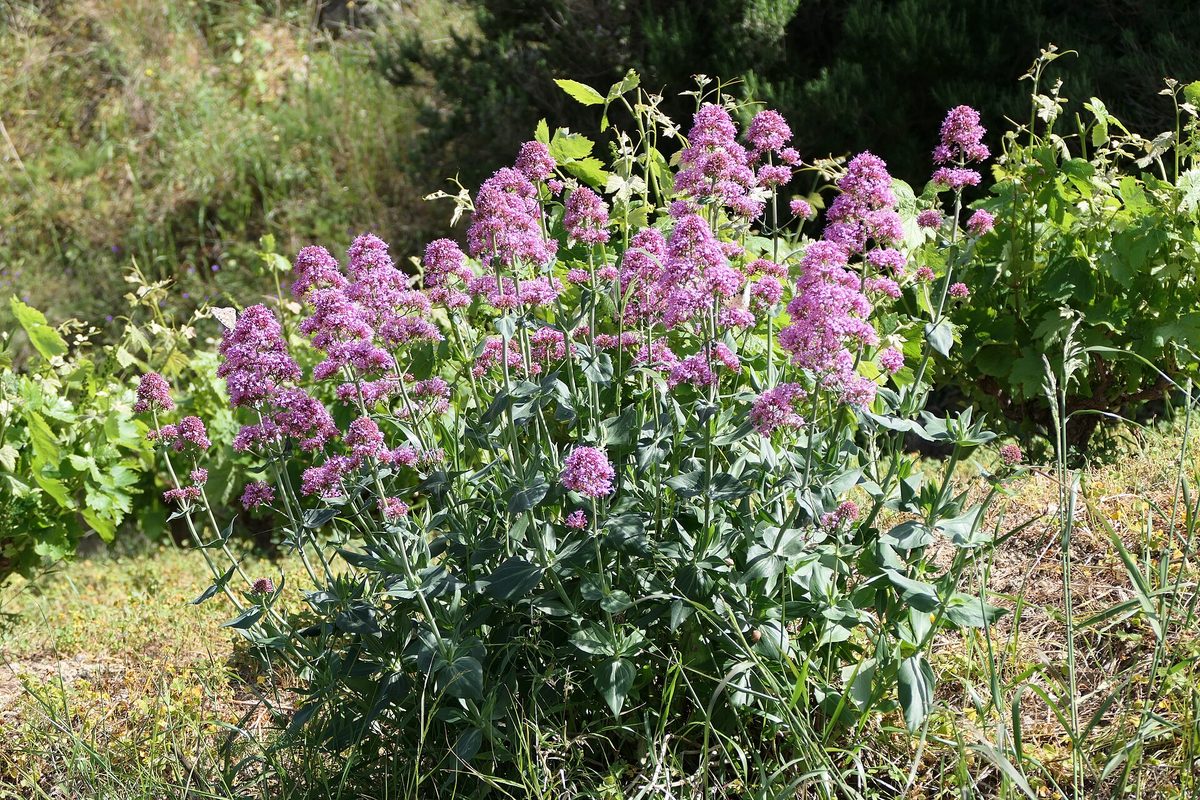
Photo: Petro Stelte, CC BY-SA 4.0 via Wikimedia Commons

Quick facts
| Light: | Full sun and part shade (full sun preferred)112 |
|---|---|
| Soil: | Well drained and occasionally dry; pH 6–811 source |
| Hardiness: | Zones 5a–8b112 |
| Size: | 2–4 ft (0.61–1.22 m) × 1–2 ft (0.3–0.61 m)11 source |
| Growth rate: | Moderate11 source |
| Bloom: | May–Oct, Yellow, pink, purple, red and white211 source |
| Cats: | Not documented by major sources |
| Dogs: | Not documented by major sources |
| Family: | Caprifoliaceae |
How much light does a Red Valerian need?
Give this plant full sun to part shade outdoors. Full sun, six or more hours of direct sunlight a day, is the exposure it prefers. Partial shade, with direct sun for only part of the day, two to six hours, is also listed as suitable if full sun is not available. Both exposures are listed as suitable for Valeriana rubra outdoors, with full sun the preferred of the two. This exposure guidance applies to Valeriana rubra planted outdoors.
Best soil for a Red Valerian
This plant needs soil with good drainage outdoors. It also tolerates soil that is occasionally dry. Its soil pH ranges from 6 to 8, which falls inside the neutral band. Anything above a pH of 8 would count as alkaline soil instead. Well-drained soil with a pH of 6 to 8 is the combination recorded for this plant. Soil that stays continuously wet can lead to crown rot in this plant. Good drainage and an occasionally dry soil are both listed as acceptable conditions for it. These soil conditions apply to Valeriana rubra planted outdoors. These details describe the soil Valeriana rubra needs outdoors.
Hardiness and temperature
Valeriana rubra is hardy outdoors in USDA hardiness zones 5a through 8b, the full range listed for it. Zone 5a marks the coldest end of that range, and zone 8b marks the warmest end. Outside zones 5a through 8b, this hardiness rating no longer applies. That zone range is the climate information on record for this plant. This range places it among plants suited to cold winters as well as mild ones. That is the only hardiness information recorded for this plant. The full list of zones where it is hardy runs 5a, 5b, 6a, 6b, 7a, 7b, 8a and 8b.
Pruning a Red Valerian
Deadhead this plant outdoors. Deadheading means removing the flowers after they fade. Doing this is necessary to prevent this plant from spreading, since it is classified as an invasive specimen. This is the only pruning method recorded for Valeriana rubra. Keeping up with deadheading is the main maintenance this plant needs outdoors.
- Pruning: Deadheading1
How to plant a Red Valerian
Plant Valeriana rubra outdoors in USDA zones 5a through 8b. Give it soil with good drainage and a pH between 6 and 8. At maturity, this plant spreads 1 to 2 ft (0.3-0.61 m) wide. It grows 2 to 4 ft (0.61-1.22 m) tall at maturity. Once planted, it grows at a moderate rate. From May through October, it opens yellow, pink, purple, red and white flowers. Zone 5a is the coldest zone on that list, and zone 8b is the warmest. These soil, size and zone details together describe planting this species outdoors. Its full hardiness list outdoors spans 5a, 5b, 6a, 6b, 7a, 7b, 8a and 8b.
Winter care
Winters outdoors are survivable for this plant within USDA zones 5a to 8b. Gardens colder than zone 5a fall outside the hardiness range listed for it. Zone 8b is the warmest zone where this hardy rating still applies. That zone range outdoors is the hardiness information available for winter care. This hardiness rating applies only to outdoor planting within that zone range. Winter survival outdoors depends on staying inside zones 5a through 8b. No minimum winter temperature is documented for this plant beyond that zone range. Those zones, listed individually, are 5a, 5b, 6a, 6b, 7a, 7b, 8a and 8b.
How to propagate a Red Valerian
You can propagate Valeriana rubra by division or from seed. Division is one recommended option, and growing new plants from seed is the other. Plants grown by division or from seed mature at 2 to 4 ft (0.61-1.22 m) tall and 1 to 2 ft (0.3-0.61 m) wide. These are the two methods recommended for this plant. Division and seed are listed as the full set of propagation strategies for this species. No other propagation method is recorded for Valeriana rubra. That makes two options for growing new plants outdoors.
- Propagation: Division and seed1
Common problems
Watch for aphids and mealy bugs as the main insect problems on this plant outdoors. Continuously wet soil can lead to crown rot. These are the pests and disease recorded for Valeriana rubra. No other pests or diseases are listed for this plant beyond these. Crown rot remains the disease risk tied to this plant's soil moisture.
| Problem | Kind |
|---|---|
| Aphids | Pest |
| Mealy bugs | Pest |
| Crown rot | Disease |
Is Red Valerian toxic to cats and dogs?
Recommended supplies
- Soil: a free-draining mix, and a pot with a drainage hole.
Questions and answers
- What light does Valeriana rubra need outdoors?
- It grows best in full sun to part shade, with full sun the preferred exposure. Full sun means six or more hours of direct sunlight, and part shade means two to six hours. Both exposures are listed as suitable outdoors. Full sun is the exposure it prefers between the two.
- How do you propagate Valeriana rubra?
- You can propagate this plant by division or from seed. These are the two methods recommended for Valeriana rubra. A plant grown this way reaches 2 to 4 ft (0.61-1.22 m) tall and 1 to 2 ft (0.3-0.61 m) wide at maturity. Division and seed are the only two methods recommended for it.
- Is Valeriana rubra hardy in cold winters?
- Yes, it is hardy outdoors in USDA zones 5a through 8b. Zone 5a is the coldest zone on that list, and zone 8b is the warmest. That range is the hardiness information recorded for this plant. This hardiness information is specific to Valeriana rubra outdoors.
Sources
- NC State Extension Gardener Plant Toolbox. https://plants.ces.ncsu.edu/plants/valeriana-rubra/. Accessed 16 November 2026.
- Chicago Botanic Garden. https://www.chicagobotanic.org/plant-information/plant-finder/centranthus-ruber-coccineus-scarlet-jupiters-beard. Accessed 16 November 2026.
How this page was made
- Written with AI assistance from the sources listed on this page. AI is never the source of a fact.