New York Aster (Symphyotrichum novi-belgii)
Formerly Aster novi-belgii, Aster longifolius, Aster laxifolius
New York aster prefers full sun and also grows in part shade. It needs well-drained soil and prefers moist conditions. Plants reach up to about 4 ft (1.22 m) tall. They flower in white, yellow, pink, purple and blue. Bloom season runs Jul–Oct. It is listed for USDA zones 4a to 8b. Toxicity to cats and dogs is not documented here.
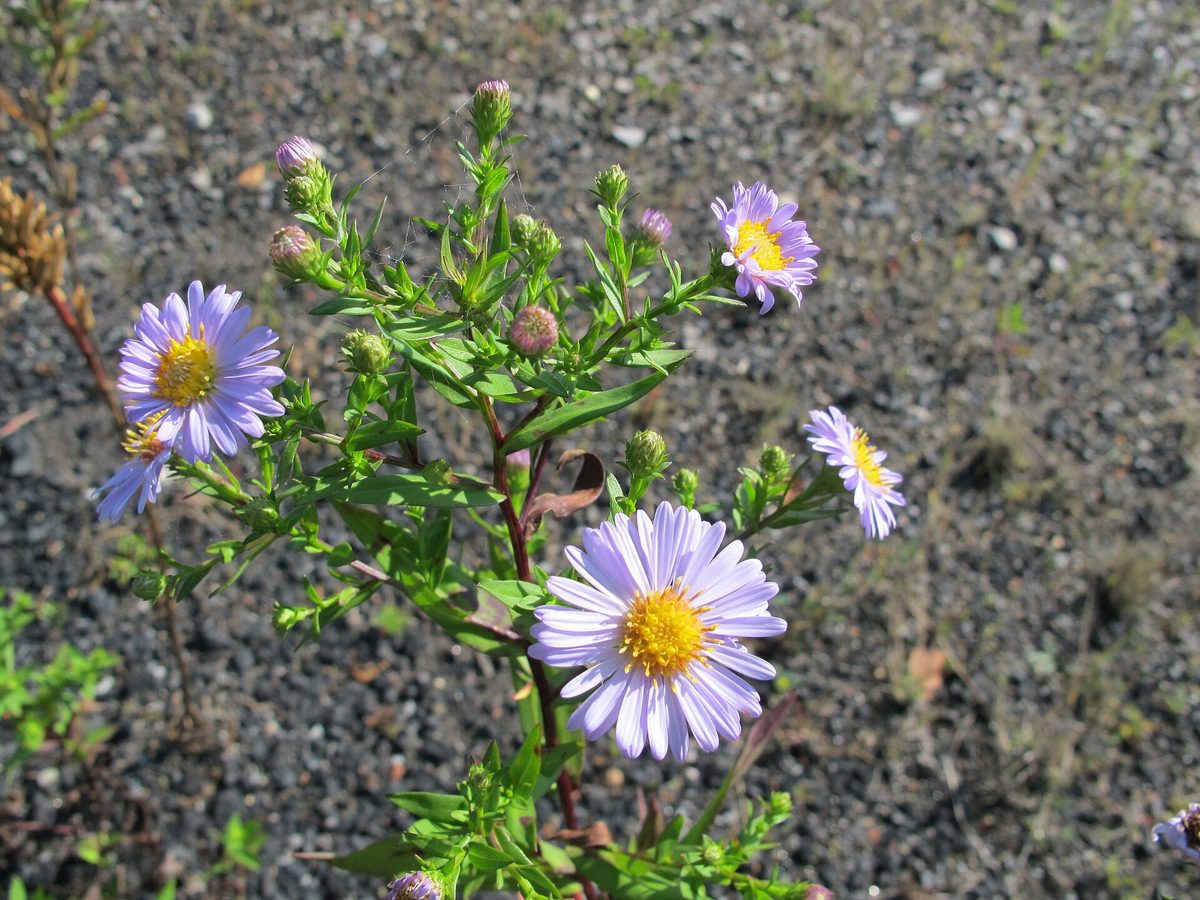
Photo: Hugues Tinguy, CC BY-SA 2.0 via Wikimedia Commons

Quick facts
| Light: | Full sun and part shade (full sun preferred)123 |
|---|---|
| Water: | Medium to wet2Not documented by major sources |
| Soil: | Well drained and moist14 |
| Hardiness: | Zones 4a–8b11 source |
| Size: | 4 ft (1.22 m) × 1–2 ft (0.3–0.61 m)611 source |
| Bloom: | Jul–Oct, White, yellow, pink, purple and blue611 source |
| Cats: | Not documented by major sources |
| Dogs: | Not documented by major sources |
| Family: | Asteraceae |
How much light does a New York Aster need?
New York aster prefers full sun and also grows in part shade. Full sun means 6 or more hours of direct sunlight a day. Part shade means direct sun for only part of the day, between 2 and 6 hours. A site with at least 2 hours of direct sun a day falls inside the part shade range. Many asters grow best in moist, well-drained soil with full sun, and that includes New York aster.
Best soil for a New York Aster
This plant requires well-drained soil. It prefers sandy, loamy and clay soils. Moist soil is also among its listed preferences. Many asters grow best in moist, well-drained soil, and New York aster is one of them. No cited source gives a soil pH range for this plant. In short, the documented soil needs are good drainage and moist conditions, on sandy, loamy or clay ground. Soil moisture and drainage are the two soil traits recorded for this species.
Hardiness and temperature
New York aster is listed for USDA zones 4a to 8b. That range covers zones 4, 5, 6, 7 and 8, each in both its a and b halves. Zone 4a is the coldest end of the listing and 8b is the warmest. Compare your own zone with that range before you choose a spot.
- Hardiness: Zones 4a–8b1
How to plant a New York Aster
Plant New York aster where your zone falls within 4a to 8b. It grows erect, up to about 4 ft (1.22 m) tall. Allow for a spread of 1 to 2 ft (0.3 to 0.61 m) when you set plants apart. Choose a site with full sun, meaning 6 or more hours of direct sun a day, and well-drained soil.
- Hardiness: Zones 4a–8b1
Winter care
New York aster is listed for USDA zones 4a to 8b. Zone 4a is the cold end of that range, and 8b is the warm end. If your zone falls inside 4a to 8b, the plant is within its listed range. If your zone is colder than 4a or warmer than 8b, it falls outside that range.
- Hardiness: Zones 4a–8b1
How to propagate a New York Aster
You can propagate New York aster by seed or by division. Division has a stated schedule: divide clumps every two or three years in spring. Seed is the other listed method. In other words, you can start new plants from seed or from an existing clump.
Common problems
The pests listed for this plant are aphids, spider mites, leafhoppers and whiteflies. The diseases listed are powdery mildew, aster yellows, rust and fusarium wilt. One source describes no serious insect or disease problems, but some susceptibility to powdery mildew. Spider mites are among the pests recorded for it.
| Problem | Kind |
|---|---|
| Aphids | Pest |
| Spider mites | Pest |
| Leafhoppers | Pest |
| Whiteflies | Pest |
| Powdery mildew | Disease |
| Aster yellows | Disease |
| Rust | Disease |
| Fusarium wilt | Disease |
Is New York Aster toxic to cats and dogs?
Recommended supplies
- Soil: a free-draining mix, and a pot with a drainage hole.
Questions and answers
- What light does New York aster need?
- It prefers full sun, which means 6 or more hours of direct sunlight a day. It also grows in part shade, where direct sun lasts only part of the day, between 2 and 6 hours.
- How tall does New York aster grow?
- It grows erect, up to about 4 ft (1.22 m) tall. Its spread is 1 to 2 ft (0.3 to 0.61 m). Leave room for that width when you plant.
- What colors are the flowers?
- The flowers come in white, yellow, pink, purple and blue. Bloom season runs Jul–Oct. The plant is up to about 4 ft (1.22 m) tall and grows erect.
Sources
- NC State Extension Gardener Plant Toolbox. https://plants.ces.ncsu.edu/plants/symphyotrichum-novi-belgii/. Accessed 25 October 2026.
- Penn State Extension. https://extension.psu.edu/native-plant-spotlights-for-wildlife-friendly-landscaping. Accessed 25 October 2026.
- Penn State Extension. https://extension.psu.edu/programs/master-gardener/counties/york/native-plants/fact-sheets/native-plants-for-sunny-moist-areas. Accessed 25 October 2026.
- University of Wisconsin-Madison Division of Extension (Wisconsin Horticulture). https://hort.extension.wisc.edu/articles/asters/. Accessed 25 October 2026.
- UC Statewide Integrated Pest Management Program. https://ipm.ucanr.edu/home-and-landscape/aster/. Accessed 25 October 2026.
- Lady Bird Johnson Wildflower Center (Native Plant Database). https://www.wildflower.org/plants/result.php?id_plant=syno3. Accessed 27 October 2026.
How this page was made
- Written with AI assistance from the sources listed on this page. AI is never the source of a fact.