Climbing Nightshade (Solanum dulcamara)
Formerly Dulcamara flexuosa, Solanum persicum, Lycopersicon dulcamara
Climbing nightshade grows in full sun, with part shade and full shade also listed, and it is rated for medium to wet water conditions. The ASPCA lists it as toxic to cats and toxic to dogs. Solanum dulcamara is a deciduous vine or scrambling shrub.
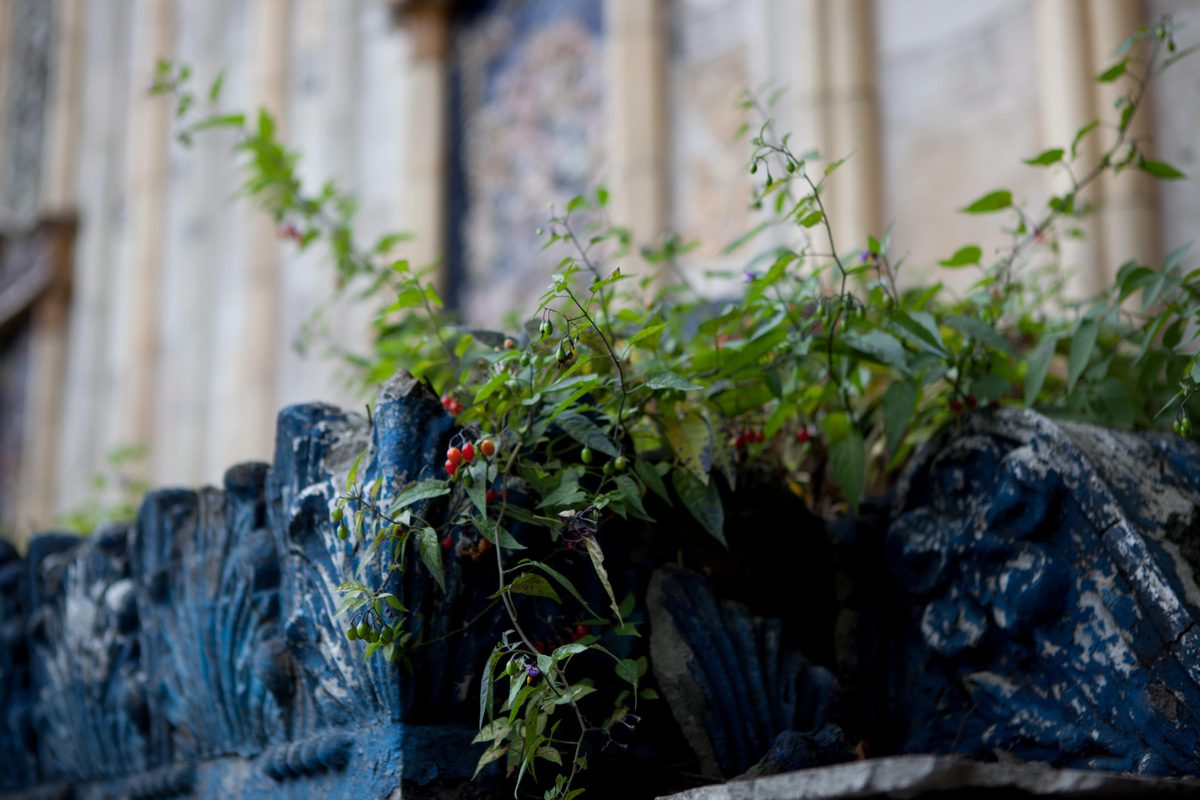
Photo: Gennady Grachev from Moscow, Russia, CC BY 2.0 via Wikimedia Commons

Quick facts
| Light: | Full sun, part shade and full shade (full sun preferred)11 source |
|---|---|
| Water: | Medium to wet21 source |
| Soil: | Well drained and moist11 source |
| Hardiness: | Zones 4a–8b11 source |
| Size: | 2–10 ft (0.61–3.05 m) × 2–8 ft (0.61–2.44 m)11 source |
| Growth rate: | Moderate11 source |
| Bloom: | Purple and white16 |
| Cats: | Toxic to cats (1 source) 5 |
| Dogs: | Toxic to dogs (1 source) 5 |
| Native range: | AFG, ALB, ALG, ALT, AMU, AUT, AZO, BAL, BGM, BLR, BLT, BRY, BUL, CHC, CHI, CHM, CHN, CHQ, CHS, CHT, CHX, COR, CTA, CZE, DEN, EAI, EHM, FIN, FRA, GER, GRB, GRC, HUN, IRE, IRK, IRN, IRQ, ITA, JAP, KAZ, KGZ, KHA, KRA, KRY, KUR, LBS, MON, MOR, MYA, NCS, NET, NNS, NOR, PAK, PAL, POL, POR, PRM, ROM, RUC, RUE, RUS, RUW, SAK, SAR, SIC, SPA, SWE, SWI, TCS, TKM, TUE, TUN, TUR, TVA, TZK, UKR, UZB, VIE, WHM, WSB, YAK, YUG7 |
| Family: | Solanaceae |
How much light does a Climbing Nightshade need?
Climbing nightshade does best in full sun, which the Plant Toolbox describes as six or more hours of direct sunlight a day. It is also listed for part shade and for full shade. Full sun is the preferred exposure of the three.
Choose a spot with six or more hours of direct sun if you can.
- Light: Full sun, part shade and full shade (full sun preferred)1
How often to water a Climbing Nightshade
Climbing nightshade is listed for medium to wet water conditions. The Ohio State University weed guide says it prefers rich soils in areas that tend to be moist or even waterlogged for a portion of the year.
No cited source gives a watering schedule, so check the condition of the soil rather than counting days. Drainage is listed as both well drained and moist.
- Water: Medium to wet2
Best soil for a Climbing Nightshade
The soil drainage listing for this plant includes both well drained and moist ground. The Plant Toolbox gives good drainage as its entry.
According to the Ohio State University weed guide, climbing nightshade prefers rich soils. Those are areas that tend to be moist or even waterlogged for a portion of the year. The same listing puts its water needs at medium to wet.
No cited source records a preferred soil pH, so this page gives no range.
- Soil drainage: Well drained and moist1
Hardiness and temperature
Climbing nightshade is listed for USDA hardiness zones 4a to 8b. Its leaf retention is deciduous. The Plant Toolbox calls it a perennial vine or scrambling shrub.
No cited source records a minimum temperature, so this page gives no figure in degrees. No cited source records a humidity preference either.
- Hardiness: Zones 4a–8b1
How to plant a Climbing Nightshade
Climbing nightshade is listed for USDA hardiness zones 4a to 8b. Allow for a mature spread of 2–8 ft (0.61–2.44 m). Mature height is listed as 2–10 ft (0.61–3.05 m).
Full sun is the preferred exposure for this plant. Its growth rate is listed as moderate. The flowers are purple and white. In the contiguous United States, its native status is listed as introduced.
- Hardiness: Zones 4a–8b1
Winter care
The hardiness range listed for climbing nightshade runs from zone 4a to zone 8b. Its leaf retention is deciduous. The Plant Toolbox describes it as a perennial vine or scrambling shrub.
No cited source records a minimum temperature, so this page gives no cold threshold in degrees. No cited source describes winter protection either.
- Hardiness: Zones 4a–8b1
How to propagate a Climbing Nightshade
Seed, stem cuttings, root cuttings and layering are the listed ways to propagate climbing nightshade. The Plant Toolbox names seed among them.
Cuttings can be taken from the stems or from the roots. Layering is also on the list of methods. This page gives no step-by-step method, because no cited source describes one.
- Propagation: Seed, stem cuttings, root cuttings and layering1
Common problems
Colorado potato beetle, whitefly and potato psyllid are the pests listed for this plant. Late blight is the disease listed.
Utah State University Extension says Phytophthora infestans survives on solanaceous weeds such as bittersweet nightshade. No cited source here describes symptoms or treatments for either problem.
| Problem | Kind |
|---|---|
| Colorado potato beetle | Pest |
| Whitefly | Pest |
| Potato psyllid | Pest |
| Late blight | Disease |
Is Climbing Nightshade toxic to cats and dogs?
The ASPCA lists climbing nightshade as toxic to cats. It lists the plant as toxic to dogs as well. Both entries come from the ASPCA Animal Poison Control Center.
For a cat, the listed position is toxic. For a dog, the listed position is also toxic. No cited source here records which parts are toxic or how severe the effects are. Cats and dogs are the only two animals this site covers for pet toxicity.
Pet-safe alternatives
Recommended supplies
- Soil: a free-draining mix, and a pot with a drainage hole.
Questions and answers
- Is climbing nightshade toxic to cats and dogs?
- The ASPCA lists it as toxic to cats and toxic to dogs. No cited source here gives the toxic parts or the severity.
- How much sun does climbing nightshade need?
- Full sun is preferred, which the Plant Toolbox describes as six or more hours of direct sunlight a day. It is also listed for part shade and full shade.
- Which USDA zones is climbing nightshade listed for?
- It is listed for USDA hardiness zones 4a to 8b. The plant is deciduous, and the Plant Toolbox calls it a perennial vine or scrambling shrub.
Sources
- NC State Extension Gardener Plant Toolbox. https://plants.ces.ncsu.edu/plants/solanum-dulcamara/. Accessed 23 September 2026.
- Ohio State University Extension (CFAES / Ohioline Weedguide). https://weedguide.cfaes.osu.edu/singlerecord.asp?id=82. Accessed 23 September 2026.
- EPPO Global Database. https://gd.eppo.int/taxon/SOLDU/pests. Accessed 23 September 2026.
- Utah State University Extension. https://extension.usu.edu/vegetableguide/tomato-pepper-eggplant/late-blight. Accessed 23 September 2026.
- ASPCA Animal Poison Control Center. https://www.aspca.org/pet-care/aspca-poison-control/toxic-and-non-toxic-plants/european-bittersweet. Accessed 23 September 2026.
- Utah State University Extension. https://extension.usu.edu/planthealth/ipm/ornamental-pest-guide/weeds/w_bittersweet-nightshade. Accessed 28 October 2026.
- Royal Botanic Gardens, Kew (World Checklist of Vascular Plants). https://sftp.kew.org/pub/data-repositories/WCVP/wcvp.zip. Accessed 4 June 2026.
How this page was made
- Written with AI assistance from the sources listed on this page. AI is never the source of a fact.