Highbush Blueberry (Vaccinium corymbosum)
Formerly Vaccinium sericeum, Polycodium sericeum, Vaccinium vicinum
Highbush blueberry is a deciduous shrub typically grown outdoors in full sun, though it also tolerates part shade. Water it deeply and often enough to keep the soil moist, but not saturated. It grows outdoors in USDA zones 3a through 8b.
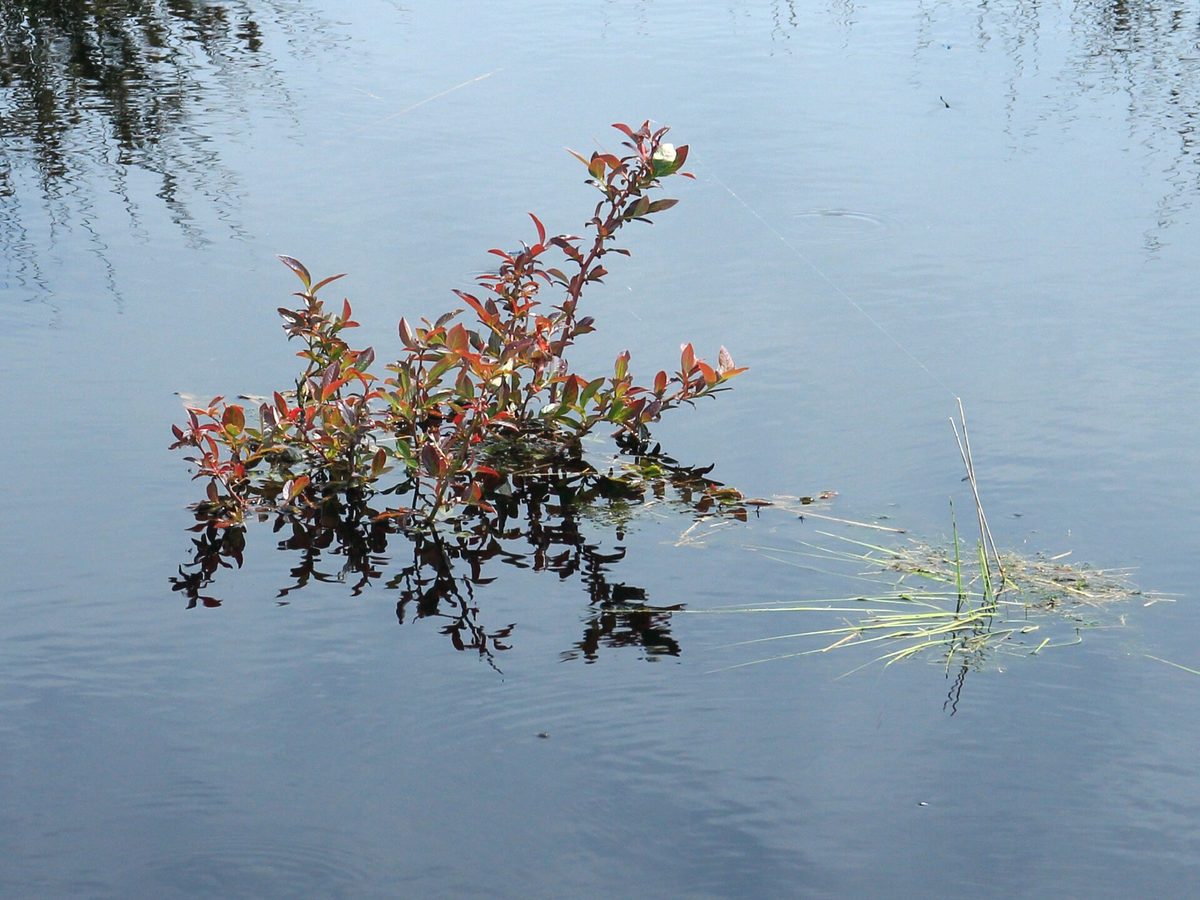
Photo: Dominicus Johannes Bergsma, CC BY-SA 3.0 via Wikimedia Commons

Quick facts
| Light: | Full sun and part shade (full sun preferred)1232 |
|---|---|
| Water: | Medium to wet41 source |
| Soil: | Well drained; pH 4–5.55326 |
| Hardiness: | Zones 3a–8b11 source |
| Size: | 6–12 ft (1.83–3.66 m) × 6–10 ft (1.83–3.05 m)11 source |
| Growth rate: | Moderate11 source |
| Bloom: | Mar–May, Pink and white11 source |
| Cats: | Not documented by major sources |
| Dogs: | Not documented by major sources |
| Family: | Ericaceae |
How much light does a Highbush Blueberry need?
Give this blueberry shrub full sun when grown outdoors, meaning at least six hours of direct sunlight each day. Part shade also works for it, though full sun is the better choice overall. Full sun exposure is described as the ideal outdoor condition for growing blueberries.
How often to water a Highbush Blueberry
Water this shrub so the soil stays in the medium to wet range. Water it both frequently and deeply, enough to keep the soil moist, but not saturated. That medium to wet range means avoiding soil that stays dry as well as soil that turns waterlogged.
- Water: Medium to wet4
Best soil for a Highbush Blueberry
Acidic, well-drained soil that is loose and high in organic matter is what this shrub needs. Keep the soil pH between 4.0 and 5.5. That same acidic soil is also described as loose and well-drained, with plenty of organic matter worked into it. A pH in that 4.0 to 5.5 band is what this shrub requires. Loose, well-drained soil with organic matter mixed in meets the drainage needs of this shrub.
Hardiness and temperature
USDA zones 3a through 8b together cover the full outdoor range where this shrub is rated as winter hardy outdoors. That full zone listing runs from 3a, 3b, 4a, and 4b, continuing through 5a, 5b, 6a, 6b, 7a, 7b, 8a, and finally 8b. That is twelve zone ratings in total.
- Hardiness: Zones 3a–8b1
Fertilizing a Highbush Blueberry
Feed an established plant once a year with a light application of an acid-producing fertilizer, such as ammonium sulfate. Apply it in March. An annual, light feeding like this is described as what benefits an already established plant. That single yearly application is timed for March.
- Fertilizer: Light, once a year (Mar)7
Pruning a Highbush Blueberry
A hard renewal method is the pruning type recorded for this shrub. Do this toward the end of the dormant season, usually sometime in March. That timing, at the close of dormancy, is when this hard pruning is best done. March marks that point in most years for this shrub.
- Pruning: Hard renewal pruning (Mar)8
How to plant a Highbush Blueberry
Within USDA zones 3a through 8b, you can plant this shrub outdoors. At full maturity, expect it to reach 6-12 ft (1.83-3.66 m) in height. Give it room to spread 6-10 ft (1.83-3.05 m) wide as it matures. This plant is classified as a shrub.
- Hardiness: Zones 3a–8b1
Winter care
In winter, this shrub survives outdoors within USDA zones 3a through 8b. Its hardiness rating covers 3a, 3b, 4a, 4b, 5a, 5b, 6a, 6b, 7a, 7b, 8a, and 8b. It is deciduous. The zone range for this shrub is written as 3a–8b. That is its full hardiness listing.
- Hardiness: Zones 3a–8b1
Care calendar
| Task | Jan | Feb | Mar | Apr | May | Jun | Jul | Aug | Sep | Oct | Nov | Dec |
|---|---|---|---|---|---|---|---|---|---|---|---|---|
| Fertilize | Fertilize in Mar | |||||||||||
| Prune | Prune in Mar | |||||||||||
| Bloom | Bloom in Mar | Bloom in Apr | Bloom in May |
How to propagate a Highbush Blueberry
You can propagate this shrub from stem cuttings. Hardwood cuttings are one way it is propagated. It is also described as most commonly propagated by softwood cuttings taken in spring. Both hardwood and softwood stem cuttings are named as methods for this shrub. Spring is the time given for taking the softwood type.
Common problems
Pests recorded for this shrub include spotted wing drosophila, citrus thrips, katydids, and blueberry maggot. Spotted wing drosophila attacks healthy fruit before harvest, and citrus thrips mainly affect blueberries in the San Joaquin Valley. Diseases recorded for it include exobasidium leaf spot, phomopsis twig blight, godronia canker, blueberry scorch virus, and blueberry rust. Also recorded are root rot, mummy berry, botrytis fruit rot, anthracnose, and stem blight.
| Problem | Kind |
|---|---|
| Spotted wing drosophila | Pest |
| Citrus thrips | Pest |
| Katydids | Pest |
| Blueberry maggot | Pest |
| Exobasidium leaf spot | Disease |
| Phomopsis twig blight | Disease |
| Godronia canker | Disease |
| Blueberry scorch virus | Disease |
| Blueberry rust | Disease |
| Root rot | Disease |
| Mummy berry | Disease |
| Botrytis fruit rot | Disease |
| Anthracnose | Disease |
| Stem blight | Disease |
Is Highbush Blueberry toxic to cats and dogs?
Recommended supplies
- Soil: a free-draining mix, and a pot with a drainage hole.
Questions and answers
- What light does this blueberry shrub need outdoors?
- Give it full sun outdoors, meaning at least six hours of direct sun a day. It also tolerates part shade, though full sun is the better choice for it.
- How often should you water this shrub?
- Water it enough to keep the soil in the medium to wet range. Keep it moist, but stop before the soil turns saturated.
- What pests and diseases affect this shrub?
- Recorded pests include spotted wing drosophila, citrus thrips, katydids, and blueberry maggot. Recorded diseases include exobasidium leaf spot, phomopsis twig blight, godronia canker, blueberry scorch virus, and blueberry rust. Root rot, mummy berry, botrytis fruit rot, anthracnose, and stem blight are also recorded.
Sources
- NC State Extension Gardener Plant Toolbox. https://plants.ces.ncsu.edu/plants/vaccinium-corymbosum/. Accessed 25 October 2026.
- Oregon State University Extension Service. https://extension.oregonstate.edu/catalog/ec-1304-growing-blueberries-your-home-garden. Accessed 25 October 2026.
- University of Minnesota Extension. https://extension.umn.edu/garden-and-home/yard-and-garden/gardening-in-minnesota/growing-blueberries-in-the-home-garden. Accessed 25 October 2026.
- University of Minnesota Extension. https://extension.umn.edu/fruit/growing-blueberries-home-garden. Accessed 25 October 2026.
- Clemson Cooperative Extension Home & Garden Information Center. https://hgic.clemson.edu/factsheet/blueberry/. Accessed 25 October 2026.
- University of Florida IFAS Extension (EDIS/Ask IFAS). https://ask.ifas.ufl.edu/publication/MG359. Accessed 25 October 2026.
- Iowa State University Extension and Outreach (Yard and Garden). https://yardandgarden.extension.iastate.edu/faq/should-blueberry-plants-be-fertilized. Accessed 27 October 2026.
- Penn State Extension. https://extension.psu.edu/pruning-blueberries-in-home-fruit-plantings. Accessed 25 October 2026.
- Iowa State University Extension and Outreach (Yard and Garden). https://yardandgarden.extension.iastate.edu/how-to/propagation-trees-shrubs-and-vines-hardwood-cuttings. Accessed 25 October 2026.
- Lady Bird Johnson Wildflower Center. https://www.wildflower.org/plants/result.php?id_plant=VACO. Accessed 25 October 2026.
- UC Statewide Integrated Pest Management Program. https://ipm.ucanr.edu/agriculture/blueberry/spotted-wing-drosophila/. Accessed 25 October 2026.
- UC Statewide Integrated Pest Management Program. https://ipm.ucanr.edu/agriculture/blueberry/citrus-thrips/. Accessed 25 October 2026.
- UC Statewide Integrated Pest Management Program. https://ipm.ucanr.edu/agriculture/blueberry/katydids/. Accessed 25 October 2026.
- University of Wisconsin-Madison Division of Extension (Wisconsin Horticulture). https://hort.extension.wisc.edu/articles/blueberry-maggot/. Accessed 25 October 2026.
- EPPO Global Database. https://gd.eppo.int/taxon/VACCO/pests. Accessed 25 October 2026.
How this page was made
- Written with AI assistance from the sources listed on this page. AI is never the source of a fact.