Bitter Dock (Rumex obtusifolius)
Formerly Rumex sylvestris, Rumex friesii, Rumex patens
Bitter dock, Rumex obtusifolius, is a herbaceous perennial that grows in medium to wet conditions. Poorly drained ground is part of its recorded range. The ASPCA lists it as toxic to cats and toxic to dogs. It reaches 1–4 ft (0.3–1.22 m) tall and bears flowers made of green sepals that turn brown.
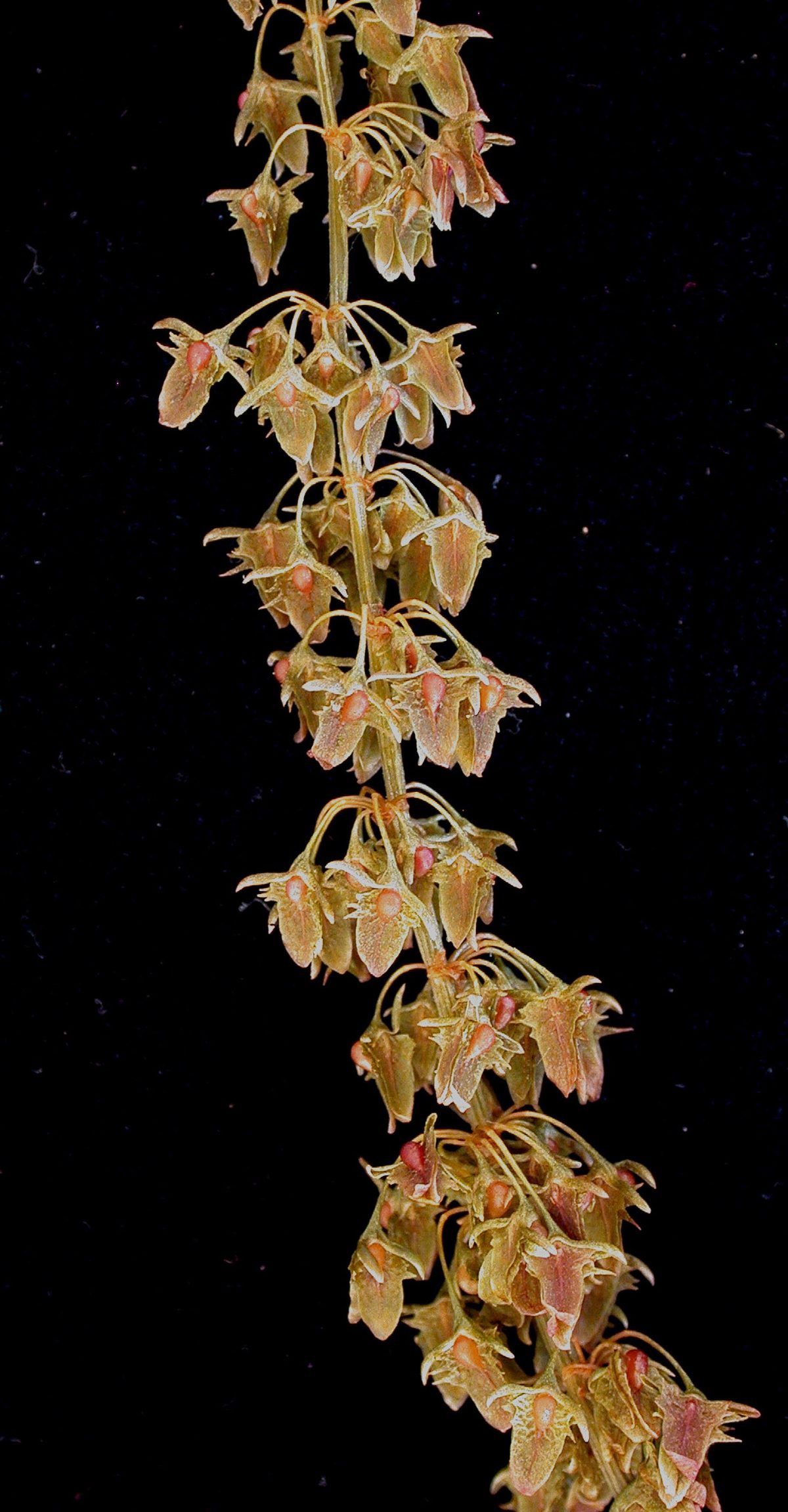
Photo: Wikimedia Commons contributor, CC BY-SA 4.0 via Wikimedia Commons

Quick facts
| Water: | Medium to wet11 source |
|---|---|
| Soil: | Poorly drained11 source |
| Size: | 1–4 ft (0.3–1.22 m)11 source |
| Bloom: | Green and brown11 source |
| Cats: | Toxic to cats (1 source) 2 |
| Dogs: | Toxic to dogs (1 source) 2 |
| Native range: | ALB, ALG, AUT, BAL, BGM, BLR, BLT, BUL, COR, CZE, DEN, FIN, FRA, GER, GRB, GRC, HUN, IRE, IRN, ITA, KRA, KRI, KRY, LBS, NCS, NET, NOR, PAL, POL, POR, ROM, RUC, RUE, RUN, RUS, RUW, SAR, SPA, SWE, SWI, TCS, TUE, TUN, TUR, UKR, WSB, YUG3 |
| Family: | Polygonaceae |
How often to water a Bitter Dock
The moisture range for this plant runs from medium to wet. The Ohio State weed guide says this weed is very commonly associated with moist situations. Medium is the drier end of what is recorded, and wet is the wettest end. Poorly drained ground is also part of its recorded soil conditions.
- Water: Medium to wet1
Best soil for a Bitter Dock
Poorly drained and nutrient rich soils are where the Ohio State weed guide places this plant. Its drainage record lists poorly drained ground and no other drainage class. The same guide says improved drainage has been suggested as an aid to managing this weed. Medium to wet moisture is the range recorded alongside this drainage class.
- Soil drainage: Poorly drained1
How to propagate a Bitter Dock
The propagation methods recorded for bitter dock are seed and root cuttings. The Ohio State weed guide says this weed reproduces primarily by seeds. The same guide describes limited regeneration from root tissues. Seed is the main method listed, and root cuttings come second. That is the full set of methods recorded for this plant.
- Propagation: Seed and root cuttings1
Is Bitter Dock toxic to cats and dogs?
The ASPCA lists bitter dock, Rumex obtusifolius, as toxic to cats in its plant listing. That same ASPCA listing marks the plant as toxic to dogs. The entry's wording is: Toxic to Dogs, Toxic to Cats, Toxic to Horses. The position for cats is toxic, and the position for dogs is toxic. Each animal has its own record, and both records carry the same value.
Pet-safe alternatives
Recommended supplies
- Soil: it tolerates heavy, slow-draining ground; no grit is needed.
Questions and answers
- Is bitter dock toxic to cats and dogs?
- The ASPCA lists bitter dock as toxic to cats. It also lists the plant as toxic to dogs. Both pets have the same recorded value, and each has its own entry in the listing.
- How tall does bitter dock grow?
- The Ohio State weed guide gives its height as 1 to 4 ft (0.3–1.22 m). Its stems are erect and sparsely branched. They arise solitary or in small groups from the root crown.
- What color are the flowers of bitter dock?
- The flowers are not showy. They are made up of small green sepals, with no petals, that turn brown at maturity. The recorded bloom colors are green and brown.
Sources
- Ohio State University Extension (CFAES Ohio Weedguide). https://weedguide.cfaes.osu.edu/singlerecord.asp?id=38. Accessed 14 October 2026.
- ASPCA. https://www.aspca.org/pet-care/aspca-poison-control/toxic-and-non-toxic-plants/dock. Accessed 14 October 2026.
- Royal Botanic Gardens, Kew (World Checklist of Vascular Plants). https://sftp.kew.org/pub/data-repositories/WCVP/wcvp.zip. Accessed 4 June 2026.
How this page was made
- Written with AI assistance from the sources listed on this page. AI is never the source of a fact.