Calamus (Acorus calamus)
Formerly Acorus casia, Acorus odoratus, Acorus belangeri
Calamus grows best in full sun, and part shade is also listed. Give it medium to wet soil. Its soil may be occasionally wet or poorly drained. Leaf scorch can occur when soil is not kept consistently moist. It is rated for hardiness zones 4a through 10b. Standing water in the bed is within what it grows in. Pet toxicity is not documented here.
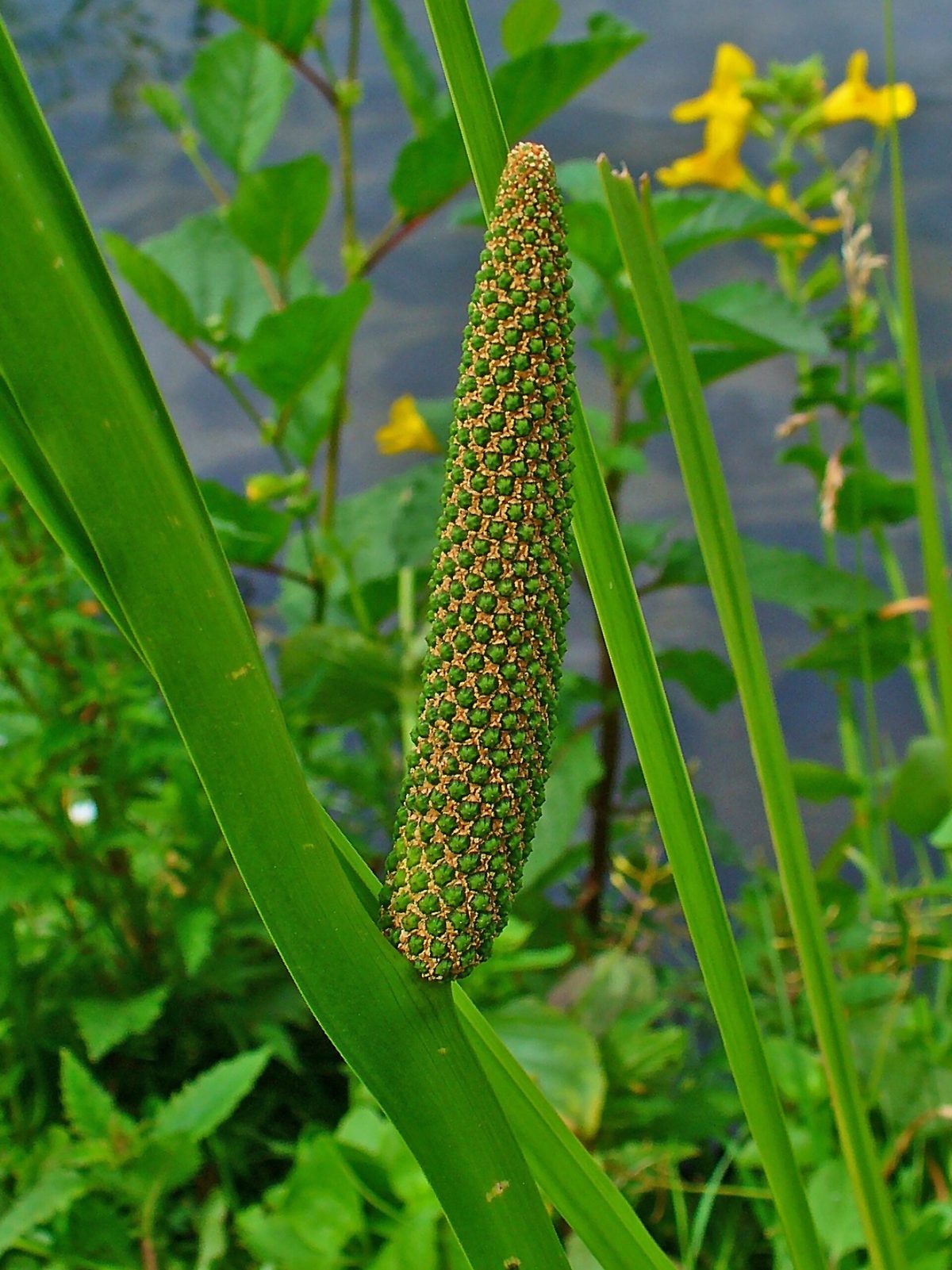
Photo: H. Zell, CC BY-SA 3.0 via Wikimedia Commons

Quick facts
| Light: | Full sun and part shade (full sun preferred)11 source |
|---|---|
| Water: | Medium to wet11 source |
| Soil: | Occasionally wet and poorly drained; pH 6–811 source |
| Hardiness: | Zones 4a–10b11 source |
| Size: | 2–2.5 ft (0.61–0.76 m) × 1.5–2 ft (0.46–0.61 m)11 source |
| Growth rate: | Moderate111 source |
| Bloom: | May–Jun and Jul–Aug, Green211 source |
| Cats: | Not documented by major sources |
| Dogs: | Not documented by major sources |
| Native range: | KAZ3 |
| Family: | Acoraceae |
How much light does a Calamus need?
Full sun, meaning 6 or more hours of direct sunlight a day, is the preferred light for calamus. It also grows in part shade. Part shade means direct sunlight for only part of the day, about 2 to 6 hours. A site with at least 2 hours of direct sun a day meets the minimum on file.
How often to water a Calamus
Calamus grows well in consistently moist garden soil. Water depth can reach 9 inches (23 cm) where the water is shallow and standing. The water range on file runs from medium to wet. Leaf scorch can occur if the soil is not kept consistently moist. Soil drainage ranges from occasionally wet to poorly drained.
- Water: Medium to wet1
Best soil for a Calamus
Calamus is listed for soils that are occasionally wet or poorly drained. Frequent standing water is among the conditions recorded for it. The listed soil pH is neutral, with a range of 6.0 to 8.0. Garden soil that stays consistently moist suits it, and so does shallow standing water up to 9 inches (23 cm) deep. Leaf scorch can occur when soil is not kept consistently moist.
Hardiness and temperature
Calamus is rated for USDA hardiness zones 4a through 10b. Zone 4a is the coldest zone on its list, and 10b is the warmest. Every half-zone between them is listed too, from 4b up to 10a. Those are 4a, 4b, 5a, 5b, 6a, 6b, 7a, 7b, 8a, 8b, 9a, 9b, 10a and 10b. Gardeners in zone 4 and warmer, up to zone 10, fall inside the listed range. The listing spans seven whole zones, 4 through 10. No cited source records a minimum temperature.
- Hardiness: Zones 4a–10b1
How to plant a Calamus
Plant calamus in zones 4a through 10b. Plan for a mature spread of 1.5 to 2 ft (0.46 to 0.61 m) for each plant. It reaches 2 to 2.5 ft (0.61 to 0.76 m) tall. Choose a spot with at least 2 hours of direct sun, though full sun is preferred. The site can be wet, including shallow standing water up to 9 inches (23 cm) deep. Neutral soil with a pH of 6 to 8 is listed.
- Hardiness: Zones 4a–10b1
Winter care
The hardiness listing for calamus runs from zone 4a to zone 10b. Zone 4a marks the cold edge of that listing. Zone 10b marks the warm edge. Each step in between, from 4a to 10b, is named in the range. The listing covers seven whole zones. Calamus is listed as a herbaceous perennial. No cited source records a minimum temperature or winter protection.
- Hardiness: Zones 4a–10b1
Common problems
Leaf beetles are the pest on record for calamus. It is the preferred host plant of a leaf beetle, Plateumaris shoemaker. Leaf scorch is the disease noted, and it can occur if soils are not kept consistently moist. The listing otherwise reports no serious problems.
| Problem | Kind |
|---|---|
| Leaf beetles | Pest |
| Leaf scorch | Disease |
Is Calamus toxic to cats and dogs?
Recommended supplies
- Soil: a mix that tolerates periods of wet soil.
Questions and answers
- Does calamus grow in shallow water?
- Calamus grows well in shallow standing water up to 9 inches (23 cm) deep. It also does well in consistently moist garden soil. Its soil drainage is listed as occasionally wet to poorly drained.
- How much sun does calamus need?
- Full sun is preferred, meaning 6 or more hours of direct sunlight a day. Part shade is also listed, with direct sun for part of the day, about 2 to 6 hours. Plan for at least 2 hours of direct sun a day.
- How tall does calamus get?
- Calamus reaches 2 to 2.5 ft (0.61 to 0.76 m) tall. Its mature spread is 1.5 to 2 ft (0.46 to 0.61 m). Its growth rate is listed as moderate.
Sources
- NC State Extension. https://plants.ces.ncsu.edu/plants/acorus-calamus/. Accessed 14 October 2026.
- Chicago Botanic Garden. https://www.chicagobotanic.org/plant-information/plant-finder/acorus-calamus-sweet-flag. Accessed 27 October 2026.
- Royal Botanic Gardens, Kew (World Checklist of Vascular Plants). https://sftp.kew.org/pub/data-repositories/WCVP/wcvp.zip. Accessed 4 June 2026.
How this page was made
- Written with AI assistance from the sources listed on this page. AI is never the source of a fact.