Rampion Bellflower (Campanula rapunculoides)
Formerly Cenekia rapunculoides, Drymocodon rapunculoides, Campanula azurea
Rampion bellflower is an herbaceous perennial. It grows 2 to 3 ft (0.61–0.91 m) tall. Its water rating is medium to wet. The soil drainage listed for it is moist. Its flowers are blue and purple. It is recorded as introduced in Alaska and the lower 48 states. Outdoor light needs and toxicity to cats and dogs are not documented here.
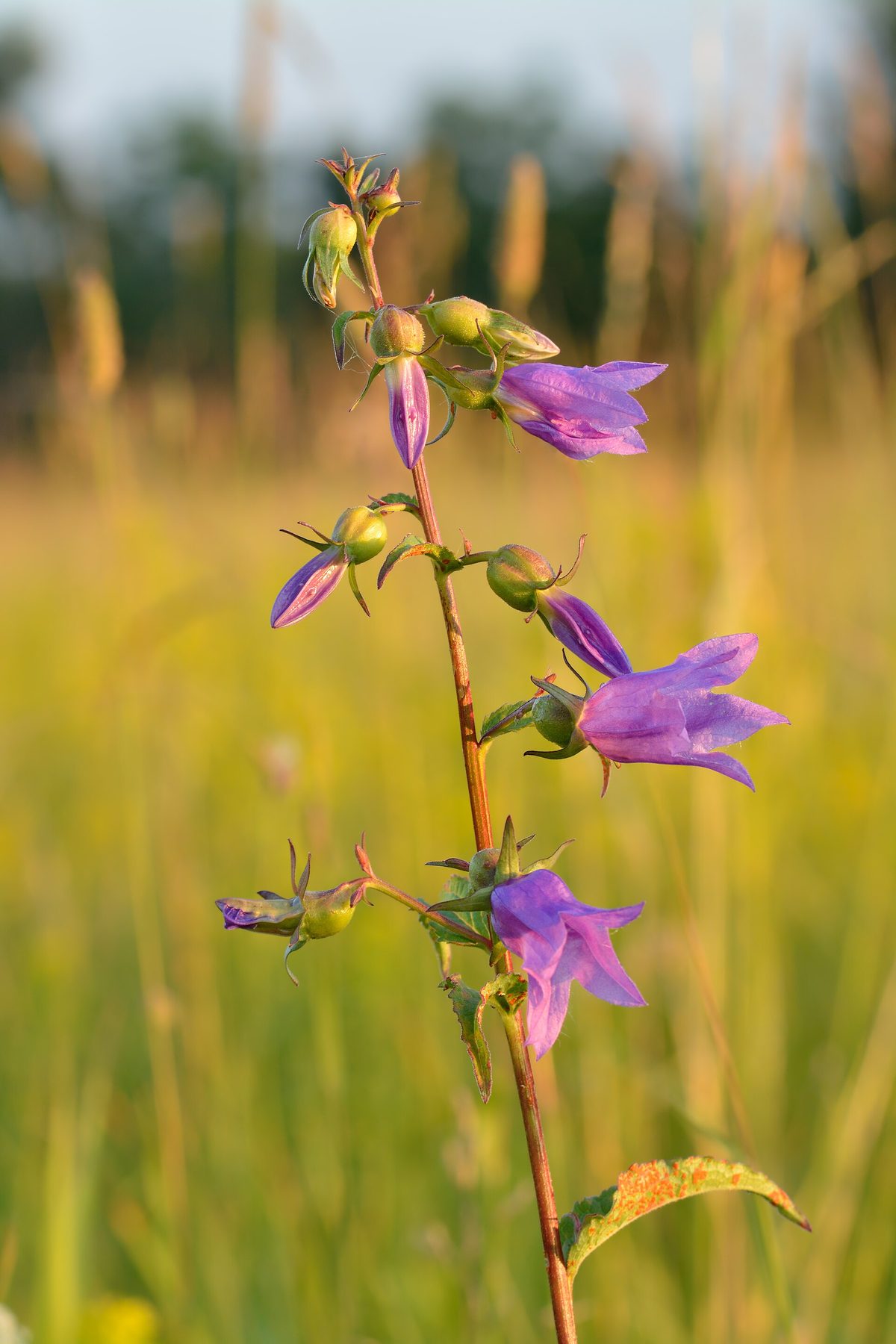
Photo: Ivar Leidus, CC BY-SA 3.0 via Wikimedia Commons

Quick facts
| Water: | Medium to wet11 source |
|---|---|
| Soil: | Moist21 source |
| Size: | 2–3 ft (0.61–0.91 m)21 source |
| Bloom: | May–Jun and Jul–Aug, Blue and purple42Not documented by major sources |
| Cats: | Not documented by major sources |
| Dogs: | Not documented by major sources |
| Native range: | ALB, ALT, AUT, BGM, BLR, BLT, BRY, BUL, CZE, DEN, FIN, FRA, GER, GRC, HUN, IRK, IRN, ITA, KAZ, KGZ, KRA, KRY, NCS, NET, NOR, POL, ROM, RUC, RUE, RUN, RUS, RUW, SPA, SWE, SWI, TCS, TUR, UKR, WSB, YUG5 |
| Family: | Campanulaceae |
How often to water a Rampion Bellflower
The recorded water need for rampion bellflower is medium to wet. Both the low end and the high end of that range are given as medium to wet. The source says the plant prefers to establish in moist garden sites. A watering schedule in days is not documented for this plant. The soil drainage record for the species reads moist. The record gives one band for water rather than separate wet and dry limits. Moist garden sites are the setting the source names for it.
- Water: Medium to wet1
Best soil for a Rampion Bellflower
Soil drainage for this species is recorded as moist. Moist is the only drainage class listed, with no dry class beside it. The source says it prefers to establish in moist garden sites. Soil pH is not documented for this plant. The matching water rating is medium to wet. Moist sites are where it prefers to establish. The drainage record has a single entry.
- Soil drainage: Moist2
How to propagate a Rampion Bellflower
Rampion bellflower is propagated by seed and by root cuttings. These are the two methods listed for the species. New plants can form from small root pieces in the soil. Blue-purple flowers grow up one side of the stalks. The stalks carry up to 15,000 seeds. Timing and technique for either method are not documented. Root cuttings are the method tied to small root pieces.
- Propagation: Seed and root cuttings1
Common problems
Two diseases are listed for this plant. One is tomato spotted wilt virus. The other is apple mosaic virus. The record names the first as Orthotospovirus tomatomaculae. Both listed problems are viruses. No pests are documented for this plant. The disease list has two entries.
- Common diseases: tomato spotted wilt virus and apple mosaic virus3
| Problem | Kind |
|---|---|
| Tomato spotted wilt virus | Disease |
| Apple mosaic virus | Disease |
Is Rampion Bellflower toxic to cats and dogs?
Recommended supplies
- Soil: a mix that holds moisture without staying wet.
Questions and answers
- How tall does rampion bellflower grow?
- It grows 2 to 3 ft (0.61–0.91 m) tall. The source says that at this height it outcompetes other species. It is an herbaceous perennial with blue-purple flowers.
- Where is rampion bellflower native?
- Its native range includes France, Germany, Italy, Poland and Sweden. In the United States it is recorded as introduced in both Alaska and the lower 48 states.
- Does rampion bellflower like moist soil?
- Its soil drainage is recorded as moist, and its water rating is medium to wet. The source says it prefers to establish in moist garden sites. New plants can also form from small root pieces in the soil.
Sources
- University of Minnesota Extension. https://extension.umn.edu/weeds/creeping-bellflower. Accessed 14 October 2026.
- University of Minnesota Extension. https://extension.umn.edu/garden-and-home/yard-and-garden/gardening-in-minnesota/yard-and-garden-problems/creeping-bellflower. Accessed 14 October 2026.
- EPPO Global Database. https://gd.eppo.int/taxon/CMPRA/pests. Accessed 14 October 2026.
- Chicago Botanic Garden. https://www.chicagobotanic.org/plant-information/plant-finder/campanula-rapunculoides-creeping-bellflower. Accessed 21 October 2026.
- Royal Botanic Gardens, Kew (World Checklist of Vascular Plants). https://sftp.kew.org/pub/data-repositories/WCVP/wcvp.zip. Accessed 4 June 2026.
How this page was made
- Written with AI assistance from the sources listed on this page. AI is never the source of a fact.