Dyer's Madder (Rubia tinctorum)
Formerly Galium rubia, Rubia sativa, Rubia iberica
Grow dyer's madder outdoors in full sun, though it tolerates part shade. It needs soil that is dry to medium in moisture. This vine grows 1.5 to 3 ft (0.46-0.91 m) tall and wide. It is hardy in USDA zones 5a through 9b. It blooms with small yellow flowers from June through August. It grows at a moderate rate. No cat or dog toxicity listing is documented here.
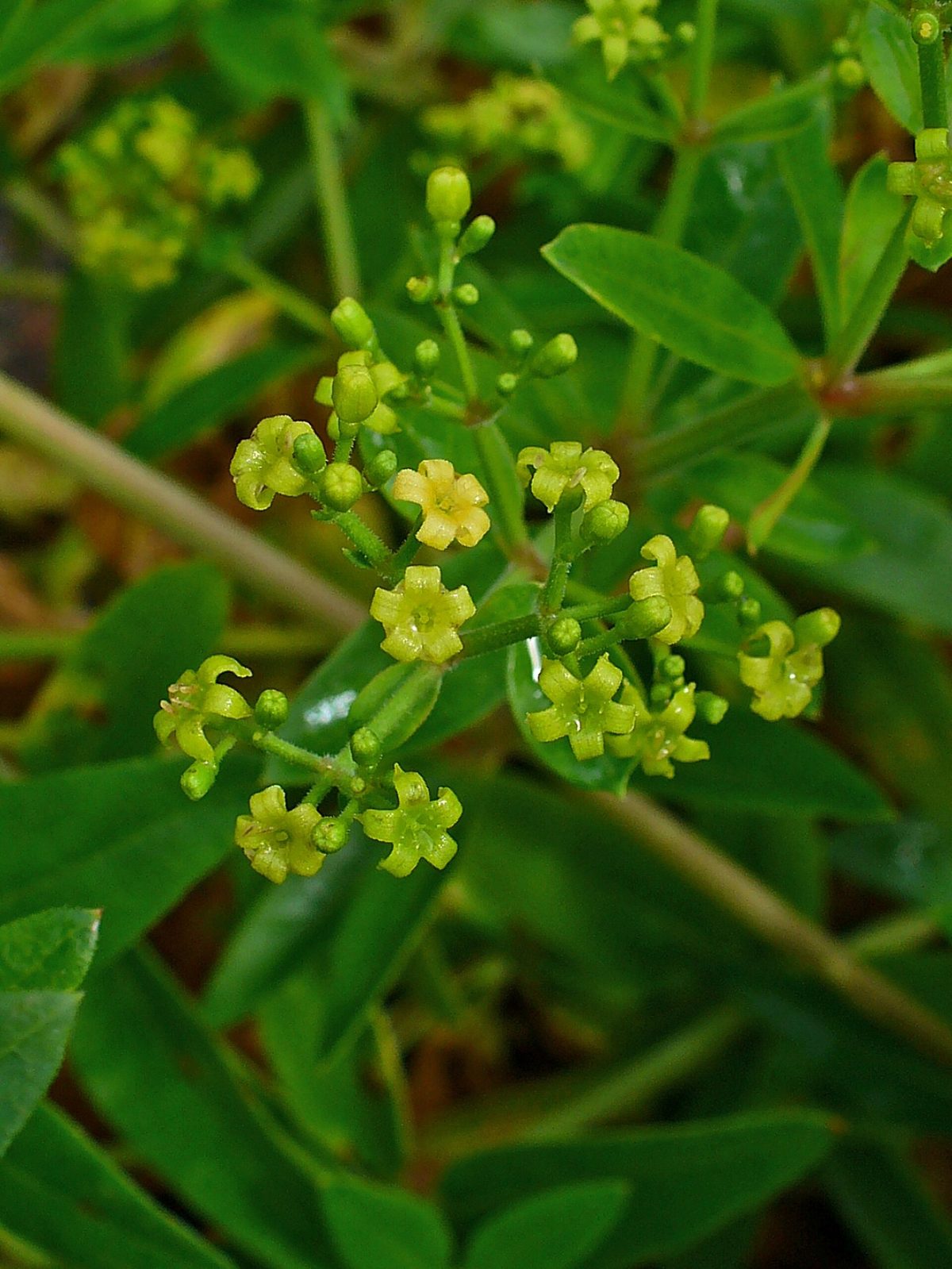
Photo: H. Zell, CC BY-SA 3.0 via Wikimedia Commons

Quick facts
| Light: | Full sun and part shade (full sun preferred)11 source |
|---|---|
| Water: | Dry to medium11 source |
| Soil: | Well drained; pH 6–811 source |
| Hardiness: | Zones 5a–9b11 source |
| Size: | 1.5–3 ft (0.46–0.91 m) × 1.5–3 ft (0.46–0.91 m)11 source |
| Growth rate: | Moderate11 source |
| Bloom: | Jun–Aug, Yellow11 source |
| Cats: | Not documented by major sources |
| Dogs: | Not documented by major sources |
| Family: | Rubiaceae |
How much light does a Dyer's Madder need?
Dyer's madder grows best outdoors in full sun, which means at least six hours of direct sunlight a day. It also tolerates part shade, so a spot with some shade for part of the day is still a workable choice outdoors. Full sun is the preferred exposure for this vine, while part shade is the next best option. Choose the sunniest spot available, and fall back to part shade only when full sun is not an option outdoors. This makes it adaptable to more than one spot in the yard outdoors.
- Light: Full sun and part shade (full sun preferred)1
How often to water a Dyer's Madder
Outdoors, give dyer's madder soil that stays within a dry to medium moisture range. That range comes from soil with good drainage rather than soil that holds standing water. A dry spell is within the range this vine tolerates outdoors. Medium moisture marks the wetter end of what this plant takes, and dry marks the drier end. Good drainage keeps the soil from sitting wetter than that medium point. Both ends of that moisture range suit this vine when grown outdoors in the ground.
- Water: Dry to medium1
Best soil for a Dyer's Madder
Choose a planting spot for dyer's madder with soil that has good drainage. That good drainage goes along with a moisture range of dry to medium, not standing water. Keep soil pH somewhere between 6 and 8, within the neutral range. A pH of 6 sits at the low end of that band, and a pH of 8 sits at the high end.
Hardiness and temperature
Outdoors in the ground year-round, dyer's madder is hardy throughout USDA hardiness zones 5a through 9b. That span reaches from the colder winters recorded near zone 5 to the much milder winters recorded near zone 9, covering a wide range of outdoor growing climates overall.
- Hardiness: Zones 5a–9b1
How to plant a Dyer's Madder
Plant dyer's madder outdoors in USDA hardiness zones 5a through 9b, where it can stay in the ground year-round. Space plants about 1.5 to 3 ft (0.46-0.91 m) apart to match its mature spread. Choose a planting site in full sun, since that is the preferred exposure outdoors, though part shade also works. Use soil with good drainage and a pH between 6 and 8.
- Hardiness: Zones 5a–9b1
Winter care
Dyer's madder is listed as hardy outdoors through winter within USDA zones 5a through 9b. That range includes both the colder conditions near zone 5 and the milder winters near zone 9, so outdoor winter survival depends on where in that span your garden falls.
- Hardiness: Zones 5a–9b1
How to propagate a Dyer's Madder
You can propagate dyer's madder from seed or by division. Division is the propagation method recommended for this vine. Growing it from seed is the other documented option for starting new plants. Either method works outdoors for establishing this moderate-growing vine in the garden. Both options are documented ways to start new plants of this species outdoors.
- Propagation: Seed and division1
Common problems
No significant insect pests have been documented for dyer's madder when it is grown outdoors. No significant diseases are documented for this vine outdoors either. No other notable plant problems are listed for this species outdoors beyond those two categories of concern.
Is Dyer's Madder toxic to cats and dogs?
Recommended supplies
- Soil: a free-draining mix, and a pot with a drainage hole.
Questions and answers
- What light does dyer's madder need outdoors?
- Dyer's madder grows best outdoors in full sun, meaning at least six hours of direct sun each day. It also tolerates part shade, so a partly shaded spot works as a second choice outdoors.
- Is dyer's madder hardy enough to survive outdoors in winter?
- Dyer's madder is listed as hardy outdoors in USDA zones 5a through 9b. That span runs from the colder parts of zone 5 to the milder parts of zone 9.
- Does dyer's madder have any serious pest or disease problems?
- No significant pests or diseases are documented for dyer's madder. No other notable plant problems are listed for it either.
Sources
- NC State Extension Gardener Plant Toolbox. https://plants.ces.ncsu.edu/plants/rubia-tinctorum/. Accessed 15 November 2026.
How this page was made
- Written with AI assistance from the sources listed on this page. AI is never the source of a fact.