Monkeypuzzle Tree (Araucaria araucana)
Formerly Columbea imbricata, Araucaria imbricata, Abies araucana
Keep this tree's soil watered in the medium to medium-wet range. It thrives with full sun and well-drained soil. This tree grows at a moderate rate. It survives outdoors in USDA zones 7a through 10b. Good drainage also matters for this species. Seed is the documented way to grow new plants. Outdoor light needs and the toxicity position for cats and dogs are not documented for this page.
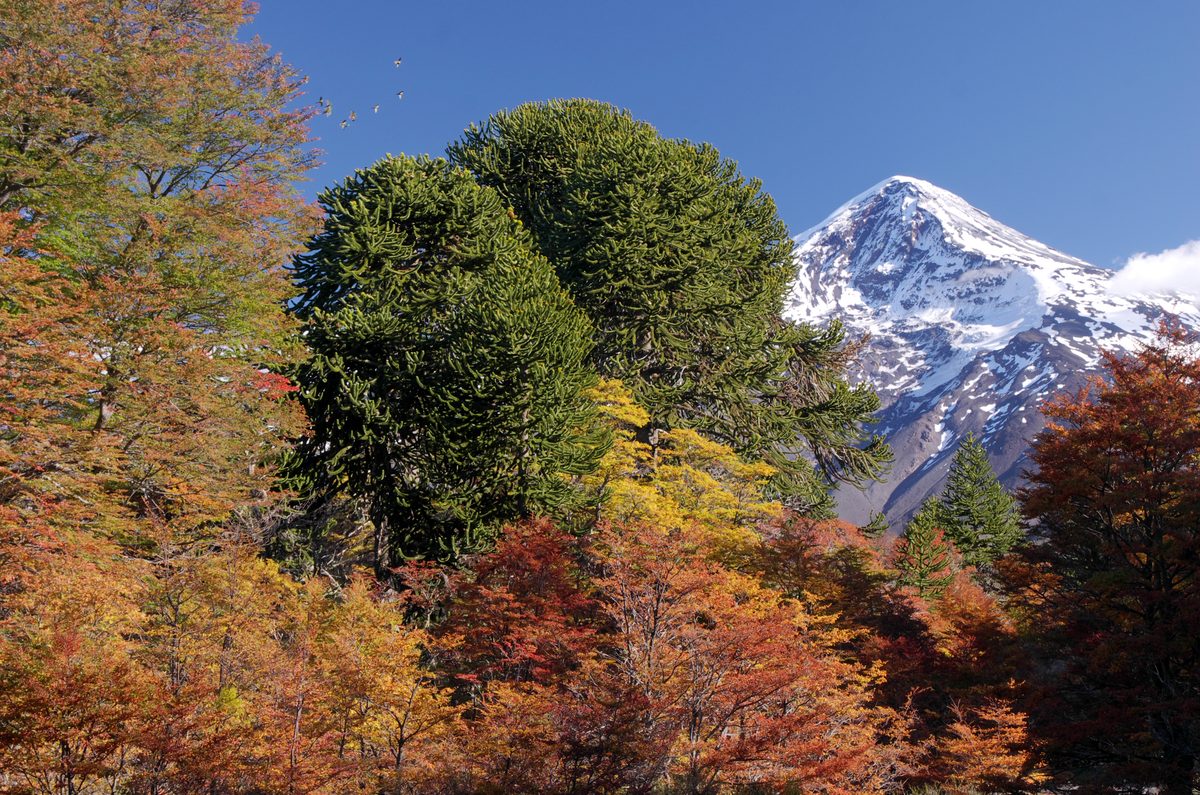
Photo: Leonardo Sandon, CC BY-SA 4.0 via Wikimedia Commons

Quick facts
| Water: | Medium to wet11 source |
|---|---|
| Soil: | Well drained and moist11 source |
| Hardiness: | Zones 7a–10b11 source |
| Size: | 60–70 ft (18.29–21.34 m) × 30–35 ft (9.14–10.67 m)11 source |
| Growth rate: | Moderate11 source |
| Bloom: | , 11 source |
| Cats: | Not documented by major sources |
| Dogs: | Not documented by major sources |
| Native range: | AGS, CLC, CLS3 |
| Family: | Araucariaceae |
How often to water a Monkeypuzzle Tree
Soil moisture should sit between medium and medium-wet for this species. The species thrives best with full sun, well-drained soil, and frequent watering together. Good drainage keeps water from sitting around the roots. Keep the soil moist as well, not fully dry between waterings. Root rot is one of the diseases documented for this species. This tree's growth rate outdoors is moderate. You can grow it outdoors in USDA zones 7a to 10b. Mature trees reach 60 to 70 feet tall (18-21 m) and spread 30 to 35 feet wide (9-11 m). Leaf spot, phytophthora, root rot, and sooty mold are documented diseases for this species.
- Water: Medium to wet1
Best soil for a Monkeypuzzle Tree
This tree needs soil with good drainage. The soil should stay moist, not dry and not waterlogged. Soil pH preferences are not documented for this species. It thrives best with full sun, well-drained soil, and frequent watering together. Root rot is one of the diseases documented for this species. This tree has a moderate growth rate outdoors. Mature trees reach 60 to 70 feet tall (18-21 m) and spread 30 to 35 feet wide (9-11 m). Pair that soil with watering in the medium to medium-wet range. You can grow this tree outdoors in USDA zones 7a through 10b.
- Soil drainage: Well drained and moist1
Hardiness and temperature
This tree grows outdoors in USDA zones 7a through 10b. An exact minimum temperature is not documented for this species. Cultivated specimens typically reach 60 to 70 feet tall (18-21 m) and 30 to 35 feet wide (9-11 m). It also needs full sun, well-drained soil, and frequent watering to grow well. Its growth rate outdoors is moderate. Seed is the method documented for propagating this species. Good drainage and even moisture round out the growing conditions for this tree. Pests documented for this species include scales, mealybugs, and cottony cushion scale. Diseases documented include leaf spot, phytophthora, root rot, and sooty mold.
- Hardiness: Zones 7a–10b1
How to plant a Monkeypuzzle Tree
Plant it outdoors only where winters stay within USDA zones 7a to 10b. Mature trees reach 60 to 70 feet tall (18-21 m) and spread 30 to 35 feet wide (9-11 m). Plant it in soil with good drainage that also stays moist. It thrives best with full sun, well-drained soil, and frequent watering after planting. Seed is the documented way to start new plants of this species. Once planted, watch for scales, mealybugs, and cottony cushion scale. Also watch for leaf spot, phytophthora, root rot, and sooty mold. Growth after planting is moderate, not fast. An exact minimum winter temperature is not documented for this species. Good drainage and steady soil moisture also help it settle in. This species is classified as a tree.
- Hardiness: Zones 7a–10b1
Winter care
Winter hardiness for this tree spans USDA zones 7a to 10b. No cited source gives an exact minimum temperature for this species. Keep soil moisture in the medium to medium-wet range through the colder months. Good drainage still matters in winter, since the soil should stay moist, not waterlogged. Growth continues at a moderate rate once the tree is established outdoors. Diseases documented for this species include leaf spot, phytophthora, root rot, and sooty mold. Pests documented for it include scales, mealybugs, and cottony cushion scale. Seed remains the documented method for growing new plants of this species.
- Hardiness: Zones 7a–10b1
How to propagate a Monkeypuzzle Tree
Growing this tree from seed is the method documented for this species. Once established, it grows at a moderate rate. You can grow it outdoors in USDA zones 7a to 10b. Give seedlings full sun, well-drained soil, and frequent watering as they grow. Cultivated trees eventually reach 60 to 70 feet tall (18-21 m) and spread 30 to 35 feet wide (9-11 m). Watch young plants for scales, mealybugs, and cottony cushion scale. Good drainage and even moisture also help seedlings establish.
- Propagation: Seed1
Common problems
This tree can attract scales, mealybugs, and cottony cushion scale. It also has some susceptibility to leaf spot, phytophthora, root rot, and sooty mold. It thrives best with full sun, well-drained soil, and frequent watering. Growth outdoors is moderate for this tree. You can grow it outdoors in USDA zones 7a through 10b. Good drainage and moisture round out its care. Seed is the documented way to start new plants.
| Problem | Kind |
|---|---|
| Scales | Pest |
| Mealybugs | Pest |
| Cottony cushion scale | Pest |
| Leaf spot | Disease |
| Phytophthora | Disease |
| Root rot | Disease |
| Sooty mold | Disease |
Is Monkeypuzzle Tree toxic to cats and dogs?
Recommended supplies
- Soil: a free-draining mix, and a pot with a drainage hole.
Questions and answers
- Does the ASPCA list monkey puzzle tree as toxic to cats or dogs?
- The toxicity position for cats and for dogs is not documented on this page, so contact your vet or a pet poison line if your pet eats part of this plant. This tree is documented as a non-flowering species.
- How much water does monkeypuzzle tree need?
- This tree does best with soil watered in the medium to medium-wet range. It thrives with full sun, well-drained soil, and frequent watering. You can grow it outdoors in USDA zones 7a to 10b. Good drainage also matters alongside that watering range.
- What pests and diseases affect monkeypuzzle tree?
- Documented pests include scales, mealybugs, and cottony cushion scale. Documented diseases include leaf spot, phytophthora, root rot, and sooty mold. Growth stays moderate when the tree is healthy. You can grow this tree outdoors in USDA zones 7a to 10b as well.
Sources
- NC State Extension Gardener Plant Toolbox. https://plants.ces.ncsu.edu/plants/araucaria-araucana/. Accessed 12 October 2026.
- UC Statewide Integrated Pest Management Program. https://ipm.ucanr.edu/home-and-landscape/araucaria/. Accessed 24 September 2026.
- Royal Botanic Gardens, Kew (World Checklist of Vascular Plants). https://sftp.kew.org/pub/data-repositories/WCVP/wcvp.zip. Accessed 4 June 2026.
How this page was made
- Written with AI assistance from the sources listed on this page. AI is never the source of a fact.