Spanish Lime (Melicoccus bijugatus)
Formerly Melicocca bijuga, Melicoccus carpoodea, Stadtmannia bijugata
Spanish lime (Melicoccus bijugatus) is a tree. Outdoors, it grows best in full sun. It wants well-drained soil. It tolerates prolonged drought but not flooding. Mature trees may be damaged or killed at 27 to 28 °F (-2.8 to -2.2 °C). Fertilize lightly, once or twice a year. Indoor light needs and pet toxicity are not documented for this page.
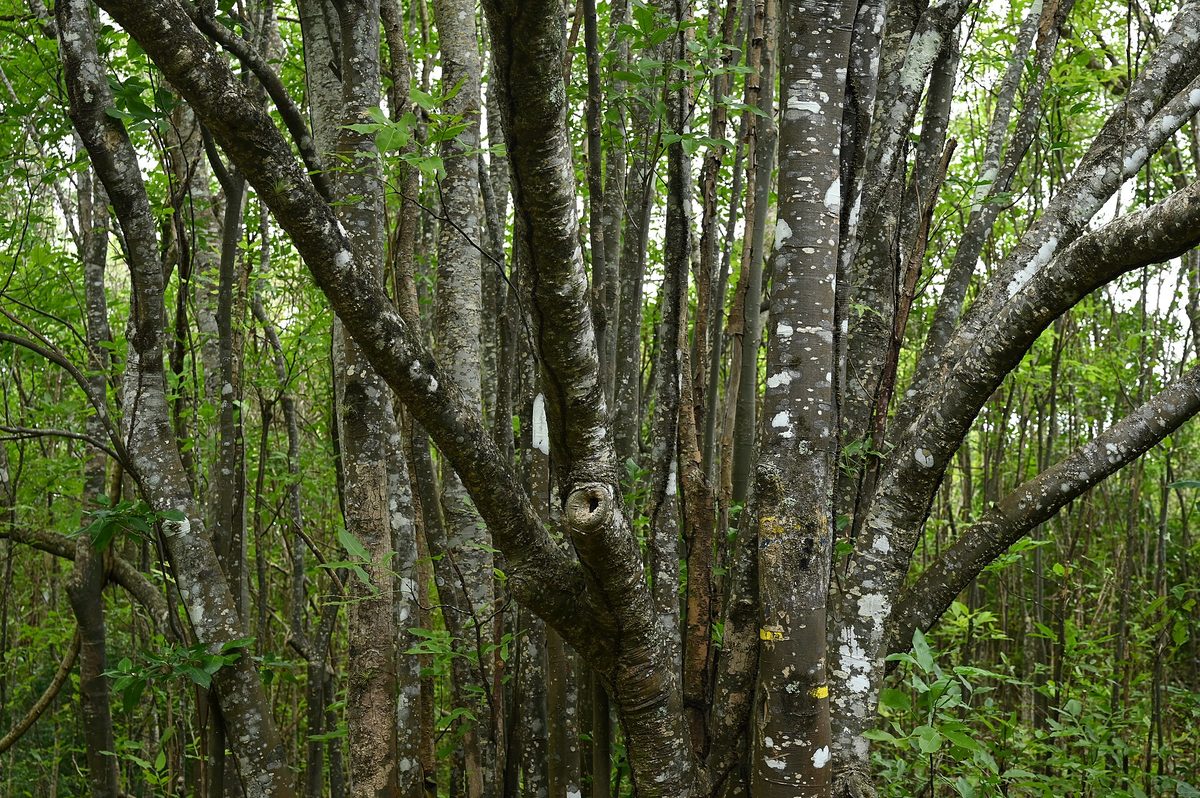
Photo: Krzysztof Ziarnek, Kenraiz, CC BY-SA 4.0 via Wikimedia Commons

Quick facts
| Water: | Dry to medium11 source |
|---|---|
| Soil: | Well drained21 source |
| Minimum temperature: | 26.6 °F (-3 °C)21 source |
| Size: | 85.3 ft (26 m)21 source |
| Bloom: | White1Not documented by major sources |
| Cats: | Not documented by major sources |
| Dogs: | Not documented by major sources |
| Native range: | CLM, VEN4 |
| Family: | Sapindaceae |
How often to water a Spanish Lime
Spanish lime tolerates prolonged drought. It does not tolerate flooding. The recorded water range runs from dry to medium. Mamoncillo trees are well adapted to a wide range of well-drained soils. Avoid planting where water floods, because the trees are intolerant of it. Full sun is the recorded outdoor light for the tree.
- Water: Dry to medium1
Best soil for a Spanish Lime
Well-drained soil is the recorded drainage class for Spanish lime. The trees appear well adapted to a wide range of such soils. Their recorded water range is dry to medium. Flooded ground is the condition they do not tolerate. Prolonged drought is tolerated. Full sun is the outdoor light listed for planting.
- Soil drainage: Well drained2
Temperature and humidity
Mature trees may be damaged or killed by temperatures of 27 to 28 °F (-2.8 to -2.2 °C). The recorded minimum temperature is 26.6 °F (-3 °C). In the United States, the tree is recorded as introduced in the lower 48 states and in Puerto Rico. Its native range is recorded as CLM and VEN. Full sun is the recorded outdoor light, and well-drained soil is the recorded drainage.
- Minimum temperature: 26.6 °F (-3 °C)2
Fertilizing a Spanish Lime
Fertilizer frequency for Spanish lime is recorded as light, once a year. Apply granular fertilizer one to two times per year. Granular is the only fertilizer form named in the recorded guidance. That puts the range at one or two feedings a year.
- Fertilizer: Light, once a year1
Pruning a Spanish Lime
Prune selectively after harvest to limit tree size. The recorded pruning types are light shaping and removal of dead growth only. Spanish lime is a tree. Mature trees reach up to 85 ft (26 m) with a round or oval canopy.
- Pruning: Light shaping and Remove dead growth only1
How to propagate a Spanish Lime
Spanish lime is propagated by seed, layering and grafting. Trees may be vegetatively propagated by marcottage. Marcottage is the one vegetative method the guidance names. Mamoncillo trees should be planted in full sun for best growth and fruit production. Well-drained soils suit the trees. Avoid planting where water floods, since the trees are intolerant of flooding.
- Propagation: Seed, layering and grafting1
Common problems
Recorded pests for Spanish lime include aleurocanthus woglumi, euwallacea fornicatus, gymnandrosoma aurantianum, icerya purchasi and spodoptera frugiperda. Five pest species are recorded. Each is listed by its scientific name only. The list names five species and no others. They are named here as recorded and are not ranked by how common or harmful they are.
| Problem | Kind |
|---|---|
| Aleurocanthus woglumi | Pest |
| Euwallacea fornicatus | Pest |
| Gymnandrosoma aurantianum | Pest |
| Icerya purchasi | Pest |
| Spodoptera frugiperda | Pest |
| Root rot | Disease |
| Leaf spot | Disease |
| Algal leaf spot | Disease |
Is Spanish Lime toxic to cats and dogs?
Recommended supplies
- Soil: a free-draining mix, and a pot with a drainage hole.
Questions and answers
- How tall does Spanish lime grow?
- Mature trees can reach up to 85 ft (26 m) with a round or oval canopy. Spanish lime is recorded as a tree. Pruning after harvest is recorded as a way to limit tree size. The recorded pruning types are light shaping and removing dead growth only.
- Can Spanish lime handle drought or wet soil?
- The trees tolerate prolonged drought but not flooding. The recorded water range is dry to medium. Well-drained soils suit the trees. They are adapted to a wide range of well-drained soils. Full sun is recorded for planting outdoors.
- What temperatures damage Spanish lime?
- Mature trees may be damaged or killed at 27 to 28 °F (-2.8 to -2.2 °C). The recorded minimum is 26.6 °F (-3 °C). Plant it in full sun outdoors for best growth and fruit production. Its native range is recorded as CLM and VEN.
Sources
- University of Florida IFAS Extension (EDIS). https://ask.ifas.ufl.edu/hs310. Accessed 15 October 2026.
- University of Florida IFAS Extension (EDIS). https://ask.ifas.ufl.edu/publication/HS310. Accessed 14 October 2026.
- EPPO Global Database. https://gd.eppo.int/taxon/MLCBI/pests. Accessed 14 October 2026.
- Royal Botanic Gardens, Kew (World Checklist of Vascular Plants). https://sftp.kew.org/pub/data-repositories/WCVP/wcvp.zip. Accessed 4 June 2026.
How this page was made
- Written with AI assistance from the sources listed on this page. AI is never the source of a fact.