Southern Magnolia (Magnolia grandiflora)
Formerly Magnolia foetida, Magnolia glabra, Magnolia maxima
Keep southern magnolia in full sun, though part shade is also accepted, and give it soil that is medium to wet, noting that toxicity to cats and dogs is not documented for this plant. It is an evergreen tree that is rated for USDA zones 7a to 10a.
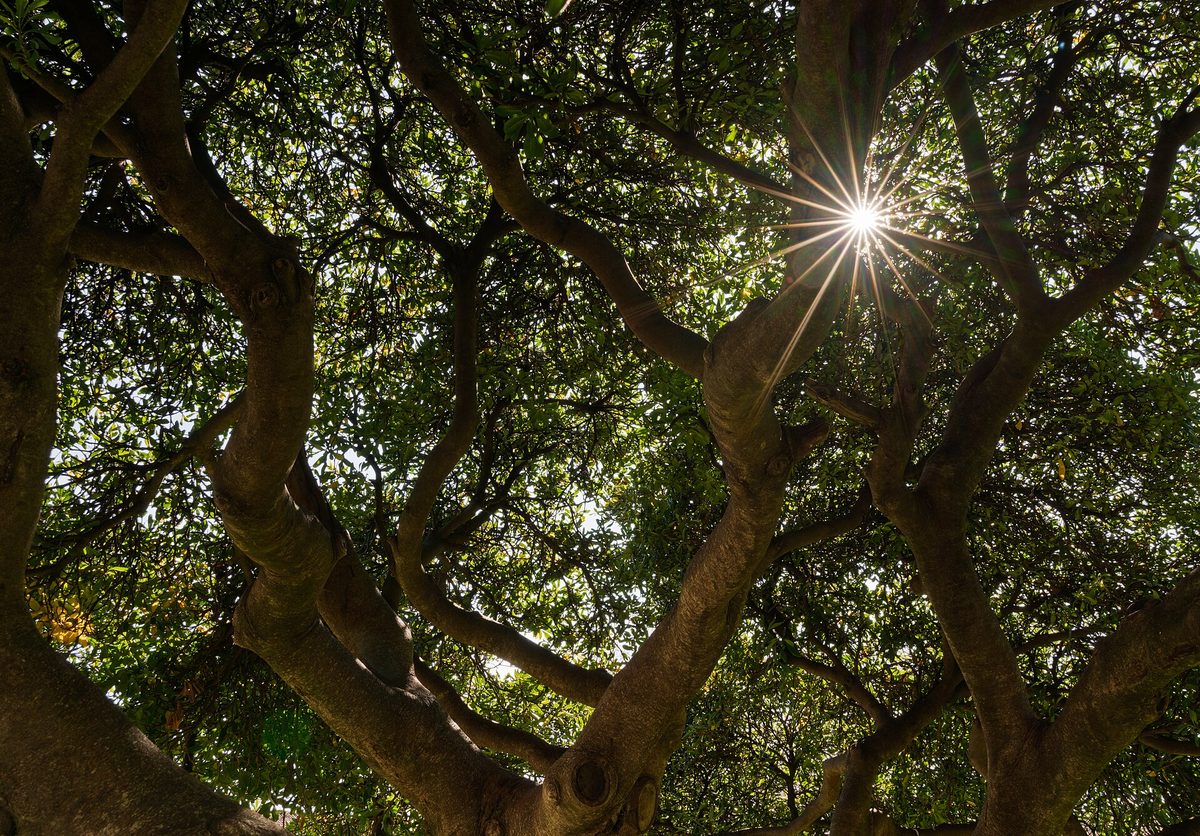
Photo: Jules Verne Times Two, CC BY-SA 4.0 via Wikimedia Commons

Quick facts
| Light: | Full sun and part shade (full sun preferred)123 |
|---|---|
| Water: | Medium to wet14 |
| Soil: | Well drained, moist and occasionally wet; pH 5.5–6.5125 |
| Hardiness: | Zones 7a–10a21 source |
| Size: | 60–90 ft (18.29–27.43 m) × 30–50 ft (9.14–15.24 m)217 |
| Growth rate: | Moderate2127 |
| Bloom: | May–Jun, White131 source |
| Cats: | Not documented by major sources |
| Dogs: | Not documented by major sources |
| Native range: | ALA, FLA, GEO, LOU, MSI, NCA, SCA, TEX8 |
| Family: | Magnoliaceae |
How much light does a Southern Magnolia need?
Southern magnolia grows best in full sun, which means six or more hours of direct sunlight a day. It also tolerates part shade, although full sun is the preferred exposure. The listed range runs from full sun to part shade. Count the hours of direct sun that a spot receives and compare them with the six-hour mark for full sun.
How often to water a Southern Magnolia
Southern magnolia needs water in the medium to wet range. It tolerates high moisture levels. It does not tolerate overly wet or swampy soil, or prolonged flooding. Soil that is occasionally wet but well drained suits it. Judge watering by the condition of the soil, which should be medium to wet but not swampy.
Best soil for a Southern Magnolia
Most magnolias do best in rich, porous, acidic soil that drains well. For this tree the acidic range runs from pH 5.5 to 6.5. Its drainage record lists well drained, moist and occasionally wet soil. You can plant where the ground stays moist or gets wet now and then. Swampy ground and prolonged flooding fall outside what the tree tolerates. A pH between 5.5 and 6.5 together with good drainage matches the tree's listed conditions.
Hardiness and temperature
Zone ratings for southern magnolia run from 7a at the cold end to 10a at the warm end. Zone 7a is the coldest zone listed, and no minimum temperature or humidity figure is recorded in the cited sources. Gardens colder than zone 7a or warmer than 10a fall outside it.
- Hardiness: Zones 7a–10a2
Pruning a Southern Magnolia
Light shaping is the pruning listed for southern magnolia. Clemson Extension says shaping should be done early in the life of the tree. The purpose of early shaping is to avoid big cuts. The pruning record covers shaping and gives no other pruning task.
- Pruning: Light shaping5
How to plant a Southern Magnolia
Plant southern magnolia where your garden falls in USDA zones 7a to 10a. Plan for a tree that reaches 60 to 90 ft (18.3 to 27.4 m) tall. Its spread is 30 to 50 ft (9.1 to 15.2 m) wide, and you should leave room for that width when you choose a spot. Choose a site with full sun or part shade and soil that drains well. The tree is evergreen and grows at a moderate rate. Its native range includes Alabama, Florida, Georgia, Louisiana, Mississippi, North Carolina, South Carolina and Texas. Its status is native in the lower 48 states and introduced in Puerto Rico.
- Hardiness: Zones 7a–10a2
Winter care
Southern magnolia is evergreen, with persistent, leathery leaves. Zone 7a is the coldest end of the range where the tree is listed. The listing runs from zone 7a to 10a, and it records no minimum temperature or frost protection method. Colder zones are not covered by the listing.
- Hardiness: Zones 7a–10a2
How to propagate a Southern Magnolia
You can propagate southern magnolia from seed or from stem cuttings. For seed, the Lady Bird Johnson Wildflower Center names fresh seed sown in fall, or stratified seed. For cuttings, it names wounded, semi-hardwood cuttings taken in summer. Those are the two methods on record for this species. No other propagation method is recorded for this tree.
Common problems
Common pests of southern magnolia are magnolia scale, yellow poplar weevil, twig girdler and black twig borer. Clemson says late winter and early summer sprays with horticultural oil will control scale pests. Common diseases are algal leaf spot, sooty mold and phytophthora kernoviae. The EPPO Global Database lists Phytophthora kernoviae under Magnolia.
| Problem | Kind |
|---|---|
| Magnolia scale | Pest |
| Yellow poplar weevil | Pest |
| Twig girdler | Pest |
| Black twig borer | Pest |
| Algal leaf spot | Disease |
| Sooty mold | Disease |
| Phytophthora kernoviae | Disease |
Is Southern Magnolia toxic to cats and dogs?
Recommended supplies
- Soil: a free-draining mix, and a pot with a drainage hole.
Questions and answers
- What zones does southern magnolia grow in?
- It is listed for Zones 7a–10a. The tree is evergreen and has a moderate growth rate. Its mature height is 60 to 90 ft (18.3 to 27.4 m).
- What color are southern magnolia flowers and when do they bloom?
- The flowers are white, and one source describes them as fragrant and creamy white. Flowers bloom from May to June, according to NC State Extension Gardener Plant Toolbox.
- Can I grow southern magnolia from cuttings?
- Wounded, semi-hardwood stem cuttings taken in summer are one named method. Seed is the other, either fresh seed sown in fall or stratified seed.
Sources
- NC State Extension Gardener Plant Toolbox. https://plants.ces.ncsu.edu/plants/magnolia-grandiflora/. Accessed 21 October 2026.
- University of Florida IFAS Extension (EDIS). https://ask.ifas.ufl.edu/publication/ST371. Accessed 21 October 2026.
- Lady Bird Johnson Wildflower Center. https://www.wildflower.org/plants/result.php?id_plant=magr4. Accessed 21 October 2026.
- University of Florida IFAS Extension (EDIS). https://ask.ifas.ufl.edu/st371. Accessed 21 October 2026.
- Clemson Cooperative Extension Home & Garden Information Center. https://hgic.clemson.edu/factsheet/magnolia/. Accessed 21 October 2026.
- EPPO Global Database. https://gd.eppo.int/taxon/MAGGR/pathwayspests. Accessed 21 October 2026.
- USDA Forest Service Fire Effects Information System. https://www.fs.usda.gov/database/feis/plants/tree/maggra/all.html. Accessed 14 October 2026.
- Royal Botanic Gardens, Kew (World Checklist of Vascular Plants). https://sftp.kew.org/pub/data-repositories/WCVP/wcvp.zip. Accessed 4 June 2026.
How this page was made
- Written with AI assistance from the sources listed on this page. AI is never the source of a fact.