Oriental Planetree (Platanus orientalis)
Formerly Platanus nana, Platanus cretica, Platanus palmata
Give Oriental planetree full sun, with part shade also accepted, and moist soil that ranges from medium to wet. It is a tree with a rapid growth rate that reaches 70 to 80 ft (21.3–24.4 m) tall. No cited source records whether it is toxic to cats or to dogs, so pet toxicity is not documented here.
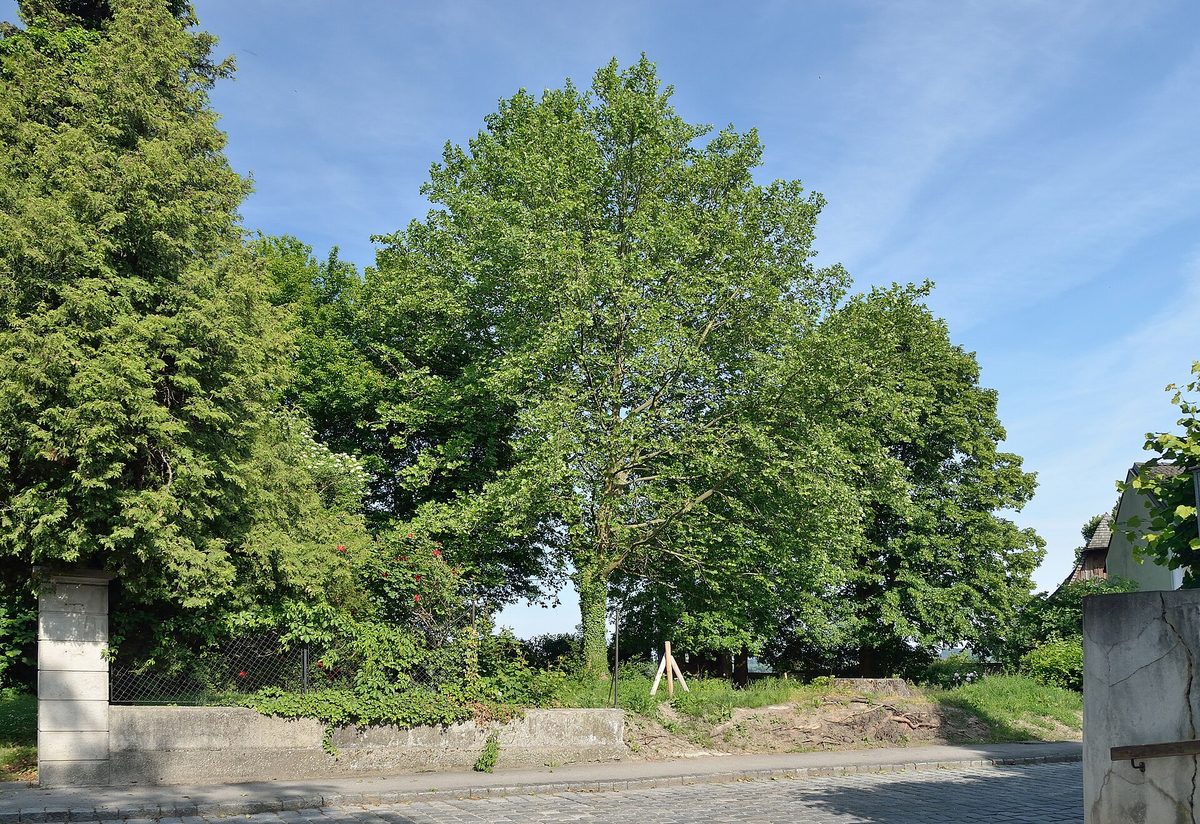
Photo: Herzi Pinki, CC BY-SA 4.0 via Wikimedia Commons

Quick facts
| Light: | Full sun and part shade (full sun preferred)11 source |
|---|---|
| Water: | Medium to wet21 source |
| Soil: | Well drained and occasionally wet11 source |
| Hardiness: | Zones 7a–9a11 source |
| Size: | 69.9–80.1 ft (21.3–24.4 m) × 49.9–69.9 ft (15.2–21.3 m)11 source |
| Growth rate: | Rapid11 source |
| Cats: | Not documented by major sources |
| Dogs: | Not documented by major sources |
| Native range: | ALB, BUL, CYP, EAI, GRC, IRN, IRQ, ITA, KRI, LBS, NCS, SIC, TCS, TUR, YUG4 |
| Family: | Platanaceae |
How much light does an Oriental Planetree need?
Oriental planetree does best in full sun. The listed light requirement also includes partial sun and partial shade. Treat part shade as an accepted condition rather than the preferred one. Full sun is the setting the tree prefers, and it is the one to choose first when you have a free choice of site. A mature tree stands 70 to 80 ft (21.3–24.4 m) tall.
- Light: Full sun and part shade (full sun preferred)1
How often to water an Oriental Planetree
The water range for this tree runs from medium to wet. The source advises growing it in full sun or partial shade on moist soils. Aim for medium to wet conditions rather than dry ones. Soil drainage is listed as well drained and occasionally wet. Occasionally wet soil appears among its listed tolerances. No cited source gives a watering schedule, so check the soil condition instead of counting days.
- Water: Medium to wet2
Best soil for an Oriental Planetree
Oriental planetree is listed as tolerating clay, sand and loam soils. It also tolerates alkaline and acidic soil. Drainage is listed as well drained and occasionally wet. The source also says the tree should be grown on moist soils. Those tolerances cover three soil textures and both acidic and alkaline soil. No cited source records a preferred soil pH, so a specific pH range is not documented for this page.
- Soil drainage: Well drained and occasionally wet1
Hardiness and temperature
USDA hardiness zones for this tree run from 7a through 9a. Zone 7a is the coldest zone listed, and zone 9a is the warmest. Check your own zone against that range before you plant. Gardeners in zones 7a to 9a are within the listed range. No cited source records a minimum temperature, so a lowest safe temperature is not documented here. Humidity is not covered by any fact on this page.
- Hardiness: Zones 7a–9a1
Pruning an Oriental Planetree
The listed pruning requirement for this tree is little required. The pruning note says to remove dead growth only. Dead growth is the only thing the record names for removal. The tree has a rapid growth rate, and the listed pruning requirement is still little. No cited source gives a pruning time or a method, so those details are not documented.
- Pruning: Remove dead growth only2
How to plant an Oriental Planetree
Plant it in USDA zones 7a through 9a, the range the source lists. Allow room for a spread of 50 to 70 ft (15.2–21.3 m). Height reaches 70 to 80 ft (21.3–24.4 m). Choose a site with full sun, which is the preferred light. Part shade is accepted if full sun is not available. Soil that is well drained or occasionally wet suits the listed tolerances. The record lists the plant type as tree. No cited source gives a planting time, so timing relative to frost is not documented.
- Hardiness: Zones 7a–9a1
Winter care
Winter hardiness is described only by zone, and the range is 7a through 9a. Zone 7a is the coldest end of that listed range. Colder zones fall outside the range the source gives. A site in zone 7a sits at the cold edge of the listed range. No cited source records a minimum temperature for the tree. No winter protection method is documented either.
- Hardiness: Zones 7a–9a1
Common problems
The pests listed for this tree are sycamore lace bug, citrus longhorned beetle and whitemarked tussock moth. The diseases listed are canker stain, stem canker, anthracnose and bacterial leaf scorch. Canker stain and stem canker can severely weaken or kill trees. No cited source gives a treatment for any of these problems, so none is described here.
| Problem | Kind |
|---|---|
| Sycamore lace bug | Pest |
| Citrus longhorned beetle | Pest |
| Whitemarked tussock moth | Pest |
| Canker stain | Disease |
| Stem canker | Disease |
| Anthracnose | Disease |
| Bacterial leaf scorch | Disease |
Is Oriental Planetree toxic to cats and dogs?
Recommended supplies
- Soil: a free-draining mix, and a pot with a drainage hole.
Questions and answers
- How much sun does an Oriental planetree need?
- Oriental planetree prefers full sun. The listed requirement also names partial sun and partial shade as acceptable. Pick full sun first when you can.
- How big does an Oriental planetree get?
- A mature tree reaches 70 to 80 ft (21.3–24.4 m) tall. The spread is 50 to 70 ft (15.2–21.3 m). The growth rate is listed as rapid.
- Which hardiness zones suit Oriental planetree?
- USDA hardiness zones 7a through 9a are listed. Zone 7a is the coldest zone in that range. Colder zones are outside the listed range. No minimum temperature is documented.
Sources
- University of Florida IFAS Extension (EDIS). https://ask.ifas.ufl.edu/publication/ST485. Accessed 21 October 2026.
- University of Florida IFAS Extension (EDIS). https://ask.ifas.ufl.edu/st485. Accessed 27 October 2026.
- EPPO Global Database. https://gd.eppo.int/taxon/PLTOR/pests. Accessed 21 October 2026.
- Royal Botanic Gardens, Kew (World Checklist of Vascular Plants). https://sftp.kew.org/pub/data-repositories/WCVP/wcvp.zip. Accessed 4 June 2026.
How this page was made
- Written with AI assistance from the sources listed on this page. AI is never the source of a fact.