Chokecherry (Prunus virginiana)
Formerly Padus virginiana, Prunus demissa, Cerasus virginiana
Full sun and medium, steady moisture outdoors are what keep chokecherry healthy. Give it well-drained soil and room to grow into a small tree. This plant is toxic to both cats and dogs, so keep pets from chewing on any part of it.
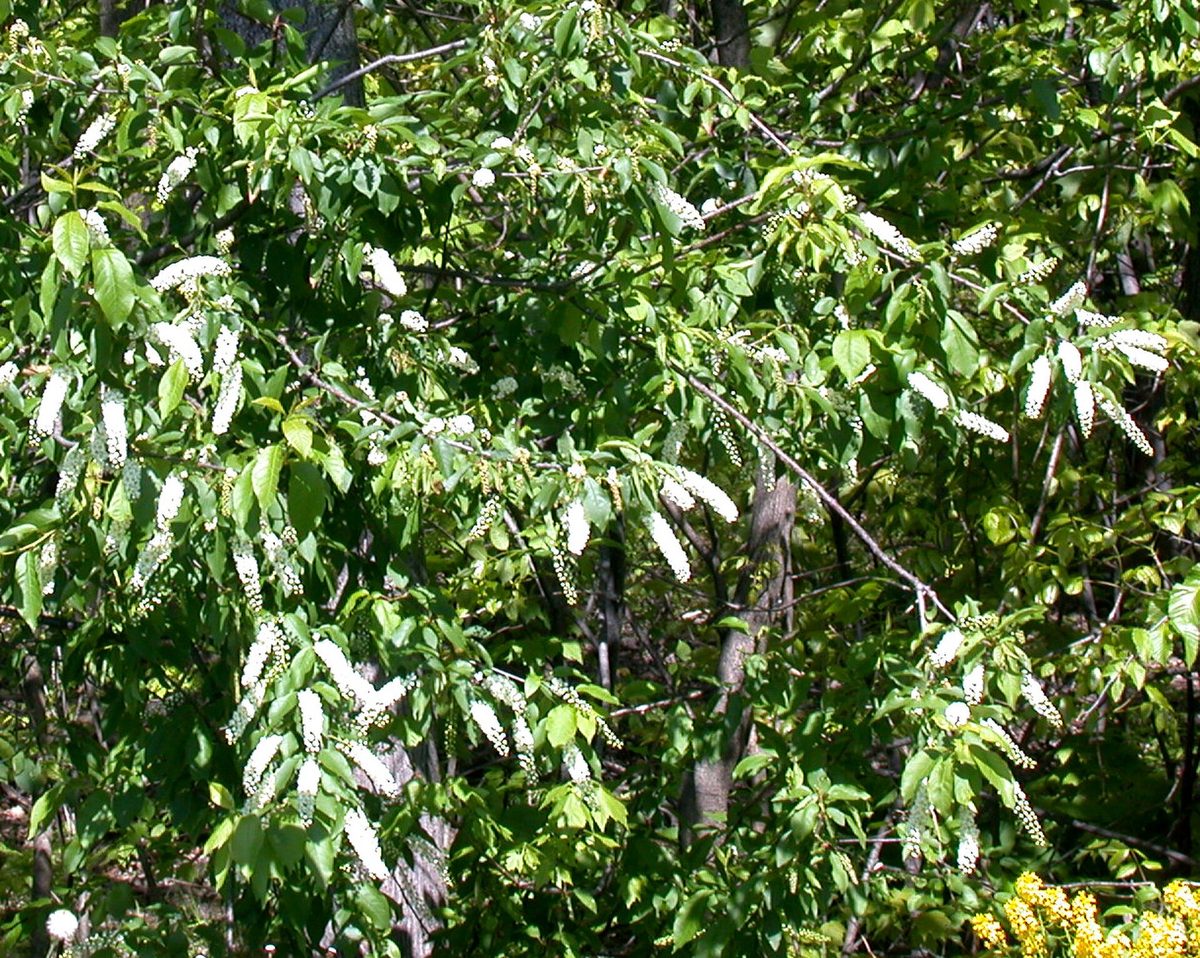
Photo: Wikimedia Commons contributor, CC BY-SA 4.0 via Wikimedia Commons

Quick facts
| Light: | Full sun12 |
|---|---|
| Water: | Medium31 source |
| Soil: | Well drained, moist and occasionally dry; pH 6–8211 source |
| Hardiness: | Zones 2a–6b11 source |
| Size: | 20–35 ft (6.1–10.67 m) × Sources differ: Cornell University CALS Woody Plants Database325 |
| Growth rate: | Moderate11 source |
| Bloom: | White31 |
| Cats: | Toxic to cats (1 source) 4 |
| Dogs: | Toxic to dogs (1 source) 4 |
| Native range: | ABT, ARI, ARK, BRC, CAL, CNT, COL, DEL, GEO, IDA, ILL, INI, IOW, KAN, KTY, MAI, MAN, MAS, MIC, MIN, MNT, MRY, MSO, MXN, NBR, NCA, NDA, NEB, NEV, NFL, NSC, NWH, NWM, NWT, NWY, OHI, OKL, ONT, ORE, PEI, PEN, QUE, RHO, SAS, SDA, TEN, TEX, UTA, VER, VRG, WAS, WDC, WIS, WVA, WYO6 |
| Family: | Rosaceae |
How much light does a Chokecherry need?
Chokecherry needs full sun to grow well outdoors. Give it a spot that gets direct sunlight for most of the day. This amount of light also supports its clusters of white spring flowers. As it grows into a tree that reaches 20-35 ft (6.1-10.7 m) tall, full sun helps it fill out evenly on all sides.
How often to water a Chokecherry
Medium, even moisture is what chokecherry needs outdoors. Check the soil and water when the top few inches start to dry out, rather than watering on a fixed schedule. It grows in soil that ranges from well-drained to occasionally dry, so brief dry spells usually aren't a problem once it's established. Avoid soil that stays soggy for long periods, since standing water works against this species' drainage needs.
- Water: Medium3
Best soil for a Chokecherry
Well-drained soil that still holds some moisture suits chokecherry best. It also tolerates ground that turns occasionally dry between waterings. Aim for a soil pH between 6 and 8, which covers slightly acidic to somewhat alkaline ground. This wide range makes the tree adaptable to many garden and naturalized sites. Heavy, compacted clay that stays wet for long stretches works against its drainage needs.
Hardiness and temperature
USDA zones 2a to 6b mark where chokecherry reliably survives winter outdoors. That range reaches into some of the coldest parts of Canada and the northern US, including Manitoba, Alberta, and Alaska. This tree is native across that cold range, from Alaska down through the northern and central United States. A zone 2a rating means it handles long, hard winters without extra protection. At the warmer edge of its range, zone 6b, it still needs a true winter chill each year. Gardeners as far north as USDA zone 2a grow chokecherry successfully outdoors. No cited source gives an exact minimum winter temperature or humidity range for this species.
- Hardiness: Zones 2a–6b1
How to plant a Chokecherry
Pick a planting site in full sun, since that's what this tree needs to grow and bloom well. This species grows outdoors across USDA zones 2a to 6b, so check that your area falls in that range before you plant. Choose soil that drains well but still holds some moisture, with a pH between 6 and 8. Give it plenty of room, since a mature chokecherry reaches 20-35 ft (6.1-10.7 m) tall. At a moderate growth rate, expect it to take a few years to fill that space.
- Hardiness: Zones 2a–6b1
Winter care
Winters across chokecherry's zones, 2a to 6b, bring hard freezes most years. Within that range, established plants handle normal winter cold on their own. Gardeners as far north as zone 2a grow this species successfully outdoors through winter. Soil that drains well helps roots avoid sitting in cold, wet ground over winter. This tree is native as far north as Alaska, pointing to strong cold tolerance. At the warmer edge of its range, zone 6b, it still gets real winter cold yearly.
- Hardiness: Zones 2a–6b1
How to propagate a Chokecherry
You can propagate chokecherry from seed, stem cuttings, root cuttings, or by division. Growing from seed is one documented option for starting new plants. Root cuttings and division are also documented ways to propagate this tree. Whichever method you choose, expect a young chokecherry to grow at a moderate pace once it's established.
- Propagation: Seed, stem cuttings, root cuttings and division3
Common problems
Eastern tent caterpillar is a pest reported on chokecherry outdoors. Check new growth each spring for this pest and remove any you find by hand. Black knot is a disease documented on this species. If you notice black knot, remove affected branches to limit its spread.
| Problem | Kind |
|---|---|
| Eastern tent caterpillar | Pest |
| Black knot | Disease |
Is Chokecherry toxic to cats and dogs?
This species is toxic to cats, according to the cited source. It is also toxic to dogs. Because both pets can be affected, keep cats and dogs from chewing on any part of this plant. As a tree that can reach 20-35 ft (6.1-10.7 m) tall, chokecherry often grows within reach of a curious pet in a yard. Because of that, it's worth fencing off or keeping pets away from chokecherry trees in yards. The source used here does not break down symptoms by plant part or give a severity rating. If your cat or dog eats any part of this tree, contact your vet or a pet poison line right away.
Pet-safe alternatives
Recommended supplies
- Soil: a free-draining mix, and a pot with a drainage hole.
Questions and answers
- Is chokecherry toxic to dogs?
- Yes, chokecherry is toxic to dogs, according to the cited source. It's also toxic to cats, so keep both pets from chewing on any part of the plant.
- What growing zones does chokecherry tolerate?
- Chokecherry grows outdoors in USDA zones 2a to 6b, which covers everything from cold northern areas to milder regions at the warm edge of that range. That span includes some of the coldest regions where landscape trees are grown.
- How do you propagate chokecherry?
- You can propagate chokecherry from seed, stem cuttings, root cuttings, or by division. It grows at a moderate pace once established, regardless of which method you use.
Sources
- NC State Extension. https://plants.ces.ncsu.edu/plants/prunus-virginiana/. Accessed 14 October 2026.
- Cornell University CALS Woody Plants Database. https://woodyplants.cals.cornell.edu/plant/197. Accessed 14 October 2026.
- Lady Bird Johnson Wildflower Center. https://www.wildflower.org/plants/result.php?id_plant=PRVI. Accessed 14 October 2026.
- ASPCA Animal Poison Control Center. https://www.aspca.org/pet-care/aspca-poison-control/toxic-and-non-toxic-plants/choke-cherry. Accessed 14 October 2026.
- Utah State University Extension. https://extension.usu.edu/yardandgarden/research/chokecherry-in-the-garden. Accessed 14 October 2026.
- Royal Botanic Gardens, Kew (World Checklist of Vascular Plants). https://sftp.kew.org/pub/data-repositories/WCVP/wcvp.zip. Accessed 4 June 2026.
How this page was made
- Written with AI assistance from the sources listed on this page. AI is never the source of a fact.