Butternut (Juglans cinerea)
Formerly Nux cinerea, Wallia cinerea, Juglans oblonga
Butternut is a deciduous tree that grows in full sun, and its recorded water range runs from dry to wet. It reaches 40–60 ft (12.19–18.29 m) tall at maturity. The sources on file do not state a toxicity position for cats or dogs, so that position is not documented on this page.
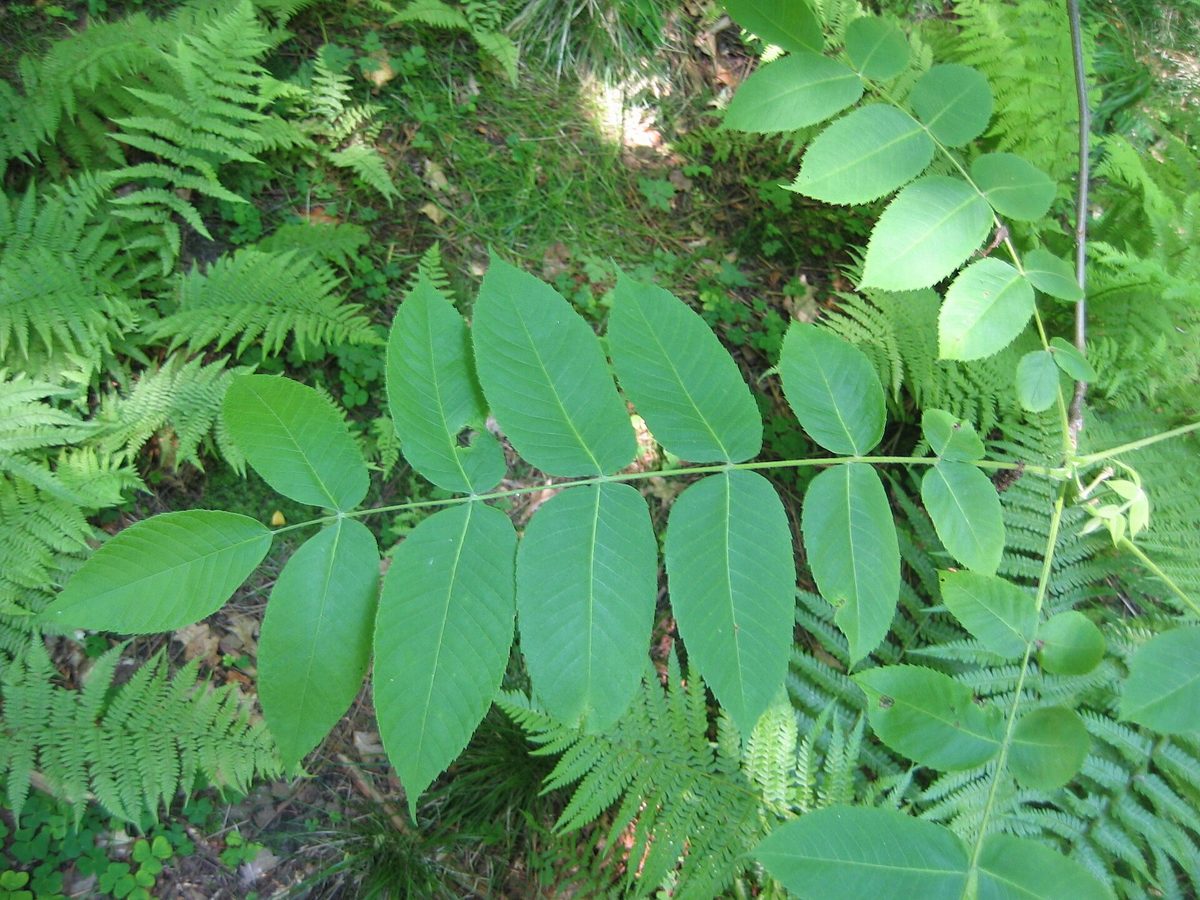
Photo: Kristjan, Public domain via Wikimedia Commons

Quick facts
| Light: | Full sun12 |
|---|---|
| Water: | Dry to wet21 source |
| Soil: | Well drained, moist and occasionally dry; pH 5–812 |
| Hardiness: | Zones 3a–7b11 source |
| Size: | 40–60 ft (12.19–18.29 m) × 30–50 ft (9.14–15.24 m)342 |
| Growth rate: | Moderate14 |
| Bloom: | Apr–Jun, Yellow, green and brown131 source |
| Cats: | Not documented by major sources |
| Dogs: | Not documented by major sources |
| Native range: | ALA, ARK, CNT, DEL, GEO, ILL, INI, IOW, KTY, MAI, MAS, MIC, MIN, MRY, MSI, MSO, NBR, NCA, NWH, NWJ, NWY, OHI, ONT, PEN, QUE, RHO, SCA, TEN, VER, VRG, WIS, WVA5 |
| Family: | Juglandaceae |
How much light does a Butternut need?
Full sun is the preferred light for butternut outdoors. The source describes that as six or more hours of direct sunlight a day. Full sun is also the only outdoor light level listed for this tree. A spot with fewer than six hours of direct sun does not meet that description of full sun.
How often to water a Butternut
Butternut is recorded with a water range that runs from dry to medium at the low end and up to medium to wet at the top. The quoted listing describes consistently moist, well-drained soil with occasional periods of dry soil. Drainage is recorded as good, alongside moist soil and occasionally dry soil. No watering schedule is documented for this tree.
- Water: Dry to wet2
Best soil for a Butternut
Good drainage is recorded for butternut, along with moist soil and occasional periods of dry soil. The Cornell listing says it can tolerate acid to alkaline soil, from pH 5.0 to 8.0. That gives a pH range of 5–8 for this tree. Neither the drainage record nor the pH record names a soil type such as clay or loam, and no amendments are documented.
Hardiness and temperature
Butternut is listed for hardiness zones 3a to 7b, which covers ten half-zone steps. Zone 3a is the coldest end of the range and zone 7b the warmest. Compare your own zone with that range to see whether you fall inside it. No cited source records a minimum temperature for this tree, and humidity is not documented either.
- Hardiness: Zones 3a–7b1
How to plant a Butternut
Butternut is a tree that reaches 40–60 ft (12.19–18.29 m) tall with a spread of 30–50 ft (9.14–15.24 m), so leave room for both. Check your own zone against the recorded range of 3a to 7b before you choose a site. Pick a spot with full sun. It is listed as native in the lower 48 United States, and its native range is recorded in 32 regions.
- Hardiness: Zones 3a–7b1
Winter care
Cold hardiness is recorded as zones 3a to 7b, and butternut is a deciduous tree. Zone 3a is the coldest zone listed. No minimum temperature is recorded in the cited sources. Winter protection, mulching and wrapping are not documented for this tree.
- Hardiness: Zones 3a–7b1
How to propagate a Butternut
You can propagate butternut by seed or by grafting. Grafting is the method named in the cited quote. Cuttings are not among the recorded methods. No cited source gives timing, rootstock or seed-handling steps for either method, so those details are not documented. Because the record holds only two methods, those are the two this page can describe.
- Propagation: Seed and grafting1
Common problems
Sources list several insects for butternut, including wood borers, nut weevils, lace bugs, walnut husk flies, bark beetles and butternut curculio. Butternut canker has devastated the tree, and the cited source says there is no cure. The tree may also suffer from blight. No treatment steps for the insects or the diseases are documented.
| Problem | Kind |
|---|---|
| Wood borers | Pest |
| Nut weevils | Pest |
| Lace bugs | Pest |
| Walnut husk flies | Pest |
| Bark beetles | Pest |
| Butternut curculio | Pest |
| Butternut canker | Disease |
| Blight | Disease |
Is Butternut toxic to cats and dogs?
Recommended supplies
- Soil: a free-draining mix, and a pot with a drainage hole.
Questions and answers
- How much sun does butternut need?
- Butternut grows in full sun, which the source describes as six or more hours of direct sunlight a day. That is the preferred outdoor light level and the only one recorded for this tree.
- How big does a butternut tree get?
- It reaches 40–60 ft (12.19–18.29 m) tall with a spread of 30–50 ft (9.14–15.24 m). Its recorded growth rate is moderate, and it is a deciduous tree.
- What diseases affect butternut?
- Butternut canker has devastated the tree, and the cited source says there is no cure. The tree may also suffer from blight. The same listing names several insects, including wood borers and bark beetles.
Sources
- NC State Extension Gardener Plant Toolbox. https://plants.ces.ncsu.edu/plants/juglans-cinerea/. Accessed 15 October 2026.
- Cornell University CALS Woody Plants Database. https://woodyplants.cals.cornell.edu/plant/view?id=121. Accessed 15 October 2026.
- Lady Bird Johnson Wildflower Center. https://www.wildflower.org/plants/result.php?id_plant=JUCI. Accessed 14 October 2026.
- USDA Forest Service Fire Effects Information System. https://www.fs.usda.gov/database/feis/plants/tree/jugcin/all.html. Accessed 14 October 2026.
- Royal Botanic Gardens, Kew (World Checklist of Vascular Plants). https://sftp.kew.org/pub/data-repositories/WCVP/wcvp.zip. Accessed 4 June 2026.
How this page was made
- Written with AI assistance from the sources listed on this page. AI is never the source of a fact.