Common Plantain (Plantago major)
Formerly Plantago uliginosa, Plantago japonica, Plantago winteri
Common plantain (Plantago major) grows in full sun or part shade. Full sun is preferred. It suits USDA zones 3a to 12b. Plants reach about 0.5 to 1 ft (0.15 to 0.3 m) tall. Its growth rate is moderate. Its flowers are green and white. Watering and pet toxicity are not documented on this page.
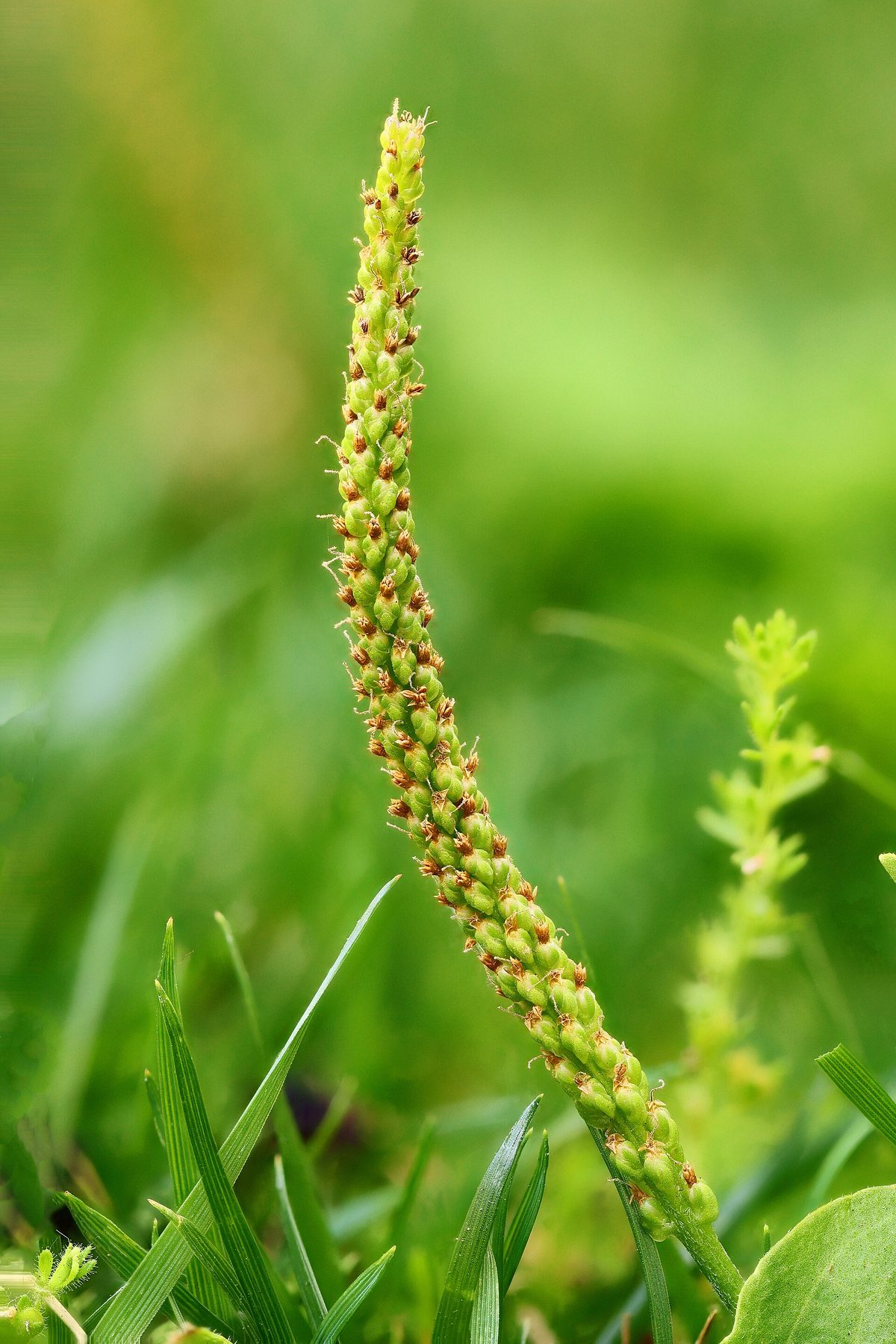
Photo: Sanjay Acharya, CC BY-SA 4.0 via Wikimedia Commons

Quick facts
| Light: | Full sun and part shade (full sun preferred)11 source |
|---|---|
| Soil: | Well drained and occasionally wet11 source |
| Hardiness: | Zones 3a–12b11 source |
| Size: | 0.5–1 ft (0.15–0.3 m)21 source |
| Growth rate: | Moderate11 source |
| Bloom: | Apr–Sep, Green and white11 source |
| Cats: | Not documented by major sources |
| Dogs: | Not documented by major sources |
| Native range: | AFG, ALB, ALG, ALT, AMU, AUT, BAL, BGM, BLR, BLT, BRY, BUL, CHC, CHH, CHI, CHM, CHN, CHQ, CHS, CHT, CHX, CNY, COR, CPP, CTA, CVI, CYP, CZE, DEN, EAI, EGY, FIN, FRA, GER, GRB, GRC, HUN, IRE, IRK, IRN, IRQ, ITA, JAP, KAM, KAZ, KGZ, KHA, KOR, KRA, KRI, KRY, KUR, LBS, LBY, LES, MAG, MDR, MON, MOR, NAM, NAT, NCS, NEP, NET, NOR, OFS, OMA, PAK, PAL, POL, POR, PRM, ROM, RUC, RUE, RUN, RUS, RUW, SAK, SAR, SAU, SIC, SIN, SPA, SWE, SWI, TAI, TCS, TKM, TUE, TUN, TUR, TVA, TVL, TZK, UKR, UZB, WHM, WSB, YAK, YEM, YUG3 |
| Family: | Plantaginaceae |
How much light does a Common Plantain need?
Full sun is the preferred exposure for common plantain, which means 6 or more hours of direct sunlight a day. Part shade is also listed as suitable. Both conditions are recorded for this species outdoors, with full sun named first. Look for a spot with 6 or more hours of direct sun for the preferred exposure, or choose a part shade spot instead.
- Light: Full sun and part shade (full sun preferred)1
Best soil for a Common Plantain
Common plantain is recorded for well drained soil. It is also recorded for soil that is occasionally wet. The drainage note in the source reads good drainage. Those two entries together describe the soil range for this species. A bed that drains well fits the first entry. A spot that sometimes holds water fits the second entry. Soil pH is not documented on this page.
- Soil drainage: Well drained and occasionally wet1
Hardiness and temperature
Common plantain is listed for USDA hardiness zones 3a through 12b. That range is wide. The coldest listed zone is 3a. The warmest listed zone is 12b. Every half zone between them is listed too, from 3a and 3b up to 12a and 12b. Gardeners in cold zone 3a and in warm zone 12b are both within the listed range. No minimum temperature is documented for this plant.
- Hardiness: Zones 3a–12b1
How to plant a Common Plantain
Common plantain is listed for USDA hardiness zones 3a to 12b. In the United States it is recorded as introduced in Alaska, Hawaii, the lower 48 states and Puerto Rico. Choose a spot with full sun, or part shade if full sun is not available. Pick a site with well drained soil. Plants reach about 0.5 to 1 ft (0.15 to 0.3 m) tall. The extension source calls plantains aggressive perennials that spread vigorously by seed.
- Hardiness: Zones 3a–12b1
Winter care
The record places common plantain in zones 3a through 12b. Zone 3a is the coldest zone in that range. Extension guidance describes plantains as perennials. Zone 12b is the warmest zone in the range. The listed range includes every half zone from 3a to 12b. Gardeners in cold zone 3a are within the record, and so are gardeners in warm zone 12b. No minimum temperature or winter protection step is documented for this plant.
- Hardiness: Zones 3a–12b1
How to propagate a Common Plantain
You can propagate common plantain by seed. Root cuttings are the other recorded method. Seed and root cutting are the only two methods listed in the record for this species. Extension guidance describes plantains as low-growing perennials that spread vigorously by seed. Both methods are recorded as ways to grow new plants.
- Propagation: Seed and root cuttings1
Common problems
The extension record lists no known diseases for common plantain. It lists no known insect problems either. That means the lists of recorded pests and recorded diseases for this plant are both empty. The statement comes from the NC State Extension Gardener Plant Toolbox.
Is Common Plantain toxic to cats and dogs?
Recommended supplies
- Soil: a free-draining mix, and a pot with a drainage hole.
Questions and answers
- How much sun does common plantain need?
- Common plantain prefers full sun, which means 6 or more hours of direct sunlight a day. It is also listed for part shade. Full sun comes first in the record.
- Which USDA zones suit common plantain?
- Common plantain is listed for zones 3a through 12b. That covers every half zone from 3a up to 12b. Zone 3a is the coldest in the range and zone 12b is the warmest.
- How do you propagate common plantain?
- Seed and root cuttings are the two methods listed for this species. Extension guidance describes plantains as spreading vigorously by seed. They are low-growing perennials, 6 to 12 inches tall (15 to 30 cm).
Sources
- NC State Extension Gardener Plant Toolbox. https://plants.ces.ncsu.edu/plants/plantago-major/. Accessed 14 October 2026.
- University of Minnesota Extension. https://extension.umn.edu/garden-and-home/yard-and-garden/gardening-in-minnesota/yard-and-garden-problems/plantain. Accessed 14 October 2026.
- Royal Botanic Gardens, Kew (World Checklist of Vascular Plants). https://sftp.kew.org/pub/data-repositories/WCVP/wcvp.zip. Accessed 4 June 2026.
How this page was made
- Written with AI assistance from the sources listed on this page. AI is never the source of a fact.