Garden Lettuce (Lactuca sativa)
Formerly Lactuca crispa, Lactuca romana, Lactuca palmata
To keep garden lettuce (Lactuca sativa) alive, give it full sun to part shade and consistently moist soil. Full sun is preferred, and the water need runs from medium to wet. It is a cool-season crop. Toxicity for cats and for dogs is not documented on this page.
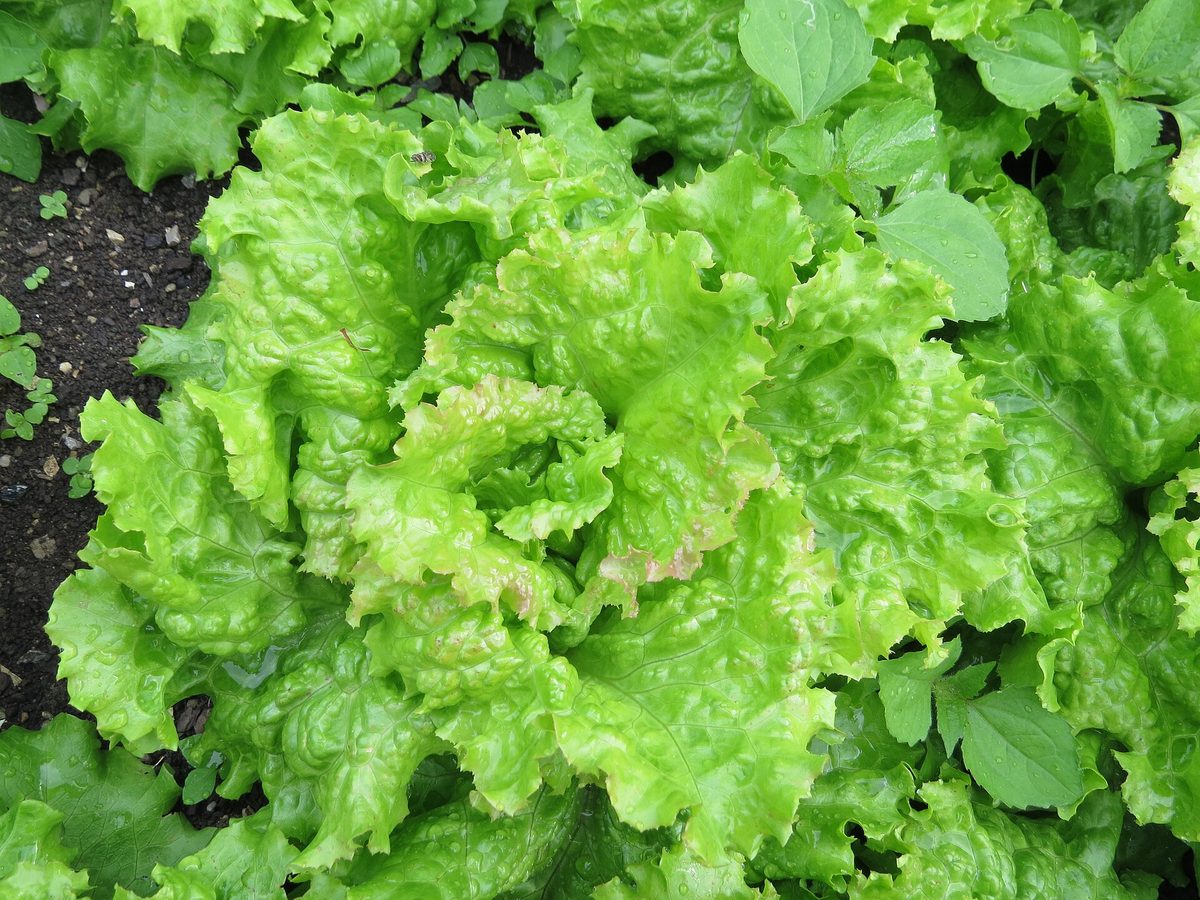
Photo: GT1976, CC BY-SA 4.0 via Wikimedia Commons

Quick facts
| Light: | Full sun and part shade (full sun preferred)111 source |
|---|---|
| Water: | Medium to wet11 source |
| Soil: | Well drained and moist; pH 6–6.712 |
| Size: | 0.5–1 ft (0.15–0.3 m) × 0.5–1 ft (0.15–0.3 m)11 source |
| Growth rate: | Rapid11 source |
| Bloom: | Yellow11 source |
| Cats: | Not documented by major sources |
| Dogs: | Not documented by major sources |
| Native range: | IRQ8 |
| Family: | Asteraceae |
How much light does a Garden Lettuce need?
Lettuce grown outdoors does best in full sun, which means 6 or more hours of direct sunlight a day. Part shade, meaning direct sunlight for only 2 to 6 hours a day, is also listed as an acceptable exposure. Those two exposures are the only outdoor light conditions recorded for this crop.
How often to water a Garden Lettuce
Lettuce requires consistently moist soil for proper growth and flavor, and it has a shallow root system. The listed water need runs from medium to wet for this cool-season crop. Its soil should also be well drained and moist. Moist soil and well-drained soil are both listed, not one or the other.
- Water: Medium to wet1
Best soil for a Garden Lettuce
Soil for lettuce should be organically rich, moist and well drained. It should also be moisture retentive while staying well drained. Moist and well drained are the two drainage conditions recorded for lettuce, and rich organic content is named alongside them. The optimal soil pH ranges from 6 to 6.7. A pH of 6 is the lower limit and 6.7 is the upper limit of that optimal range.
Fertilizing a Garden Lettuce
A single sidedressing during the growing season is the recorded feeding for lettuce. The fertilizer level is light, applied once a year. Lettuce is a rapid grower, and its maintenance level is medium. The fertilizer amount and product are not documented on this page.
- Fertilizer: Light, once a year3
When to plant Garden Lettuce
The recorded transplant window is 1 to 2 weeks before the last frost date. Lettuce is a cool-season crop that prefers temperatures of 55 to 65 °F (13 to 18 °C) for optimum growth. Timing for sowing indoors or sowing directly in the garden is not documented on this page.
- Transplant: 1–2 weeks after last spring frost4
| Step | When |
|---|---|
| Transplant | 1–2 weeks after last spring frost |
When and how to harvest Garden Lettuce
Plants of leaf lettuce are usable once they stand 5 to 6 in (13 to 15 cm) tall. Romaine, also called cos, is ready when the leaves elongate and overlap into a fairly tight head about 4 in (10 cm) wide and 6 to 8 in (15 to 20 cm) tall. Crisphead is mature when its leaves overlap into a compact, firm head. A number of days to maturity is not documented on this page.
How to propagate a Garden Lettuce
Seed is the only propagation method recorded for lettuce. Sow seeds in the spring as soon as the soil is workable. Cuttings, division and other methods are not recorded for this species. Lettuce is a cool-season crop with a rapid growth rate and medium maintenance.
Common problems
Lettuce aphid, armyworm, beet armyworm, cutworms, leafminers, loopers, lygus bug, silverleaf whitefly and western flower thrips are the pests listed for this crop. The diseases listed are downy mildew, powdery mildew, fusarium wilt, verticillium wilt, lettuce drop, botrytis crown rot, anthracnose, corky root and tipburn. That makes nine pests and nine diseases on the list.
| Problem | Kind |
|---|---|
| Lettuce aphid | Pest |
| Armyworm | Pest |
| Beet armyworm | Pest |
| Cutworms | Pest |
| Leafminers | Pest |
| Loopers | Pest |
| Lygus bug | Pest |
| Silverleaf whitefly | Pest |
| Western flower thrips | Pest |
| Downy mildew | Disease |
| Powdery mildew | Disease |
| Fusarium wilt | Disease |
| Verticillium wilt | Disease |
| Lettuce drop | Disease |
| Botrytis crown rot | Disease |
| Anthracnose | Disease |
| Corky root | Disease |
| Tipburn | Disease |
Is Garden Lettuce toxic to cats and dogs?
Recommended supplies
- Soil: a free-draining mix, and a pot with a drainage hole.
Questions and answers
- How much sun does garden lettuce need outdoors?
- Full sun is preferred, which means 6 or more hours of direct sunlight a day. Part shade, with direct sunlight for 2 to 6 hours a day, is also listed. Full sun and part shade are the two exposures recorded for lettuce outdoors.
- What soil pH is best for lettuce?
- The optimal pH ranges from 6 to 6.7. The pH range has a lower limit of 6 and an upper limit of 6.7. The soil should also be moist, well drained and moisture retentive. Organically rich soil is the description given for lettuce.
- How do you start and plant lettuce?
- Seed is the recorded propagation method, and you sow it as soon as the soil is workable. Transplants go outdoors 1 to 2 weeks before the last frost date. Lettuce is a cool-season crop. Cuttings and division are not recorded as methods.
Sources
- NC State Extension Gardener Plant Toolbox. https://plants.ces.ncsu.edu/plants/lactuca-sativa/. Accessed 14 October 2026.
- University of Minnesota Extension. https://extension.umn.edu/garden-and-home/yard-and-garden/gardening-in-minnesota/growing-lettuce-endive-and-radicchio. Accessed 14 October 2026.
- Clemson Cooperative Extension Home & Garden Information Center. https://hgic.clemson.edu/factsheet/lettuce/. Accessed 14 October 2026.
- Penn State Extension. https://extension.psu.edu/season-extenders-and-growing-fall-vegetables. Accessed 28 October 2026.
- University of Maryland Extension. https://extension.umd.edu/resource/growing-lettuce-home-garden. Accessed 14 October 2026.
- University of Minnesota Extension. https://extension.umn.edu/vegetables/growing-lettuce-endive-and-radicchio. Accessed 14 October 2026.
- UC Statewide Integrated Pest Management Program. https://ipm.ucanr.edu/agriculture/lettuce/. Accessed 14 October 2026.
- Royal Botanic Gardens, Kew (World Checklist of Vascular Plants). https://sftp.kew.org/pub/data-repositories/WCVP/wcvp.zip. Accessed 4 June 2026.
How this page was made
- Written with AI assistance from the sources listed on this page. AI is never the source of a fact.