Lambsquarters (Chenopodium album)
Formerly Chenopodium lanceolatum, Chenopodium probstii, Chenopodium praeacutum
Lamb's quarters grows best in full sun and also tolerates part shade. It prefers dry soil and does not need frequent watering. This annual spreads quickly and reaches only about 4 to 12 inches (0.1 to 0.3 m) wide. It is hardy in USDA zones 3a to 10b.
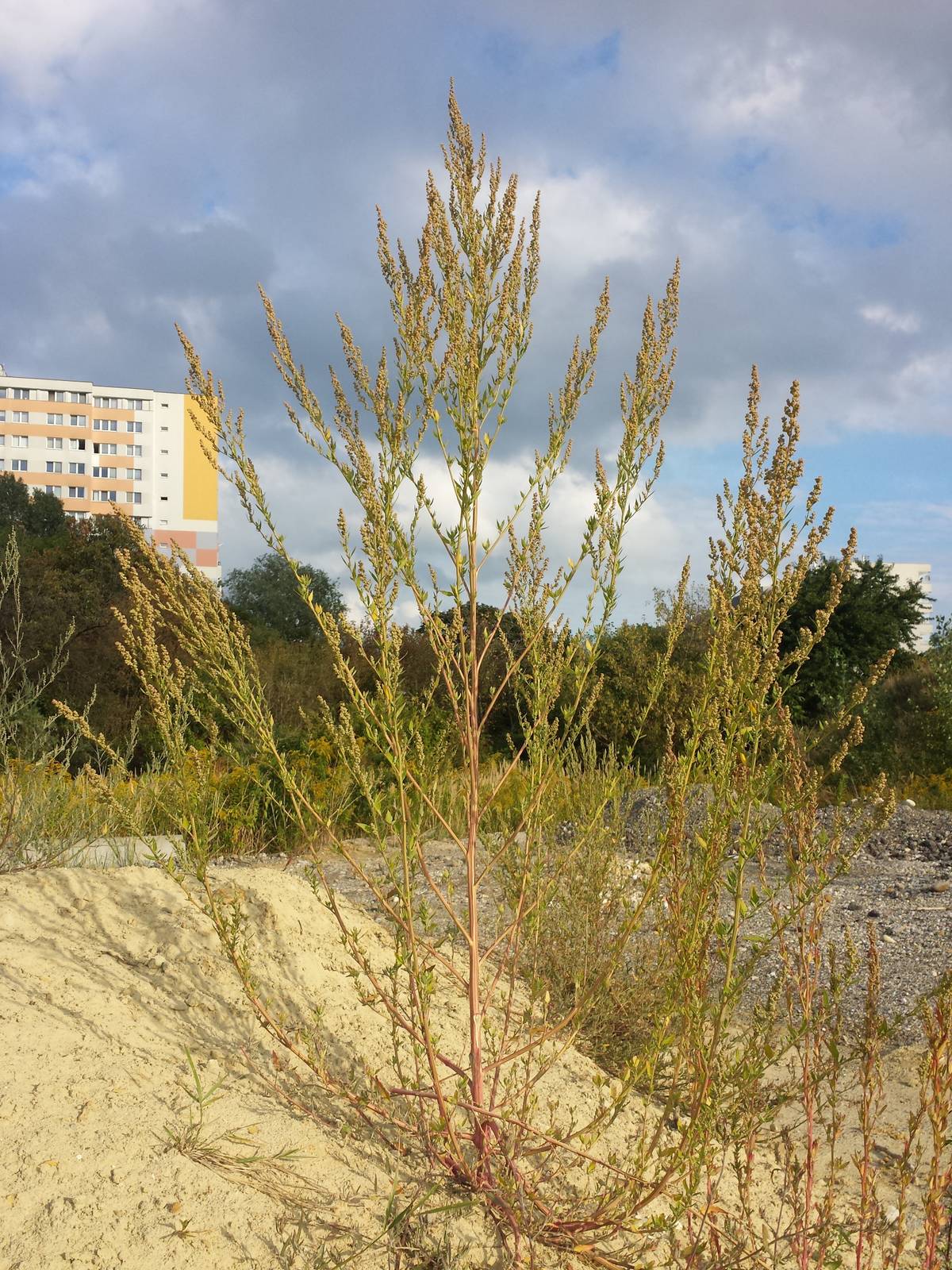
Photo: Stefan.lefnaer, CC BY-SA 4.0 via Wikimedia Commons

Quick facts
| Light: | Full sun and part shade (full sun preferred)11 source |
|---|---|
| Water: | Dry21 source |
| Soil: | Well drained and moist11 source |
| Hardiness: | Zones 3a–10b11 source |
| Size: | 0.3–1 ft (0.1–0.3 m)11 source |
| Growth rate: | Rapid11 source |
| Bloom: | Yellow, green and pink11 source |
| Cats: | Not documented by major sources |
| Dogs: | Not documented by major sources |
| Native range: | AFG, ALA, ALB, ALG, ALT, AMU, ARK, ASS, AUT, AZO, BAL, BAN, BGM, BLR, BLT, BRY, BUL, CHC, CHH, CHI, CHM, CHN, CHQ, CHS, CHT, CHX, CNT, CNY, COR, CTA, CVI, CYP, CZE, DEL, DJI, EAI, EGY, EHM, ETH, FLA, FRA, GEO, GER, GRB, GRC, GST, HUN, ILL, IND, INI, IRE, IRK, IRN, IRQ, ITA, JAP, KAM, KAZ, KGZ, KHA, KOR, KRA, KRI, KRY, KTY, KUR, KUW, LBS, LBY, LOU, MAG, MAI, MAS, MDR, MIC, MON, MOR, MRY, MSI, NCA, NCS, NDA, NEB, NEP, NET, NNS, NWH, NWJ, NWM, NWY, OGA, OHI, OMA, PAK, PAL, PEN, POL, POR, PRM, RHO, ROM, RUC, RUE, RUN, RUS, RUW, SAK, SAR, SAU, SCA, SIC, SIN, SPA, SWI, TAI, TCS, TEN, TKM, TUE, TUN, TUR, TVA, TZK, UKR, UZB, VER, VRG, WDC, WHM, WSB, YAK, YEM, YUG6 |
| Family: | Amaranthaceae |
How much light does a Lambsquarters need?
Give lamb's quarters full sun whenever you can. Full sun means at least six hours of direct light a day. This plant also tolerates part shade. Between the two, full sun is listed as the preferred option for this species. Outdoors, both full sun and part shade are listed as suitable conditions for it.
- Light: Full sun and part shade (full sun preferred)1
How often to water a Lambsquarters
Dry soil is what lamb's quarters prefers, and it does not need regular watering. Records list both its minimum and maximum soil moisture as dry, rather than a varying range. The soil this plant grows in is also recorded as well drained and moist. Well drained soil is listed as a suitable condition for this plant alongside moist soil.
- Water: Dry2
Best soil for a Lambsquarters
This plant's soil is recorded as well drained. It is also recorded as suited to moist soil. Separately, its water needs are recorded as dry, both at the low and the high end of the range. Good drainage is listed as one of this plant's soil requirements. No soil pH preference is documented for this plant in the sources checked here.
- Soil drainage: Well drained and moist1
Hardiness and temperature
Hardiness for lamb's quarters spans USDA zones 3a through 10b. That range runs from the cooler zone 3a up to the warmer zone 10b. No minimum temperature in degrees is documented for this plant in the sources checked here. Zones 3a and 10b mark the lowest and highest ends of its hardiness range.
- Hardiness: Zones 3a–10b1
Pruning a Lambsquarters
The recommended pruning method for lamb's quarters is deadheading. Deadheading means removing the flowers from the plant. Doing this before the flowers can set seed prevents the plant from producing seeds. Removing spent flowers in this way is the method recorded for keeping this plant from reseeding itself.
- Pruning: Deadheading3
How to plant a Lambsquarters
In USDA zones 3a through 10b, lamb's quarters can be planted outdoors. Within that range, give it a spot in full sun or part shade. Space plants so each one has 4 to 12 inches (0.1 to 0.3 m) of room, since spread can vary with the soil's nutrient level. Plant it in well drained, moist soil. It grows from seed.
- Hardiness: Zones 3a–10b1
Winter care
This species' hardiness range runs from USDA zone 3a to 10b. This plant is classified as an annual. No minimum winter temperature in degrees is documented for it in the sources checked here. Gardeners outside zones 3a to 10b are outside the range these sources record for it.
- Hardiness: Zones 3a–10b1
How to propagate a Lambsquarters
Seed is the propagation method recorded for lamb's quarters. A single plant can produce tens of thousands of seeds. That heavy seed output is described as the reason this plant spreads so successfully as a weed. This plant is classified as an annual. Its growth rate is also recorded as rapid.
- Propagation: Seed4
Common problems
Leafminers, spider mites, root knot nematodes and armyworms are all recorded as pests that affect this plant. Verticillium wilt and bacterial wilt are recorded as diseases that can affect it as well. No treatment or prevention steps for these particular pests and diseases are documented here.
| Problem | Kind |
|---|---|
| Leafminers | Pest |
| Spider mites | Pest |
| Root knot nematodes | Pest |
| Armyworms | Pest |
| Verticillium wilt | Disease |
| Bacterial wilt | Disease |
Is Lambsquarters toxic to cats and dogs?
Recommended supplies
- Soil: a free-draining mix, and a pot with a drainage hole.
Questions and answers
- Does lamb's quarters need full sun?
- It grows best in full sun, which means at least six hours of direct light a day, and full sun is listed as the preferred option, though it also tolerates part shade outdoors.
- How much water does lamb's quarters need?
- This plant's soil moisture needs are recorded as dry at both the low and high end of the range.
- What pests and diseases affect lamb's quarters?
- Leafminers, spider mites, root knot nematodes and armyworms are recorded as pests, and verticillium wilt and bacterial wilt are recorded as diseases that affect it.
Sources
- NC State Extension Gardener Plant Toolbox. https://plants.ces.ncsu.edu/plants/chenopodium-album/. Accessed 12 October 2026.
- Lady Bird Johnson Wildflower Center. https://www.wildflower.org/plants/result.php?id_plant=chal7. Accessed 12 October 2026.
- Clemson Cooperative Extension Home & Garden Information Center. https://hgic.clemson.edu/weed-of-the-month-lambsquarters/. Accessed 12 October 2026.
- Brooklyn Botanic Garden. https://www.bbg.org/article/weed_of_the_month_lambsquarters. Accessed 12 October 2026.
- EPPO Global Database. https://gd.eppo.int/taxon/CHEAL/pests. Accessed 12 October 2026.
- Royal Botanic Gardens, Kew (World Checklist of Vascular Plants). https://sftp.kew.org/pub/data-repositories/WCVP/wcvp.zip. Accessed 4 June 2026.
How this page was made
- Written with AI assistance from the sources listed on this page. AI is never the source of a fact.