Sorrel (Oxalis triangularis)
Formerly Oxalis palustris, Oxalis regnellii, Acetosella triangularis
Sorrel, Oxalis triangularis, does best in bright, indirect light, and it tolerates direct sun and medium light. Water it when the surface has dried, aiming for a range from dry to medium. Cats and dogs are both listed as affected, because the ASPCA calls this plant toxic to each.
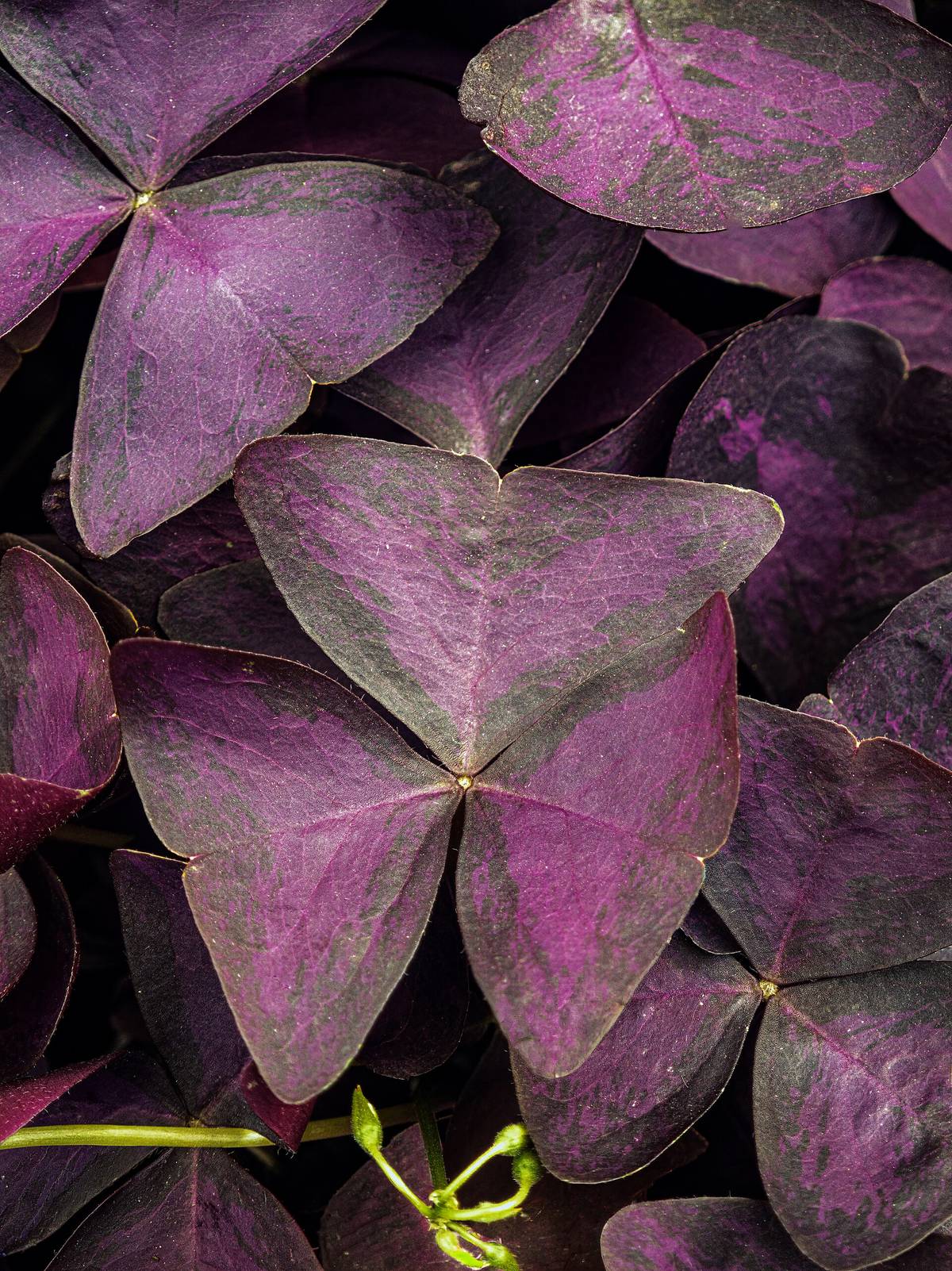
Photo: Didier Descouens, CC BY-SA 4.0 via Wikimedia Commons

Quick facts
| Light: | Bright, indirect light; tolerates direct sun and medium light11 source |
|---|---|
| Water: | Dry to medium21 |
| Soil: | Well drained, moist and occasionally dry21 |
| Size: | 0.7 ft (0.2 m) × 1–2 ft (0.3–0.61 m)721 source |
| Growth rate: | Moderate21 source |
| Bloom: | Purple, white and pink21 source |
| Cats: | Toxic to cats 56 |
| Dogs: | Toxic to dogs 56 |
| Native range: | AGE, AGW, BOL, BZC, BZE, BZL, BZN, BZS, PAR, PER8 |
| Family: | Oxalidaceae |
How much light does a Sorrel need?
Indoors, the best spot gets bright, indirect light. The plant also tolerates direct sun and medium light. Outdoors, it takes full sun, meaning six or more hours of direct sunlight a day, or part shade, and full sun is the preferred choice. The listed hardiness range is USDA zones 8a to 11b.
- Light: Bright, indirect light; tolerates direct sun and medium light1
How often to water a Sorrel
Check the top of the soil before you water, and wait until the surface has dried between waterings. The watering range for this plant runs from dry to medium. The soil should be slightly moist but well drained, and a loamy potting mix with good drainage is the type described. Water by the condition of the soil rather than on a fixed number of days.
Best soil for a Sorrel
Drainage is the main soil need for this plant. The listed soil conditions are well drained, moist and occasionally dry. A loamy mix of potting soil with good drainage is the type described, and it should be slightly moist but well drained. This plant is listed as a bulb. At full size it stands about 8 in (0.2 m) tall and spreads 1 to 2 ft (0.3 to 0.61 m). No soil pH range is documented for it.
Temperature and humidity
Humidity needs are listed as average, and ordinary household levels are usually adequate. No cited source records a minimum temperature for this plant. The one temperature-related fact on file is its hardiness range of USDA zones 8a to 11b. Zones 8a, 8b, 9a, 9b, 10a, 11a and 11b are the ones listed.
- Humidity: Average3
Fertilizing a Sorrel
Feed it once or twice a month with a houseplant fertilizer while it is actively growing or flowering. Use a dilute fertilizer solution and apply it lightly, both during the growing season and after flowering. The upper end of that range is every two weeks in the growing season.
How to propagate a Sorrel
Division is the propagation method on file for this plant. You can divide the rhizome, or break off the scale leaves, and either one will produce new plants. The plant is listed as a bulb with a spreading habit. Mature plants measure 1 to 2 ft (0.3 to 0.61 m) wide.
- Propagation: Division2
Common problems
No serious insect or disease problems are listed for this plant. The record names no common pests and no common diseases. Deer resistance is listed as reported resistant. That wording is a report, not a promise, so keep it in mind if deer visit your garden.
Is Sorrel toxic to cats and dogs?
For cats, the ASPCA lists this plant as toxic. For dogs, the listing is also toxic. Pet Poison Helpline says dogs and cats that eat small amounts of shamrock plants can have immediate oral discomfort and pain. Keep this plant where neither your cat nor your dog can reach it. Cats and dogs are the two animals this site covers for toxicity.
Pet-safe alternatives
Recommended supplies
- Light: bright, indirect light, such as near an east window; a full-spectrum grow light substitutes where no window does.
- Soil: a free-draining mix, and a pot with a drainage hole.
Questions and answers
- Is sorrel toxic to cats and dogs?
- The ASPCA lists Oxalis triangularis as toxic to both cats and dogs. Pet Poison Helpline describes immediate oral discomfort and pain when small amounts of shamrock plants are eaten. Keep the plant out of reach of both animals.
- How much light does sorrel need indoors?
- Bright, indirect light is the preference indoors, and the plant tolerates direct sun and medium light. Outdoors it takes full sun or part shade, with full sun preferred. Bright light from a window is the condition to aim for.
- How big does sorrel get, and what color are the flowers?
- It stands about 8 in (0.2 m) tall and spreads 1 to 2 ft (0.3 to 0.61 m) wide. The flowers are purple, white and pink. Its growth rate is listed as medium, and its habit is spreading.
Sources
- Clemson Cooperative Extension HGIC. https://hgic.clemson.edu/shamrocks-and-st-patricks-day/. Accessed 14 October 2026.
- NC State Extension Gardener Plant Toolbox. https://plants.ces.ncsu.edu/plants/oxalis-triangularis/. Accessed 14 October 2026.
- University of Missouri Extension. https://extension.missouri.edu/news/shamrock-plants-rockin-by-day-dozin-at-night. Accessed 27 October 2026.
- Iowa State University Extension and Outreach. https://yardandgarden.extension.iastate.edu/how-to/growing-shamrocks-indoors. Accessed 14 October 2026.
- ASPCA. https://www.aspca.org/pet-care/aspca-poison-control/toxic-and-non-toxic-plants/good-luck-plant. Accessed 14 October 2026.
- Pet Poison Helpline. https://www.petpoisonhelpline.com/poison/shamrock/. Accessed 14 October 2026.
- University of Wisconsin-Madison Division of Extension (Wisconsin Horticulture). https://hort.extension.wisc.edu/articles/shamrocks-oxalis-spp/. Accessed 14 October 2026.
- Royal Botanic Gardens, Kew (World Checklist of Vascular Plants). https://sftp.kew.org/pub/data-repositories/WCVP/wcvp.zip. Accessed 4 June 2026.
How this page was made
- Written with AI assistance from the sources listed on this page. AI is never the source of a fact.