Sweetgum (Liquidambar styraciflua)
Formerly Liquidambar barbata, Liquidambar macrophylla, Liquidambar tuberculata
Give sweetgum full sun, with part shade also listed. Choose moist yet well-drained soil. It is a deciduous tree. Growth is rapid in the NC State listing. A mature tree stands 60–100 ft (18.29–30.48 m) tall. Hardiness zones 5a through 9b are listed. No cited source lists toxicity for cats or dogs.
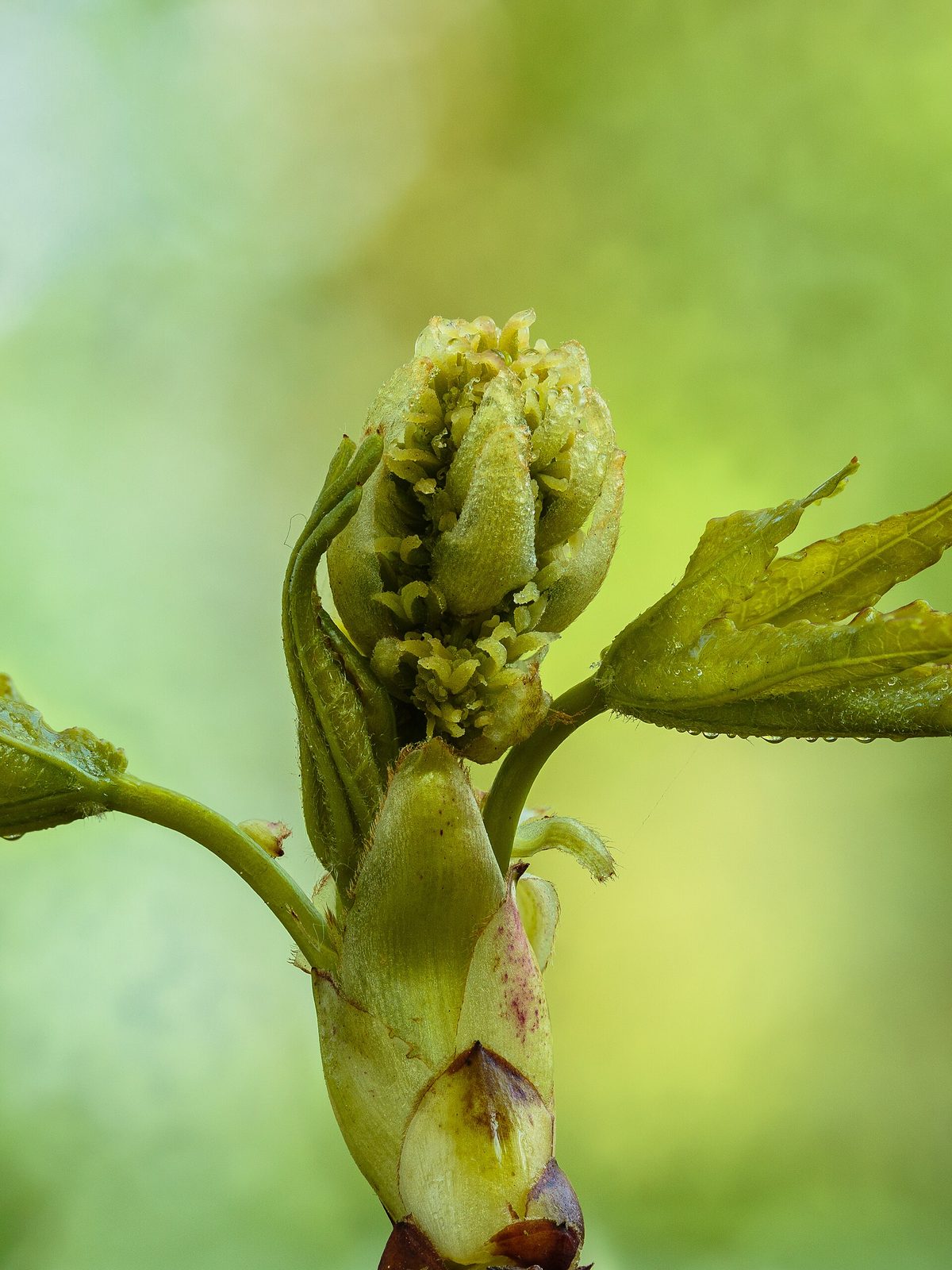
Photo: Dominicus Johannes Bergsma, CC BY-SA 4.0 via Wikimedia Commons

Quick facts
| Light: | Full sun and part shade (full sun preferred)123 |
|---|---|
| Soil: | Well drained, moist, occasionally dry and occasionally wet14 |
| Hardiness: | Zones 5a–9b11 source |
| Size: | 60–100 ft (18.29–30.48 m) × 35–50 ft (10.67–15.24 m)121 source |
| Growth rate: | Rapid12 |
| Bloom: | Yellow, green and white13 |
| Cats: | Not documented by major sources |
| Dogs: | Not documented by major sources |
| Native range: | ALA, ARK, BLZ, CNT, ELS, FLA, GEO, GUA, HON, ILL, INI, KTY, LOU, MRY, MSI, MSO, MXC, MXE, MXG, MXS, MXT, NCA, NIC, OKL, PEN, SCA, TEN, TEX, WVA6 |
| Family: | Altingiaceae |
How much light does a Sweetgum need?
Full sun is the preferred exposure for this tree, and part shade is also listed. The range given runs from full sun to partial shade. Pair that light with neutral to acidic soil that is moist yet well-drained. A mature tree reaches 60–100 ft (18.29–30.48 m) in height. Its spread is 35–50 ft (10.67–15.24 m).
Best soil for a Sweetgum
Moist yet well-drained soil suits this tree. The soil can be neutral to acidic. Deep soil is preferred, and the tree tolerates drought if its roots have ample room to spread. The drainage conditions listed are well drained, moist, occasionally dry and occasionally wet. Full sun is preferred over part shade. The spread is 35–50 ft (10.67–15.24 m). No cited source records a soil pH range.
Hardiness and temperature
Hardiness zones 5a through 9b are listed for this tree. Check your own USDA zone against that range. The tree is deciduous. Full sun is preferred, and part shade is also listed. Moist yet well-drained soil is the listed preference. Growth is rapid in the NC State listing. No cited source records a minimum temperature.
- Hardiness: Zones 5a–9b1
How to plant a Sweetgum
Zones 5a through 9b are the listed hardiness range for this tree. Check your own zone against that range before choosing a spot. Allow for a mature height of 60–100 ft (18.29–30.48 m). Allow for a spread of 35–50 ft (10.67–15.24 m) as well. The trunk may reach 4 ft (1.2 m) in diameter or more. Full sun is preferred, and part shade is also listed. Growth is rapid in the NC State listing and moderate in the University of Florida IFAS listing. It is native to the lower 48 US states.
- Hardiness: Zones 5a–9b1
Winter care
This tree is deciduous and is listed for hardiness zones 5a through 9b. A site colder than zone 5a or warmer than 9b falls outside the listed range. No cited source records a minimum temperature. Moist yet well-drained soil is the listed preference. Full sun is preferred, and part shade is also listed. Mature height is 60–100 ft (18.29–30.48 m). Growth is rapid in the NC State listing.
- Hardiness: Zones 5a–9b1
How to propagate a Sweetgum
Seed and stem cuttings are the propagation methods listed. Propagate sweetgum by seed. Leafy stem cuttings taken with a heel can be rooted in summer under mist. Two methods are named: seed, and leafy cuttings rooted under mist. Seed is named in the NC State listing, and cuttings in the Lady Bird Johnson Wildflower Center listing.
Common problems
Pests that may cause problems in some areas include webworms, caterpillars, borers and scale insects. Calico scale is also named in the pest list. Diseases that may occur on this tree are leaf spot, wood rot and bleeding necrosis. Both lists are given as problems that may occur, not as certainties.
| Problem | Kind |
|---|---|
| Webworms | Pest |
| Caterpillars | Pest |
| Borers | Pest |
| Scale insects | Pest |
| Calico scale | Pest |
| Leaf spot | Disease |
| Wood rot | Disease |
| Bleeding necrosis | Disease |
Is Sweetgum toxic to cats and dogs?
Recommended supplies
- Soil: a free-draining mix, and a pot with a drainage hole.
Questions and answers
- How much sun does sweetgum need?
- Full sun is preferred, and part shade is also listed. The range given is full sun to partial shade, with neutral to acidic soil that is moist yet well-drained. A mature tree reaches 60–100 ft (18.29–30.48 m) in height.
- How big does sweetgum get?
- Height is 60–100 ft (18.29–30.48 m), and spread is 35–50 ft (10.67–15.24 m). The trunk may reach 4 ft (1.2 m) in diameter or more. Growth is rapid in the NC State listing and moderate in the University of Florida IFAS listing.
- What pests and diseases affect sweetgum?
- Webworms, caterpillars, borers and scale insects may cause problems in some areas, and calico scale is also named. Leaf spot, wood rot and bleeding necrosis may occur. These are listed as problems that may occur, not as certainties.
Sources
- NC State Extension Gardener Plant Toolbox. https://plants.ces.ncsu.edu/plants/liquidambar-styraciflua/. Accessed 14 October 2026.
- University of Florida IFAS Extension (EDIS). https://ask.ifas.ufl.edu/publication/ST358. Accessed 14 October 2026.
- Lady Bird Johnson Wildflower Center (Native Plant Database). https://www.wildflower.org/plants/result.php?id_plant=LIST2. Accessed 14 October 2026.
- Clemson Cooperative Extension Home & Garden Information Center. https://hgic.clemson.edu/factsheet/plants-that-tolerate-drought/. Accessed 15 October 2026.
- USDA Forest Service Fire Effects Information System. https://www.fs.usda.gov/database/feis/plants/tree/liqsty/all.html. Accessed 14 October 2026.
- Royal Botanic Gardens, Kew (World Checklist of Vascular Plants). https://sftp.kew.org/pub/data-repositories/WCVP/wcvp.zip. Accessed 4 June 2026.
How this page was made
- Written with AI assistance from the sources listed on this page. AI is never the source of a fact.