Dawn Redwood (Metasequoia glyptostroboides)
Formerly Sequoia glyptostroboides, Metasequoia neopangaea, Metasequoia honshuenensis
Dawn redwood does best in full sun. Part shade is also listed as a light condition it takes. Its soil moisture range runs from dry to wet. It is a deciduous tree. Its growth rate is rapid. It is rated for hardiness zones 4a to 8b. Cat and dog toxicity is not documented on this page.
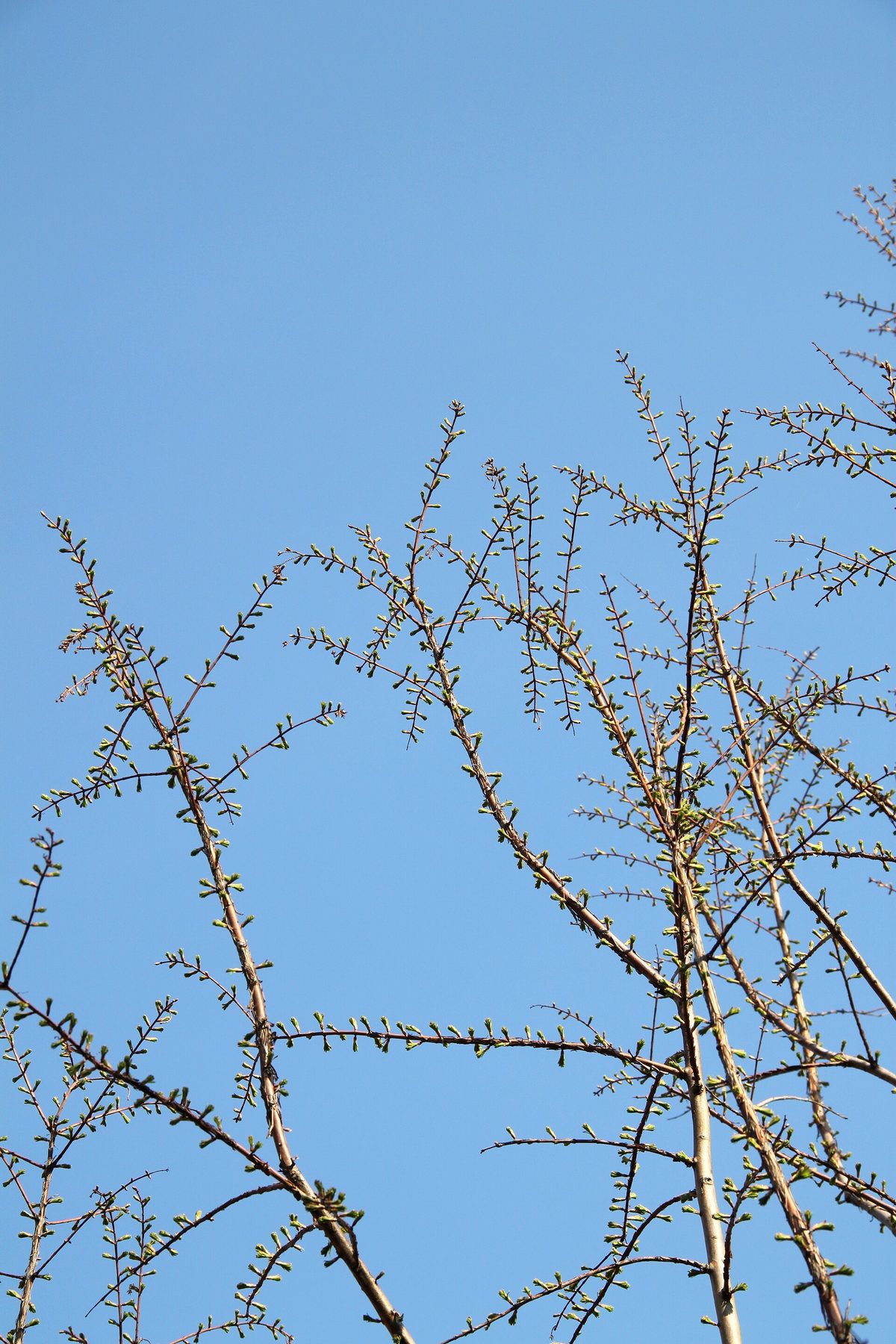
Photo: Wikimedia Commons contributor, CC BY-SA 3.0 via Wikimedia Commons

Quick facts
| Light: | Full sun and part shade (full sun preferred)12 |
|---|---|
| Water: | Dry to wet11 source |
| Soil: | Well drained, moist, occasionally wet and occasionally dry; pH 5–7.421 |
| Hardiness: | Zones 4a–8b21 source |
| Size: | 62–100.1 ft (18.9–30.5 m) × 15.1–24.9 ft (4.6–7.6 m)21 |
| Growth rate: | Rapid21 source |
| Cats: | Not documented by major sources |
| Dogs: | Not documented by major sources |
| Native range: | CHC, CHS3 |
| Family: | Cupressaceae |
How much light does a Dawn Redwood need?
Dawn redwood prefers full sun. Part shade is also listed as a light condition it takes. Choose a spot with full sun when you have the choice, because full sun is the preferred exposure. The listed light conditions are full sun and part shade, with full sun preferred. NC State Extension pairs that preference for full sun with moist, deep, well-drained soils.
How often to water a Dawn Redwood
The water range for dawn redwood runs from dry to wet. Cornell lists occasionally saturated or very wet soil within that range. The tree also takes occasional periods of dry soil. The preferred soil is moist and well drained. Moist soil is the described preference, while wet spells and dry spells are both listed as occasional conditions.
- Water: Dry to wet1
Best soil for a Dawn Redwood
Dawn redwood prefers moist, deep, well-drained soil. The drainage record lists well drained, moist, occasionally wet and occasionally dry conditions. Soil pH can run from 5 to 7.4. That range covers acid to neutral soil. Soil that is occasionally wet or occasionally dry is within what the tree accepts. Occasional periods of dry soil are listed as tolerated, and so is occasionally saturated or very wet soil.
Hardiness and temperature
Dawn redwood is rated for hardiness zones 4a to 8b. That range takes in 4a, 4b, 5a, 5b, 6a, 6b, 7a, 7b, 8a and 8b. It is a deciduous conifer in the cypress family. Zone 4a is the cold end of that range, and zone 8b is the warm end.
- Hardiness: Zones 4a–8b2
How to plant a Dawn Redwood
Dawn redwood suits planting in hardiness zones 4a to 8b. Choose a site with full sun, the preferred light. Mature height is 62–100.1 ft (18.9–30.5 m). Mature spread is 15.1–24.9 ft (4.6–7.6 m), so leave room for that width. The soil should be moist, deep and well drained, with a pH between 5 and 7.4. The tree grows at a rapid rate. In the lower 48 US states it is an introduced species, and it is a tree.
- Hardiness: Zones 4a–8b2
Winter care
Winter hardiness is recorded as zones 4a to 8b. Zone 4a marks the coldest zone in that range. Zone 8b marks the warmest zone in that range. A site outside zones 4a to 8b is outside the recorded range. Dawn redwood is a deciduous conifer in the cypress family.
- Hardiness: Zones 4a–8b2
How to propagate a Dawn Redwood
Dawn redwood can be propagated by seed. It can also be propagated by stem cuttings. Those are the two propagation methods listed for it. Seed is the first method in that list. Stem cuttings are the second method. Its growth rate is listed as rapid. It is a deciduous tree. Rooting times and conditions are not documented here.
- Propagation: Seed and stem cuttings2
Common problems
Japanese beetles are the pest recorded for dawn redwood. NC State Extension says Japanese beetles will eat the foliage. The foliage is the part of the tree they are listed as eating. This is a deciduous conifer, and the pest list names no other insect.
- Common pests: japanese beetles2
| Problem | Kind |
|---|---|
| Japanese beetles | Pest |
Is Dawn Redwood toxic to cats and dogs?
Recommended supplies
- Soil: a free-draining mix, and a pot with a drainage hole.
Questions and answers
- How much sun does dawn redwood need?
- Dawn redwood prefers full sun. Part shade is also listed as a light condition it takes. Full sun is the preferred exposure, and part shade is the other listed option.
- How big does dawn redwood get?
- Mature height is 62–100.1 ft (18.9–30.5 m). Mature spread is 15.1–24.9 ft (4.6–7.6 m). Its growth rate is listed as rapid.
- Which hardiness zones suit dawn redwood?
- Dawn redwood is rated for hardiness zones 4a to 8b. It is a deciduous conifer in the cypress family. That means it is a tree with a listed zone range from 4a at the cold end to 8b at the warm end.
Sources
- Cornell University CALS Woody Plants Database. https://woodyplants.cals.cornell.edu/plant/154. Accessed 14 October 2026.
- NC State Extension Gardener Plant Toolbox. https://plants.ces.ncsu.edu/plants/metasequoia-glyptostroboides/. Accessed 14 October 2026.
- Royal Botanic Gardens, Kew (World Checklist of Vascular Plants). https://sftp.kew.org/pub/data-repositories/WCVP/wcvp.zip. Accessed 4 June 2026.
How this page was made
- Written with AI assistance from the sources listed on this page. AI is never the source of a fact.