Bald Cypress (Taxodium distichum)
Formerly Cupressus disticha, Taxodium ascendens, Cuprespinnata disticha
Keep bald cypress alive outdoors with full sun to part shade and medium water. Full sun suits it best. Part shade also works. Medium water is enough for this tree. That water level doesn't change across its range. Use full sun when you can, and part shade when you can't. Toxicity to cats and dogs is not documented by any source cited here.
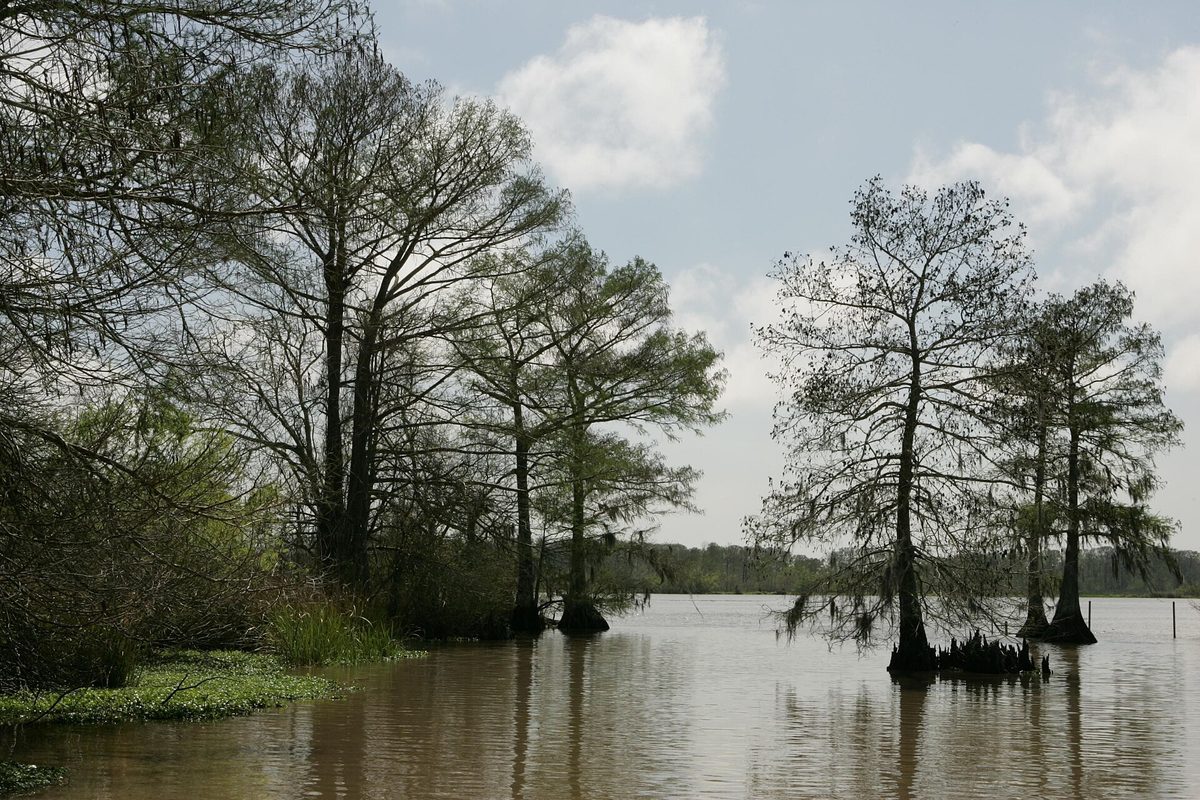
Photo: Steve Hillebrand, U.S. Fish and Wildlife Service, Public domain via Wikimedia Commons

Quick facts
| Light: | Full sun and part shade (full sun preferred)123 |
|---|---|
| Water: | Medium31 source |
| Soil: | Well drained, moist, occasionally wet, occasionally dry and poorly drained; pH 5–714 |
| Hardiness: | Zones 4a–9b11 source |
| Size: | Sources differ: University of Florida IFAS Extension (EDIS) × 20–35 ft (6.1–10.67 m)54231Sources differ |
| Growth rate: | Sources differ: University of Florida IFAS Extension (EDIS)152Sources differ |
| Bloom: | Purple13 |
| Cats: | Not documented by major sources |
| Dogs: | Not documented by major sources |
| Native range: | ALA, ARK, DEL, FLA, GEO, GUA, ILL, INI, KTY, LOU, MRY, MSI, MSO, MXC, MXE, MXG, MXN, MXS, NCA, NWY, OKL, SCA, TEN, TEX, VRG6 |
| Family: | Cupressaceae |
How much light does a Bald Cypress need?
Full sun to part shade is what bald cypress needs outdoors. Full sun is its preferred light level. Part shade is also an option if full sun isn't available. Both light levels are documented as suitable for this tree. Choose whichever of the two matches the conditions at your planting site.
How often to water a Bald Cypress
Medium water keeps bald cypress healthy outdoors. Medium is both the minimum and the maximum documented water need for this tree. This tree also tolerates soil that is well-drained, moist, occasionally wet, occasionally dry, or poorly drained. That range of drainage tolerance pairs with its medium water need.
- Water: Medium3
Best soil for a Bald Cypress
Bald cypress tolerates a wide range of soil drainage outdoors. Documented drainage types include well-drained, moist, occasionally wet, occasionally dry, and poorly drained soil. The soil pH range documented for this tree runs from 5 to 7. That pH range covers soils from moderately acidic to neutral for this tree. Both the soil pH range and the broad drainage tolerance are documented for bald cypress.
Hardiness and temperature
Bald cypress grows outdoors in USDA zones 4a to 9b. Zone 4a is the coldest zone documented for this tree. Zone 9b is the warmest zone documented for this tree. That is the full hardiness range documented for bald cypress outdoors. No cited source gives an exact minimum temperature or humidity level for this tree. Use the USDA zone number as the main planting guide outdoors. Zones between 4a and 9b all fall within the documented range for this species.
- Hardiness: Zones 4a–9b1
Pruning a Bald Cypress
Pruning stays simple for bald cypress outdoors. The only documented pruning task is removing dead wood. No other type of pruning is documented for this tree. Remove dead wood whenever you notice it on the tree. That keeps care low for this tree year-round.
- Pruning: Remove dead growth only5
How to plant a Bald Cypress
Choose a planting site that fits bald cypress's outdoor hardiness range of USDA zones 4a to 9b. Zone 4a is the cold limit of that documented range. Zone 9b is the warm limit of that same range. Check your own USDA zone before you choose a planting site.
- Hardiness: Zones 4a–9b1
Winter care
Bald cypress survives outdoor winters within USDA zones 4a to 9b. Zone 4a is the cold edge of that documented range. Zone 9b is the warm edge of that same range. This hardiness range is the main documented guide for winter planting. Match your planting site to your own USDA zone for winter survival. An exact minimum winter temperature and humidity level are not documented by the sources used here. Outside that USDA zone range, winter cold may be more than this tree is documented to handle.
- Hardiness: Zones 4a–9b1
How to propagate a Bald Cypress
Bald cypress is propagated from seed. Seed is the only propagation method documented for this tree. No other propagation method is documented for this species. If you want a new tree, growing from seed is the documented path. Seed is the documented method for home growers to use.
Common problems
Bagworms and spider mites are the pests documented on bald cypress outdoors. Both pests are documented as affecting this tree. Twig blight and cercospora needle blight are the diseases documented for this tree. Removing dead or damaged wood, the only documented pruning task, can help address affected growth.
| Problem | Kind |
|---|---|
| Bagworms | Pest |
| Spider mites | Pest |
| Twig blight | Disease |
| Cercospora needle blight | Disease |
Is Bald Cypress toxic to cats and dogs?
Recommended supplies
- Soil: a free-draining mix, and a pot with a drainage hole.
Questions and answers
- What zones can bald cypress grow in?
- USDA zones 4a to 9b are the range documented for bald cypress outdoors. That range spans cold northern winters to warm southern summers. Check your local zone to see where you fall in that range.
- How much water does bald cypress need?
- Bald cypress needs medium water outdoors. Keep the soil evenly moist rather than letting it dry out completely. It also tolerates soil that's occasionally wet or poorly drained.
- How do you prune bald cypress?
- This tree needs very little pruning outdoors. Remove only dead or damaged wood as you notice it. There's no need for regular shaping cuts on this tree.
Sources
- NC State Extension Gardener Plant Toolbox. https://plants.ces.ncsu.edu/plants/taxodium-distichum/. Accessed 14 October 2026.
- University of Florida IFAS Extension (EDIS). https://ask.ifas.ufl.edu/publication/ST620. Accessed 14 October 2026.
- Lady Bird Johnson Wildflower Center. https://www.wildflower.org/plants/result.php?id_plant=TADI2. Accessed 14 October 2026.
- Cornell University CALS Woody Plants Database. https://woodyplants.cals.cornell.edu/plant/251. Accessed 14 October 2026.
- Clemson Cooperative Extension Home & Garden Information Center. https://hgic.clemson.edu/factsheet/bald-cypress/. Accessed 14 October 2026.
- Royal Botanic Gardens, Kew (World Checklist of Vascular Plants). https://sftp.kew.org/pub/data-repositories/WCVP/wcvp.zip. Accessed 4 June 2026.
How this page was made
- Written with AI assistance from the sources listed on this page. AI is never the source of a fact.