American Elm (Ulmus americana)
Formerly Ulmus alba, Ulmus dentata, Ulmus obovata
Give American elm (Ulmus americana) full sun, its preferred light. Part shade is also listed for it. It is rated for USDA zones 3a to 9b. It is a deciduous tree. Its growth rate is rapid. Soil can range from wet to well-drained. Pet toxicity for cats and dogs is not documented on this page.
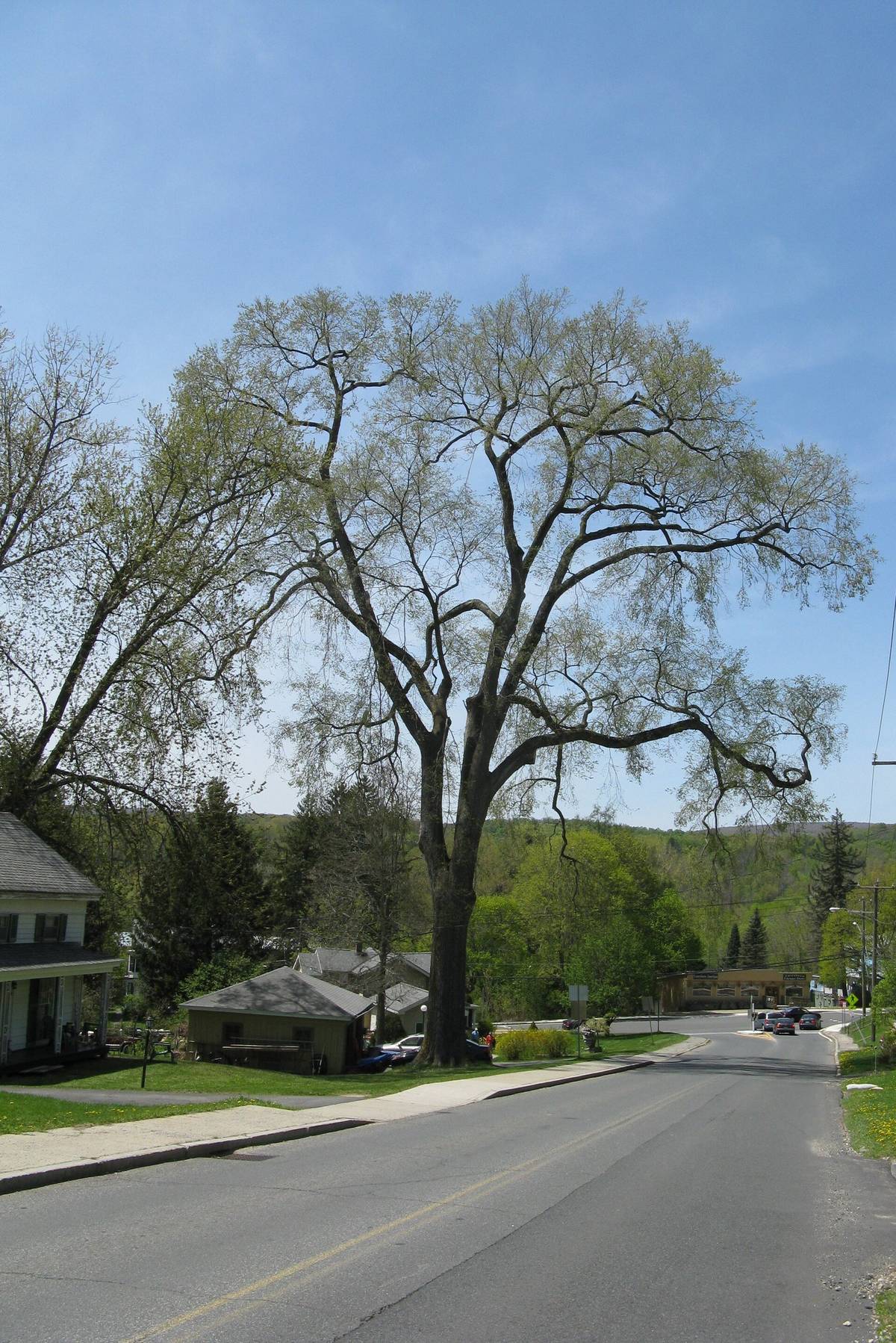
Photo: John Phelan, CC BY 3.0 via Wikimedia Commons

Quick facts
| Light: | Full sun and part shade (full sun preferred)123 |
|---|---|
| Soil: | Well drained, moist, occasionally dry and occasionally wet; pH 6–812 |
| Hardiness: | Zones 3a–9b11 source |
| Size: | 60–89.9 ft (18.3–27.4 m) × 49.9–69.9 ft (15.2–21.3 m)12 |
| Growth rate: | Rapid12 |
| Bloom: | Feb–Mar (North Carolina), Red and green131 source |
| Cats: | Not documented by major sources |
| Dogs: | Not documented by major sources |
| Native range: | ALA, ARK, CNT, DEL, FLA, GEO, ILL, INI, IOW, KAN, KTY, LOU, MAI, MAN, MAS, MIC, MIN, MNT, MRY, MSI, MSO, MXE, MXN, NBR, NCA, NDA, NEB, NSC, NWH, NWJ, NWY, OHI, OKL, ONT, PEI, PEN, QUE, RHO, SAS, SCA, SDA, TEN, TEX, VER, VRG, WDC, WIS, WVA, WYO4 |
| Family: | Ulmaceae |
How much light does an American Elm need?
American elm does best in full sun, and part shade is also listed for it. Full sun here means six or more hours of direct sunlight a day. The range recorded for this tree runs from full sun to partial shade. Part shade is a listed condition for the tree, while full sun is the preferred one.
Best soil for an American Elm
This tree is recorded in soil that is well drained, moist, occasionally dry or occasionally wet. The drainage range runs from wet to well-drained soil. Moist soil is listed, and so are spells when the ground is occasionally wet or occasionally dry. The recorded pH range is 6 to 8, which the source labels neutral. That puts the range between pH 6.0 and 8.0 on the soil pH scale.
Hardiness and temperature
American elm is rated for USDA hardiness zones 3a to 9b. The recorded list runs 3a, 3b, 4a, 4b, 5a, 5b, 6a, 6b, 7a, 7b, 8a, 8b, 9a and 9b. Zone 3a is the coldest zone in that range, and zone 9b is the warmest. Check your own USDA zone against that range before you plant.
- Hardiness: Zones 3a–9b1
Pruning an American Elm
The pruning method recorded for American elm is hard renewal pruning, done in the fall. That means cutting the tree to the ground in the fall every two or three years. Cut back this way, the tree can be kept at a shrub size. The recorded mature height is 60–89.9 ft (18.3–27.4 m).
- Pruning: Hard renewal pruning (Sep–Nov)1
How to plant an American Elm
Plant American elm where your USDA zone falls between 3a and 9b. Give it room for a mature spread of 49.9–69.9 ft (15.2–21.3 m). The tree reaches 60–89.9 ft (18.3–27.4 m) tall at maturity. Choose a site with full sun, which is the preferred light. Its growth rate is rapid. Pick ground that is well drained or moist, with a pH of 6 to 8.
- Hardiness: Zones 3a–9b1
Winter care
As a deciduous tree, American elm is recorded as hardy in zones 3a to 9b. In zone 3a, the coldest zone listed, the tree is still recorded as hardy. In zone 9b, the warmest zone listed, it is also recorded as hardy. The full list runs through each half zone from 3a to 9b.
- Hardiness: Zones 3a–9b1
Care calendar
| Task | Jan | Feb | Mar | Apr | May | Jun | Jul | Aug | Sep | Oct | Nov | Dec |
|---|---|---|---|---|---|---|---|---|---|---|---|---|
| Prune | Prune in Sep | Prune in Oct | Prune in Nov | |||||||||
| Bloom North Carolina | Bloom in Feb | Bloom in Mar |
How to propagate an American Elm
You can propagate American elm from seed or from cuttings, and both appear in the recorded methods. Seed and stem cuttings are the two methods recorded. The cuttings listed are softwood cuttings. Nothing else is recorded as a propagation method for this tree. Choose seed or a softwood stem cutting, whichever suits the time and material you have.
Common problems
The diseases recorded for American elm are Dutch elm disease, elm phloem necrosis and wetwood. Of those three, Dutch elm disease is the one described in detail: it is a fatal fungal disease spread by airborne bark beetles. Elm phloem necrosis is also listed as a common disease of this tree. Wetwood is listed as a common disease of this tree too.
- Common diseases: dutch elm disease, elm phloem necrosis and wetwood1
| Problem | Kind |
|---|---|
| Dutch elm disease | Disease |
| Elm phloem necrosis | Disease |
| Wetwood | Disease |
Is American Elm toxic to cats and dogs?
Recommended supplies
- Soil: a free-draining mix, and a pot with a drainage hole.
Questions and answers
- How much sun does American elm need?
- American elm prefers full sun, which means six or more hours of direct sunlight a day. Part shade is also listed for it. The recorded range runs from full sun to partial shade.
- Which zones can grow American elm?
- American elm is rated for USDA hardiness zones 3a to 9b. Zone 3a is the coldest zone listed, and zone 9b is the warmest. Check your own zone against that range before you plant it.
- How big does American elm get?
- A mature American elm stands 60–89.9 ft (18.3–27.4 m) tall. Its mature spread is 49.9–69.9 ft (15.2–21.3 m). Its growth rate is rapid, and it is a deciduous tree.
Sources
- NC State Extension. https://plants.ces.ncsu.edu/plants/ulmus-americana/. Accessed 14 October 2026.
- University of Florida IFAS Extension (EDIS). https://ask.ifas.ufl.edu/publication/ST649. Accessed 14 October 2026.
- Lady Bird Johnson Wildflower Center. https://www.wildflower.org/plants/result.php?id_plant=ulam. Accessed 14 October 2026.
- Royal Botanic Gardens, Kew (World Checklist of Vascular Plants). https://sftp.kew.org/pub/data-repositories/WCVP/wcvp.zip. Accessed 4 June 2026.
How this page was made
- Written with AI assistance from the sources listed on this page. AI is never the source of a fact.