Callery Pear (Pyrus calleryana)
Formerly Pyrus fauriei, Pyrus mairei, Pyrus koehnei
Keep Callery pear in full sun, though it tolerates part shade. Watering needs are not documented on this page. Toxicity to cats and dogs is not documented on this page either. It is a deciduous tree with a rapid growth rate, reaching 30 to 50 ft (9.14 to 15.24 m) tall.
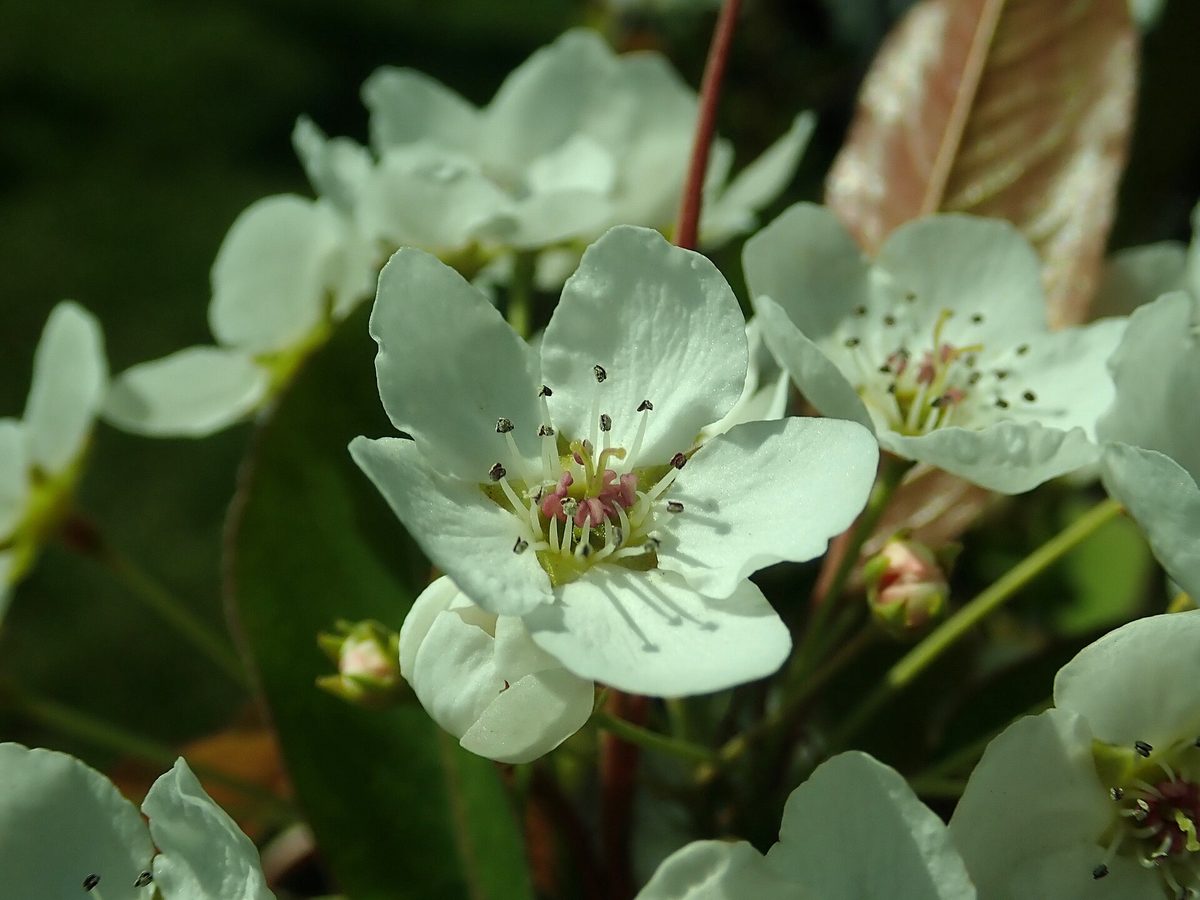
Photo: Salicyna, CC BY-SA 4.0 via Wikimedia Commons

Quick facts
| Light: | Full sun and part shade (full sun preferred)123 |
|---|---|
| Soil: | Well drained, moist, occasionally dry and occasionally wet; pH 5–814 |
| Hardiness: | Zones 5a–9b11 source |
| Size: | 30–50 ft (9.14–15.24 m) × 20–35 ft (6.1–10.67 m)15 |
| Growth rate: | Rapid156 |
| Bloom: | Apr–May, White1721 source |
| Cats: | Not documented by major sources |
| Dogs: | Not documented by major sources |
| Native range: | CHC, CHN, CHS, JAP, KOR, TAI, VIE8 |
| Family: | Rosaceae |
How much light does a Callery Pear need?
Callery pear grows best in full sun. Full sun is defined as 6 or more hours of direct sunlight a day. The tree also tolerates part shade, though full sun is the preferred exposure. At maturity this deciduous tree stands 30 to 50 ft (9.14 to 15.24 m) tall.
Best soil for a Callery Pear
Well drained soil is among the conditions listed for Callery pear. The listed drainage conditions also include moist soil, soil that is occasionally dry, and soil that is occasionally wet. One university database adds that the tree tolerates occasionally saturated or very wet soil. For soil chemistry, it tolerates acid to alkaline soil, from pH 5 to pH 8. Drainage and pH are the two soil facts documented for this tree. Nothing further about soil texture is documented.
Hardiness and temperature
USDA hardiness zones 5a to 9b are listed for this tree. The listing names each half-zone from 5a through 9b. Gardeners in zones 5 through 9 fall inside that range. No cited source records a minimum temperature for this tree. Humidity needs are not documented either. The tree is deciduous.
- Hardiness: Zones 5a–9b1
How to plant a Callery Pear
Plant Callery pear in USDA hardiness zones 5a to 9b. Leave room for a tree that reaches 20 to 35 ft (6.1 to 10.67 m) wide at maturity. It also grows 30 to 50 ft (9.14 to 15.24 m) tall. The growth rate is rapid. Choose a spot with full sun or part shade and well drained soil. Planting depth and planting dates are not documented on this page.
- Hardiness: Zones 5a–9b1
Winter care
As a deciduous tree, Callery pear is listed as hardy in zones 5a to 9b. The coldest zone listed is 5a, and the warmest is 9b. No cited source records a minimum temperature, so a specific cold limit is not documented. Specific winter protection steps are not documented either.
- Hardiness: Zones 5a–9b1
Common problems
Aphids, scales and borers are the insect pests that may affect Callery pear. These insects are listed as potential problems, not certain ones. Among diseases, the tree can be affected by fire blight, crown gall and cedar quince rust. Fire blight can spread to other Rosaceous crops, such as pears, apples and loquat.
| Problem | Kind |
|---|---|
| Aphids | Pest |
| Scales | Pest |
| Borers | Pest |
| Fire blight | Disease |
| Crown gall | Disease |
| Cedar quince rust | Disease |
Is Callery Pear toxic to cats and dogs?
Recommended supplies
- Soil: a free-draining mix, and a pot with a drainage hole.
Questions and answers
- How much sun does Callery pear need?
- Callery pear grows best in full sun, meaning 6 or more hours of direct sunlight a day. It also tolerates part shade, but full sun is the preferred exposure.
- How big does a Callery pear get?
- At maturity it reaches 30 to 50 ft (9.14 to 15.24 m) tall. It spreads 20 to 35 ft (6.1 to 10.67 m) wide. Its growth rate is rapid.
- What soil pH does Callery pear tolerate?
- It tolerates acid to alkaline soil, from pH 5 to pH 8. Well drained soil is among the drainage conditions listed for it.
Sources
- NC State Extension Gardener Plant Toolbox. https://plants.ces.ncsu.edu/plants/pyrus-calleryana/. Accessed 14 October 2026.
- Clemson Cooperative Extension HGIC. https://hgic.clemson.edu/factsheet/bradford-pear/. Accessed 14 October 2026.
- University of Florida IFAS Extension (EDIS). https://ask.ifas.ufl.edu/publication/ST537?downloadOpen=true. Accessed 14 October 2026.
- Cornell University CALS Woody Plants Database. https://woodyplants.cals.cornell.edu/plant/200. Accessed 14 October 2026.
- University of Florida IFAS Extension (EDIS). https://ask.ifas.ufl.edu/publication/ST537. Accessed 30 October 2026.
- Utah State University Extension. https://extension.usu.edu/treebrowser/catalog/pear-callery. Accessed 30 October 2026.
- Chicago Botanic Garden. https://www.chicagobotanic.org/plant-information/plant-finder/pyrus-calleryana-glens-form-callery-pear. Accessed 15 October 2026.
- Royal Botanic Gardens, Kew (World Checklist of Vascular Plants). https://sftp.kew.org/pub/data-repositories/WCVP/wcvp.zip. Accessed 4 June 2026.
How this page was made
- Written with AI assistance from the sources listed on this page. AI is never the source of a fact.