Northern Spicebush (Lindera benzoin)
Formerly Benzoin aestivale, Laurus benzoin, Euosmus benzoin
Give northern spicebush full sun, part shade, or full shade outdoors. Its water need is medium. It grows slowly. It suits USDA hardiness zones 5a to 9b. It blooms white and yellow flowers from March to May. It grows 8-15 ft (2.44-4.57 m) tall at maturity. No cited source lists this plant's toxicity to cats or dogs.
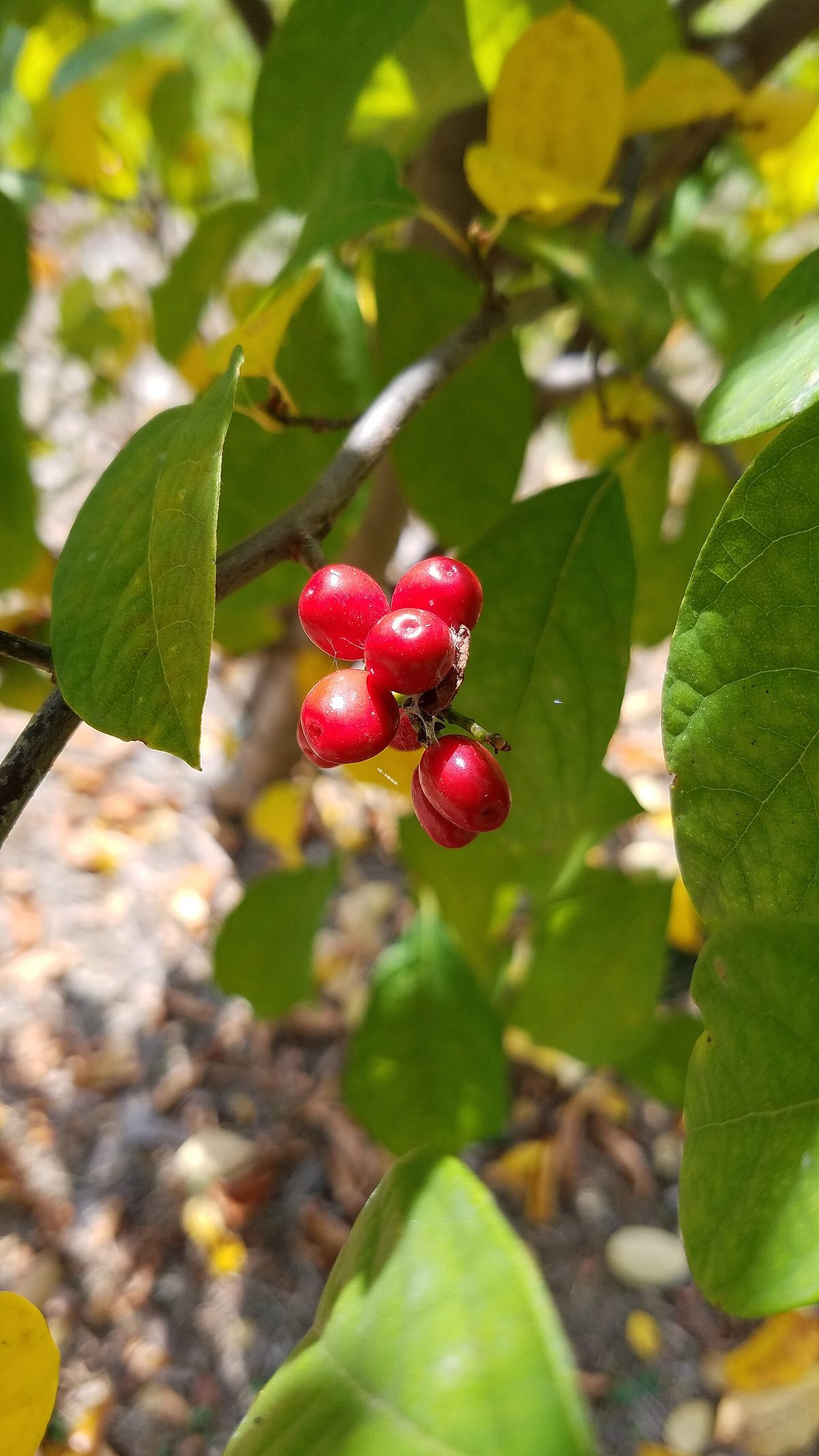
Photo: Dan Keck from Ohio, CC0 via Wikimedia Commons

Quick facts
| Light: | Full sun, part shade and full shade (full sun preferred)11 source |
|---|---|
| Water: | Medium11 source |
| Soil: | Well drained, moist, occasionally dry and occasionally wet; pH 5–821 source |
| Hardiness: | Zones 5a–9b31 source |
| Size: | 8–15 ft (2.44–4.57 m) × 6–15 ft (1.83–4.57 m)31 source |
| Growth rate: | Slow31 source |
| Bloom: | Mar–May, White and yellow11 source |
| Cats: | Not documented by major sources |
| Dogs: | Not documented by major sources |
| Family: | Lauraceae |
How much light does a Northern Spicebush need?
Outdoors, northern spicebush grows in full sun, part shade, or full shade, with full sun named as its best light. That listed range means a shaded planting spot still falls within its documented light tolerance, even though full sun is preferred. Part shade sits in between those two extremes on the same documented list.
- Light: Full sun, part shade and full shade (full sun preferred)1
How often to water a Northern Spicebush
This shrub's water need outdoors is medium, not low or high. Check the soil before watering rather than keeping to a fixed schedule, since its needs sit in that middle range. It also tolerates occasional dry spells and occasional wet soil, as well as well-drained, moist conditions.
- Water: Medium1
Best soil for a Northern Spicebush
Rich, well-drained soil with a pH between 5 and 8 suits northern spicebush best. That pH band spans acidic to slightly alkaline ground, wide enough that most planting sites already fall inside it. Beyond drainage, this shrub tolerates soil that stays moist, soil that floods occasionally, and soil that dries out occasionally. So a planting site does not need to stay perfectly even in moisture to suit it.
Hardiness and temperature
USDA hardiness zones 5a through 9b mark where northern spicebush survives winter outdoors. Zone 5a is the coldest zone on that list, and zone 9b is the warmest. The zones in between, from 5b up through 9a, are also within its documented hardy range. Check your own zone against that 5a-to-9b range before planting it outdoors.
- Hardiness: Zones 5a–9b3
Pruning a Northern Spicebush
Pruning this shrub outdoors means cutting it for shape rather than shearing it. Shaping cuts like this preserve the plant's ornamental value outdoors, while shearing does not. Prune it only when it needs shaping outdoors, not on a fixed schedule.
- Pruning: Light shaping4
How to plant a Northern Spicebush
Choose a planting site within USDA zones 5a to 9b for northern spicebush. Zone 5a is the coldest zone where it is listed as hardy, and 9b the warmest. If your garden falls outside that range, check your local zone before planting it outdoors. Give it room to grow, since mature plants reach 8-15 ft (2.44-4.57 m) tall and 6-15 ft (1.83-4.57 m) wide.
- Hardiness: Zones 5a–9b3
Winter care
Winter hardiness for northern spicebush runs from USDA zone 5a to zone 9b. Zone 5a marks its documented cold limit for winter survival outdoors, and zone 9b its documented warm limit. That hardiness range covers everything from zone 5a up through zone 9b without a gap.
- Hardiness: Zones 5a–9b3
How to propagate a Northern Spicebush
Seed is the only propagation method documented for northern spicebush. Collect the seeds in late summer through October, once the fruit on the plant has turned red, since that color change marks them as ready. No other propagation method is documented for this plant species.
- Propagation: Seed1
Common problems
No significant disease problems are documented for northern spicebush overall. The one documented exception is laurel wilt, a disease this species is known to be susceptible to. Laurel wilt is the single disease problem recorded for this plant, with no other significant issues documented.
- Common diseases: laurel wilt3
| Problem | Kind |
|---|---|
| Laurel wilt | Disease |
Is Northern Spicebush toxic to cats and dogs?
Recommended supplies
- Soil: a free-draining mix, and a pot with a drainage hole.
Questions and answers
- What light does northern spicebush need outdoors?
- Give it full sun, part shade, or full shade outdoors, since all three are listed as light levels it grows in. Full sun is named as the best light level for it.
- How much water does northern spicebush need?
- Its water need is medium outdoors, not low or high, so check the soil instead of following a fixed schedule. It also tolerates occasional dry spells and occasional wet soil, besides well-drained, moist conditions.
- What USDA zones can northern spicebush grow in?
- It grows outdoors in USDA hardiness zones 5a through 9b, from zone 5a as the coldest to zone 9b as the warmest. Check your own zone against that range before planting it.
Sources
- Lady Bird Johnson Wildflower Center. https://www.wildflower.org/plants/result.php?id_plant=libe3. Accessed 15 November 2026.
- Penn State Extension. https://extension.psu.edu/rain-garden-plants-spicebush. Accessed 15 November 2026.
- NC State Extension Gardener Plant Toolbox. https://plants.ces.ncsu.edu/plants/lindera-benzoin/. Accessed 15 November 2026.
- Penn State Extension. https://extension.psu.edu/native-plants-of-pa-spicebush-lindera-benzoin. Accessed 15 November 2026.
How this page was made
- Written with AI assistance from the sources listed on this page. AI is never the source of a fact.