Japanese Maple (Acer palmatum)
Formerly Acer amoenum, Acer ornatum, Acer septemlobum
Japanese maple, Acer palmatum, does best in full sun. It also grows in part shade and full shade. Water it during dry weather, because this tree is sensitive to drought. Its water range runs from medium to wet. It is a slow-growing deciduous tree. It reaches 15–25 ft (4.57–7.62 m) tall. Toxicity to cats and dogs is not documented on this page.
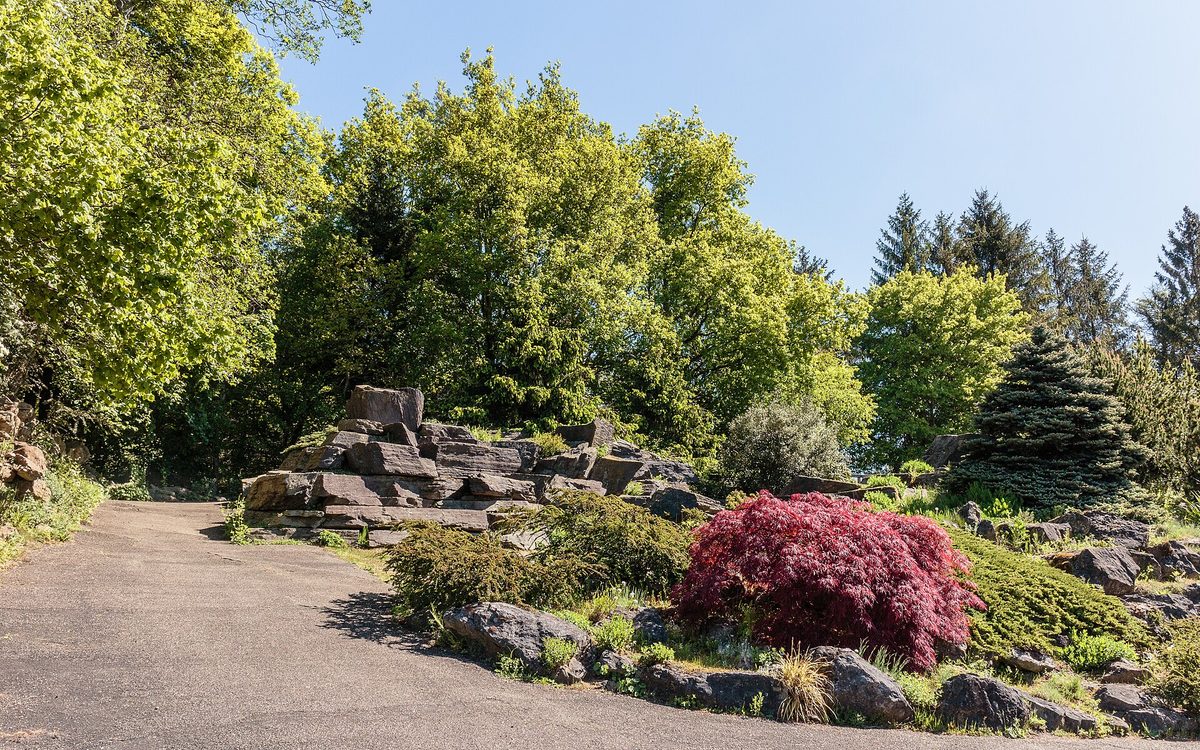
Photo: Agnes Monkelbaan, CC BY-SA 4.0 via Wikimedia Commons

Quick facts
| Light: | Full sun, part shade and full shade (full sun preferred)12 |
|---|---|
| Water: | Medium to wet31 source |
| Soil: | Well drained, moist and occasionally dry; pH 5–7.414 |
| Hardiness: | Zones 5a–8b41 source |
| Size: | 15–25 ft (4.57–7.62 m) × 15–25 ft (4.57–7.62 m)12 |
| Growth rate: | Slow23 |
| Bloom: | Mar–Apr and May–Jun, Yellow, purple and red541 source |
| Cats: | Not documented by major sources |
| Dogs: | Not documented by major sources |
| Native range: | JAP, KOR6 |
| Family: | Sapindaceae |
How much light does a Japanese Maple need?
Full sun is the preferred exposure for Japanese maple, and the species is also listed for part shade and full shade. One source lists partial sun or partial shade and calls the tree shade tolerant. Choose a spot with that range in mind, with full sun as the first choice and shade as an accepted alternative.
How often to water a Japanese Maple
Water needs for Japanese maple run from medium to wet. During dry weather, provide irrigation, as this tree is sensitive to drought. The soil it is listed for is well drained and moist, with occasional periods of dry soil. Even so, dry weather calls for irrigation, since the tree is sensitive to drought.
- Water: Medium to wet3
Best soil for a Japanese Maple
Japanese maple is listed for soil that is well drained, moist and occasionally dry, and a second source simply lists good drainage. One source describes consistently moist, well-drained soil with occasional periods of dry soil. The tree tolerates acid to neutral soil, with a pH range of 5 to 7.4. The lower limit is pH 5 and the upper limit is pH 7.4, as stated for this tree.
Hardiness and temperature
Japanese maple is listed for USDA hardiness zones 5a to 8b. The source names each step: 5a, 5b, 6a, 6b, 7a, 7b, 8a and 8b. The listing begins at zone 5a and ends at zone 8b. Frost damage, especially from late frosts, is among the problems that can occur. Leaf scorch is also listed as a problem that can occur. The tree is deciduous. No cited source records a minimum temperature or a humidity need for this tree.
- Hardiness: Zones 5a–8b4
Pruning a Japanese Maple
Light shaping is the only pruning type listed for Japanese maple, and the listed timing is late summer to early fall. Pruning in late summer and early fall, one source says, minimizes the impact on growth. The growth rate is slow, at 10 to 15 ft (3–4.6 m) in 15 years.
- Pruning: Light shaping (Aug–Sep)3
How to plant a Japanese Maple
Check that your USDA hardiness zone falls within 5a to 8b before planting. Leave room for a mature tree 15–25 ft (4.57–7.62 m) tall and 15–25 ft (4.57–7.62 m) wide. One source describes the spread as equal to or greater than the height. Full sun is preferred, and part shade or full shade is also listed. The species is native to Japan and Korea, and it is recorded as introduced in the contiguous United States.
- Hardiness: Zones 5a–8b4
Winter care
One source notes that frost damage can occur, especially from late frosts. The tree is listed for zones 5a through 8b. Frost damage sits beside anthracnose, leaf scorch, botrytis and canker in the disease list. Japanese maple is a deciduous tree. Light shaping is listed for late summer and early fall. The tree is also a slow grower. No cited source records a minimum temperature or a winter protection method.
- Hardiness: Zones 5a–8b4
Care calendar
| Task | Jan | Feb | Mar | Apr | May | Jun | Jul | Aug | Sep | Oct | Nov | Dec |
|---|---|---|---|---|---|---|---|---|---|---|---|---|
| Prune | Prune in Aug | Prune in Sep | ||||||||||
| Bloom | Bloom in Mar | Bloom in Apr | Bloom in May | Bloom in Jun |
Common problems
Aphids, scale, maple worms, leafrollers and leafhoppers are described as occasional pests. Borers and invasive shot hole borer are also on the pest list. If borers become a problem, one source says it indicates the tree is not growing well. Listed diseases are anthracnose, leaf scorch, frost damage, botrytis and canker. Botrytis and canker problems are described as possible.
| Problem | Kind |
|---|---|
| Aphids | Pest |
| Scale insects | Pest |
| Leafrollers | Pest |
| Leafhoppers | Pest |
| Maple worms | Pest |
| Borers | Pest |
| Invasive shot hole borer | Pest |
| Anthracnose | Disease |
| Leaf scorch | Disease |
| Frost damage | Disease |
| Botrytis | Disease |
| Canker | Disease |
Is Japanese Maple toxic to cats and dogs?
Recommended supplies
- Soil: a free-draining mix, and a pot with a drainage hole.
Questions and answers
- Does Japanese maple like full sun?
- Full sun is the preferred exposure for Japanese maple. It is also listed for part shade and full shade. A second source lists partial sun or partial shade and calls the tree shade tolerant.
- How big does a Japanese maple get?
- A mature Japanese maple reaches 15–25 ft (4.57–7.62 m) in height, and the spread is listed at the same range. The growth rate is slow, at 10 to 15 ft (3–4.6 m) in 15 years.
- Which hardiness zones suit Japanese maple?
- Japanese maple is listed for USDA zones 5a to 8b. That includes 5a, 5b, 6a, 6b, 7a, 7b, 8a and 8b. Frost damage can occur, especially from late frosts.
Sources
- Cornell University CALS Woody Plants Database. https://woodyplants.cals.cornell.edu/plant/9. Accessed 15 October 2026.
- University of Florida IFAS Extension (EDIS). https://ask.ifas.ufl.edu/publication/ST023. Accessed 15 October 2026.
- Clemson Cooperative Extension Home & Garden Information Center. https://hgic.clemson.edu/factsheet/maple/. Accessed 21 October 2026.
- NC State Extension Gardener Plant Toolbox. https://plants.ces.ncsu.edu/plants/acer-palmatum/. Accessed 15 October 2026.
- Chicago Botanic Garden. https://www.chicagobotanic.org/plant-information/plant-finder/acer-palmatum-japanese-maple. Accessed 21 October 2026.
- Royal Botanic Gardens, Kew (World Checklist of Vascular Plants). https://sftp.kew.org/pub/data-repositories/WCVP/wcvp.zip. Accessed 4 June 2026.
How this page was made
- Written with AI assistance from the sources listed on this page. AI is never the source of a fact.