Pawpaw (Asimina triloba)
Formerly Annona triloba, Uvaria triloba, Porcelia triloba
Pawpaw grows in full sun, part shade or full shade outdoors, preferring full sun. It needs medium water. It suits USDA zones 5a to 9b. It is a deciduous tree or shrub. Soil can be well drained, moist, occasionally wet or occasionally dry. Soil pH can run from 5 to 7.4. No cited source gives a toxicity position for cats or dogs here, so that stays not documented.
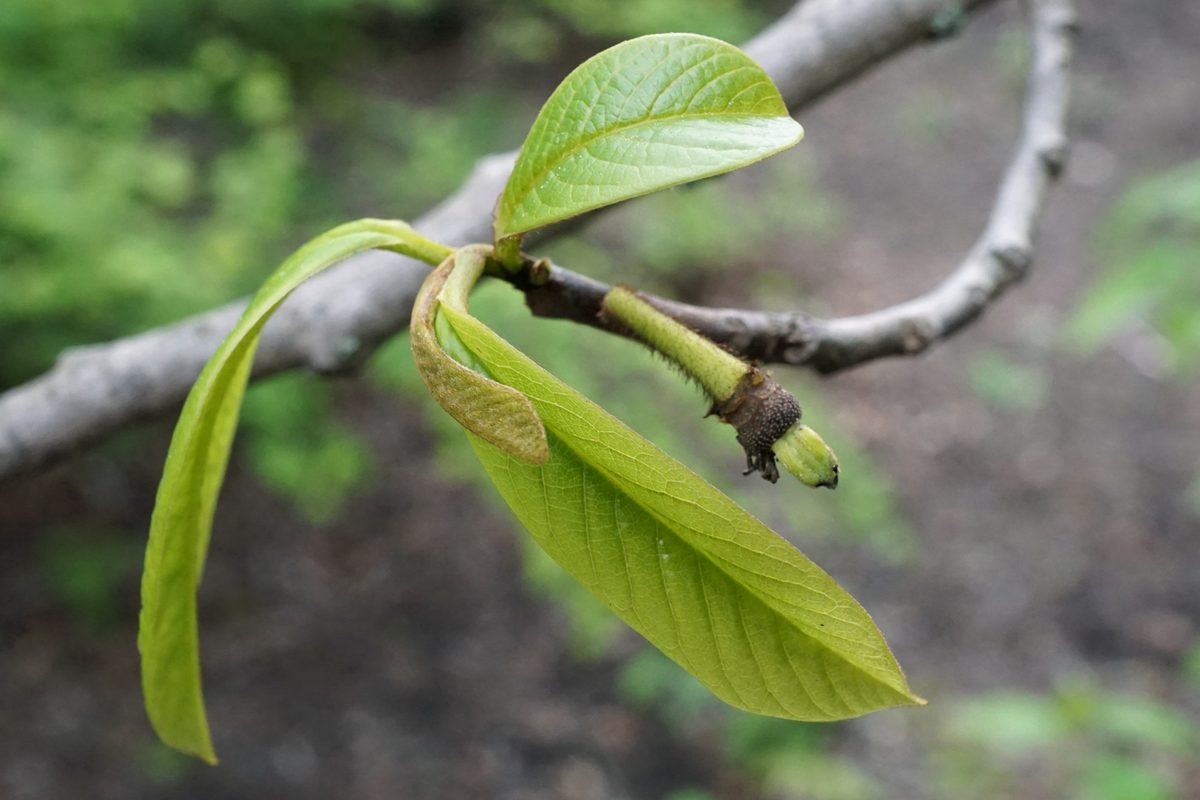
Photo: Plant Image Library from Boston, USA, CC BY-SA 2.0 via Wikimedia Commons

Quick facts
| Light: | Full sun, part shade and full shade (full sun preferred)12 |
|---|---|
| Water: | Medium21 source |
| Soil: | Well drained, moist, occasionally wet and occasionally dry; pH 5–7.413 |
| Hardiness: | Zones 5a–9b11 source |
| Size: | Sources differ: Clemson Cooperative Extension HGIC; Clemson Cooperative Extension HGIC; Lady Bird Johnson Wildflower Center; Clemson Cooperative Extension HGIC; Lady Bird Johnson Wildflower Center; Clemson Cooperative Extension Home & Garden Information Center × 15–20 ft (4.57–6.1 m)7384219Sources differ |
| Growth rate: | Moderate141 |
| Bloom: | White, red, yellow, purple and brown217 |
| Cats: | Not documented by major sources |
| Dogs: | Not documented by major sources |
| Native range: | ALA, ARK, DEL, FLA, GEO, ILL, INI, IOW, KAN, KTY, LOU, MIC, MRY, MSI, MSO, NCA, NEB, NWJ, NWY, OHI, OKL, ONT, PEN, SCA, TEN, TEX, VRG, WDC, WIS, WVA10 |
| Family: | Annonaceae |
How much light does a Pawpaw need?
Full sun is the preferred light for pawpaw outdoors, though it also tolerates part shade and full shade. Those three categories, sun, part shade and shade, cover its whole outdoor light range. Full shade for this plant means less than two hours of direct sun a day, or none at all. Part shade sits between full sun and that deep shade on the same tolerated range.
How often to water a Pawpaw
Pawpaw needs medium water, and the soil under it can range from well drained and consistently moist to occasionally wet or occasionally dry. That same soil mix includes stretches of soil that are occasionally saturated or very wet. It also includes occasional periods of dry soil. Good drainage is part of that same range, alongside the steadier, consistently moist end of it.
- Water: Medium2
Best soil for a Pawpaw
Well drained soil suits pawpaw, and it can also handle soil that stays consistently moist. Beyond that steady moisture, it tolerates soil that is occasionally saturated or very wet. It also tolerates soil with occasional dry periods. That covers a span from wetter soil through to drier soil. That is four drainage conditions in total that this soil can take. Soil pH for this plant can run anywhere from 5.0 up to 7.4. That low end is acidic, and the high end is neutral.
Hardiness and temperature
USDA zones 5a through 9b mark where pawpaw survives winters outdoors. That span runs from 5a and 5b up through 9a and 9b, with 6a, 6b, 7a, 7b, 8a and 8b in between. Zone 5a is the cold edge of that range, and zone 9b is the warm edge. That full range covers pawpaw grown outdoors in the ground.
- Hardiness: Zones 5a–9b1
Fertilizing a Pawpaw
A light, once-a-year feeding works for pawpaw. That single feeding falls in spring, sometime between March and May. A balanced granular fertilizer, such as 10-10-10, broadcast at that time matches the guidance for this plant. It stays a light application rather than a heavy one. Spring is the only season named for feeding this plant. That annual timing means pawpaw gets fed once each year, not more often.
- Fertilizer: Light, once a year (Mar–May)4
Pruning a Pawpaw
Light shaping is the pruning that pawpaw needs. That kind of light pruning benefits older trees in particular. On those older trees specifically, pruning encourages new growth. Encouraging that new growth is the stated reason for doing this kind of pruning. That is the full extent of the pruning guidance for this plant.
- Pruning: Light shaping5
How to plant a Pawpaw
Choose a site for pawpaw based on its hardiness range of USDA zones 5a through 9b. Give it room to reach a mature spread of 15 to 20 ft (4.57-6.1 m). That same mature spread of 15 to 20 ft applies equally in each direction from the trunk. Pick a spot with full sun, part shade or full shade, since all three fall within its outdoor light range. Plant it in soil that drains well, whether that soil stays consistently moist or swings between occasionally wet and occasionally dry. That same planting site can have a soil pH anywhere from 5.0 to 7.4.
- Hardiness: Zones 5a–9b1
Winter care
Winter survival for pawpaw depends on its USDA zone range. On the cold end, that range starts at zone 5a. On the warm end, it reaches zone 9b. Gardens colder than zone 5a sit outside the range this plant is suited for. Gardens warmer than zone 9b sit outside it as well. No other cold-hardiness detail is given beyond that zone range. That hardiness rating spans ten zone ratings from 5a through 9b in total.
- Hardiness: Zones 5a–9b1
How to propagate a Pawpaw
Several methods work to propagate pawpaw: seed, root cuttings, layering and grafting. Growing it from seed calls for scarified, stratified seed, since trees grow easily from seed prepared that way. Grafting and budding cover several techniques, including whip-and-tongue, cleft, bark inlay and chip budding. Root cuttings and layering are also used to propagate this tree, alongside seed and grafting. Seed, root cuttings, layering and grafting are the four methods listed for this plant.
Common problems
A number of pests and diseases are recorded on pawpaw. Its listed pests include Halyomorpha halys, Orgyia leucostigma, Choristoneura parallela, Pochazia shantungensis, Xylosandrus crassiusculus and the pawpaw peduncle borer. That is six pests in total on the list. Its listed diseases include tomato ringspot virus, tobacco ringspot virus and cotton root rot. Cotton root rot's pathogen is also recorded under the name Phymatotrichopsis omnivora.
| Problem | Kind |
|---|---|
| Halyomorpha halys | Pest |
| Orgyia leucostigma | Pest |
| Choristoneura parallela | Pest |
| Pochazia shantungensis | Pest |
| Xylosandrus crassiusculus | Pest |
| Pawpaw peduncle borer | Pest |
| Tomato ringspot virus | Disease |
| Tobacco ringspot virus | Disease |
| Cotton root rot | Disease |
Is Pawpaw toxic to cats and dogs?
Recommended supplies
- Soil: a free-draining mix, and a pot with a drainage hole.
Questions and answers
- What light does pawpaw need outdoors?
- Pawpaw tolerates full sun, part shade and full shade outdoors, and full sun is its preferred spot. Full shade here means less than two hours of direct sun a day, or none at all. Part shade sits between those two points on the same tolerated range.
- How often should I fertilize pawpaw?
- Give pawpaw one light feeding a year, in spring sometime between March and May. A balanced granular fertilizer, such as 10-10-10, broadcast at that time matches the guidance for this plant. That single spring application is the only feeding window given for pawpaw.
- What USDA zones suit pawpaw?
- Pawpaw is hardy outdoors in USDA zones 5a through 9b. That range runs from zone 5a on the cold end to zone 9b on the warm end. Gardens outside that zone range fall outside the documented hardiness for this plant.
Sources
- NC State Extension Gardener Plant Toolbox. https://plants.ces.ncsu.edu/plants/asimina-triloba/. Accessed 23 September 2026.
- Lady Bird Johnson Wildflower Center. https://www.wildflower.org/plants/result.php?id_plant=astr. Accessed 23 September 2026.
- Cornell University CALS Woody Plants Database. https://woodyplants.cals.cornell.edu/plant/363. Accessed 23 September 2026.
- Clemson Cooperative Extension HGIC. https://hgic.clemson.edu/factsheet/pawpaw/. Accessed 23 September 2026.
- Penn State Extension. https://extension.psu.edu/pawpaw-fruit-in-the-garden-and-the-kitchen. Accessed 13 October 2026.
- EPPO Global Database. https://gd.eppo.int/taxon/ASITR/pests. Accessed 23 September 2026.
- Chicago Botanic Garden. https://www.chicagobotanic.org/plantinfo/plant_profiles/pawpaw. Accessed 12 October 2026.
- Chicago Botanic Garden. https://www.chicagobotanic.org/plant-information/plant-profiles/pawpaw. Accessed 12 October 2026.
- University of Illinois Extension (Hort Answers). https://web.extension.illinois.edu/hortanswers/plantdetail.cfm?PlantID=178&PlantTypeID=7. Accessed 30 October 2026.
- Royal Botanic Gardens, Kew (World Checklist of Vascular Plants). https://sftp.kew.org/pub/data-repositories/WCVP/wcvp.zip. Accessed 4 June 2026.
How this page was made
- Written with AI assistance from the sources listed on this page. AI is never the source of a fact.