Black Henbane (Hyoscyamus niger)
Formerly Hyoscyamus agrestis, Hyoscyamus bohemicus, Hyoscarpus niger
Black henbane, Hyoscyamus niger, prefers part shade outdoors, and full shade is also listed. It is listed for USDA zones 4a to 8b. It can reach up to 3 ft (0.91 m) tall. Its flowers are greenish-yellow with deep purple veins. In the lower 48 US states it is listed as introduced. Its growth rate is moderate. Watering and toxicity for cats and dogs are not documented.
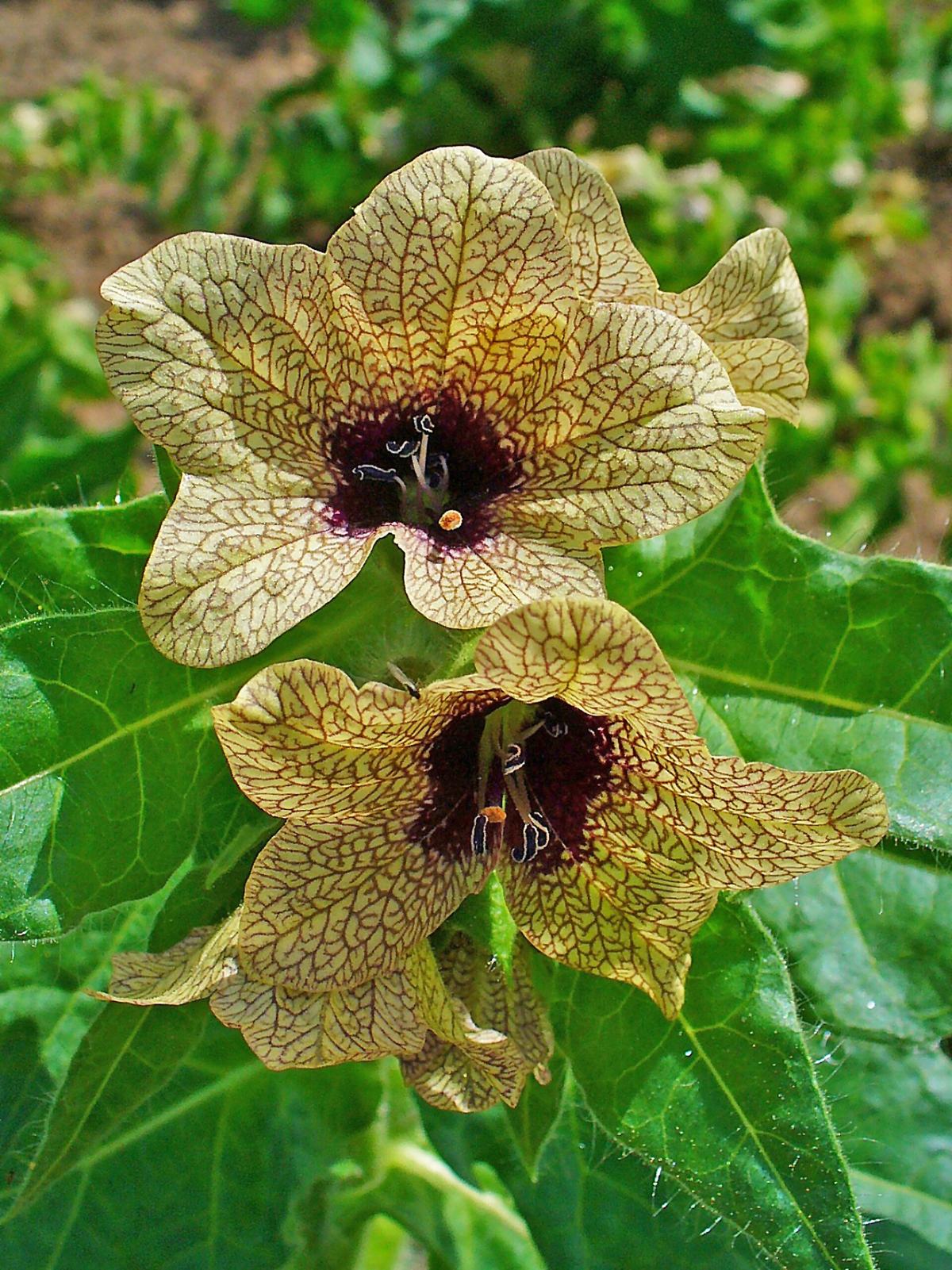
Photo: H. Zell, CC BY-SA 3.0 via Wikimedia Commons

Quick facts
| Light: | Part shade and full shade (part shade preferred)11 source |
|---|---|
| Soil: | Well drained11 source |
| Hardiness: | Zones 4a–8b11 source |
| Size: | 3 ft (0.91 m)31 source |
| Growth rate: | Moderate11 source |
| Bloom: | Yellow, green and purple31 |
| Cats: | Not documented by major sources |
| Dogs: | Not documented by major sources |
| Native range: | ALB, ALG, BUL, COR, EAI, FRA, GRC, IRN, IRQ, ITA, LBS, MOR, NCS, POR, ROM, SAR, SIC, SPA, TCS, TUE, TUN, TUR, YUG4 |
| Family: | Solanaceae |
How much light does a Black Henbane need?
Part shade is the preferred light for black henbane outdoors. Full shade is also listed and means less than 2 hours of direct sunlight, down to none. Those two conditions, part shade and full shade, are the only outdoor light levels listed. Part shade comes first because it is the preferred level. The plant is also listed for hardiness zones 4a to 8b.
- Light: Part shade and full shade (part shade preferred)1
Best soil for a Black Henbane
Soil with good drainage is what is listed for black henbane. That soil condition is recorded as well drained. Drainage is the one soil condition recorded for this plant. Black henbane prefers part shade, with full shade also listed. It is listed for zones 4a to 8b.
- Soil drainage: Well drained1
Hardiness and temperature
Zones 4a to 8b are the USDA hardiness zones listed for this plant. Zone 4a is the coldest zone in that range, and zone 8b is the warmest. A garden in zone 3 or colder, or in zone 9 or warmer, falls outside the listed range. Its growth rate is listed as moderate. Part shade is the preferred light, and full shade is also listed.
- Hardiness: Zones 4a–8b1
How to plant a Black Henbane
A mature black henbane can reach heights of up to 3 ft (0.91 m). Its growth rate is listed as moderate. Its flowers are greenish-yellow with deep purple veins and centers, and the recorded colors are yellow, green and purple. Hardiness zones 4a to 8b are listed for it outdoors. Soil with good drainage is listed for it. In the lower 48 US states it is listed as introduced. Its native range includes the region codes FRA, ITA, GRC and TUR. Part shade is the preferred light, and full shade is also listed.
- Hardiness: Zones 4a–8b1
Winter care
Winter hardiness is recorded as a zone range of 4a to 8b. The range spans ten half-zone steps: 4a, 4b, 5a, 5b, 6a, 6b, 7a, 7b, 8a and 8b. Part shade is the preferred light, and full shade is also listed. It can reach heights of up to 3 ft (0.91 m). Soil with good drainage is listed for it.
- Hardiness: Zones 4a–8b1
How to propagate a Black Henbane
Self-seeding is how black henbane spreads. Seed is the only propagation method recorded for black henbane, Hyoscyamus niger. It is described as an invasive plant. Its native range includes the region codes ALB, ALG, BUL and COR. In the lower 48 US states it is listed as introduced.
- Propagation: Seed1
Common problems
Five pests are recorded for black henbane: tomato russet mite, whitefly, stem nematode, 28 spotted potato ladybeetle and thrips. One disease is recorded for it, tomato spotted wilt virus. Together, these pests and this virus are the only problems recorded for black henbane.
| Problem | Kind |
|---|---|
| Tomato russet mite | Pest |
| Whitefly | Pest |
| Stem nematode | Pest |
| 28 spotted potato ladybeetle | Pest |
| Thrips | Pest |
| Tomato spotted wilt virus | Disease |
Is Black Henbane toxic to cats and dogs?
Recommended supplies
- Soil: a free-draining mix, and a pot with a drainage hole.
Questions and answers
- How much light does black henbane need outdoors?
- Part shade is the preferred light for black henbane, and full shade is also listed. Full shade is described as less than 2 hours of direct sunlight, down to none. No other outdoor light level is listed for it. Its hardiness zones are listed as 4a to 8b.
- How tall does black henbane get, and what color are its flowers?
- It can reach heights of up to 3 ft (0.91 m). The flowers are greenish-yellow with deep purple veins and centers. Their color is recorded as yellow, green and purple. Its growth rate is listed as moderate.
- Where is black henbane native, and how does it spread?
- Its native range includes the region codes IRN, IRQ, MOR and TUN. In the lower 48 US states it is listed as introduced. It spreads by self-seeding, and seed is the only propagation method recorded. It is also described as an invasive plant.
Sources
- NC State Extension Gardener Plant Toolbox. https://plants.ces.ncsu.edu/plants/hyoscyamus-niger/. Accessed 14 October 2026.
- EPPO Global Database. https://gd.eppo.int/taxon/HSYNI/pests. Accessed 14 October 2026.
- Utah State University Extension. https://extension.usu.edu/rangeplants/forbs-herbaceous/black-henbane. Accessed 14 October 2026.
- Royal Botanic Gardens, Kew (World Checklist of Vascular Plants). https://sftp.kew.org/pub/data-repositories/WCVP/wcvp.zip. Accessed 4 June 2026.
How this page was made
- Written with AI assistance from the sources listed on this page. AI is never the source of a fact.