Common Evening Primrose (Oenothera biennis)
Formerly Oenothera victorinii, Oenothera muricata, Oenothera chicaginensis
Common evening primrose grows in full sun, part shade or full shade. Full sun is the preferred exposure. Water needs run from dry to medium. The plant is a biennial that reaches 2–6 ft (0.61–1.83 m). Its flowers are yellow. It is listed as native in the lower 48 US states. Toxicity to cats and dogs is not documented here.
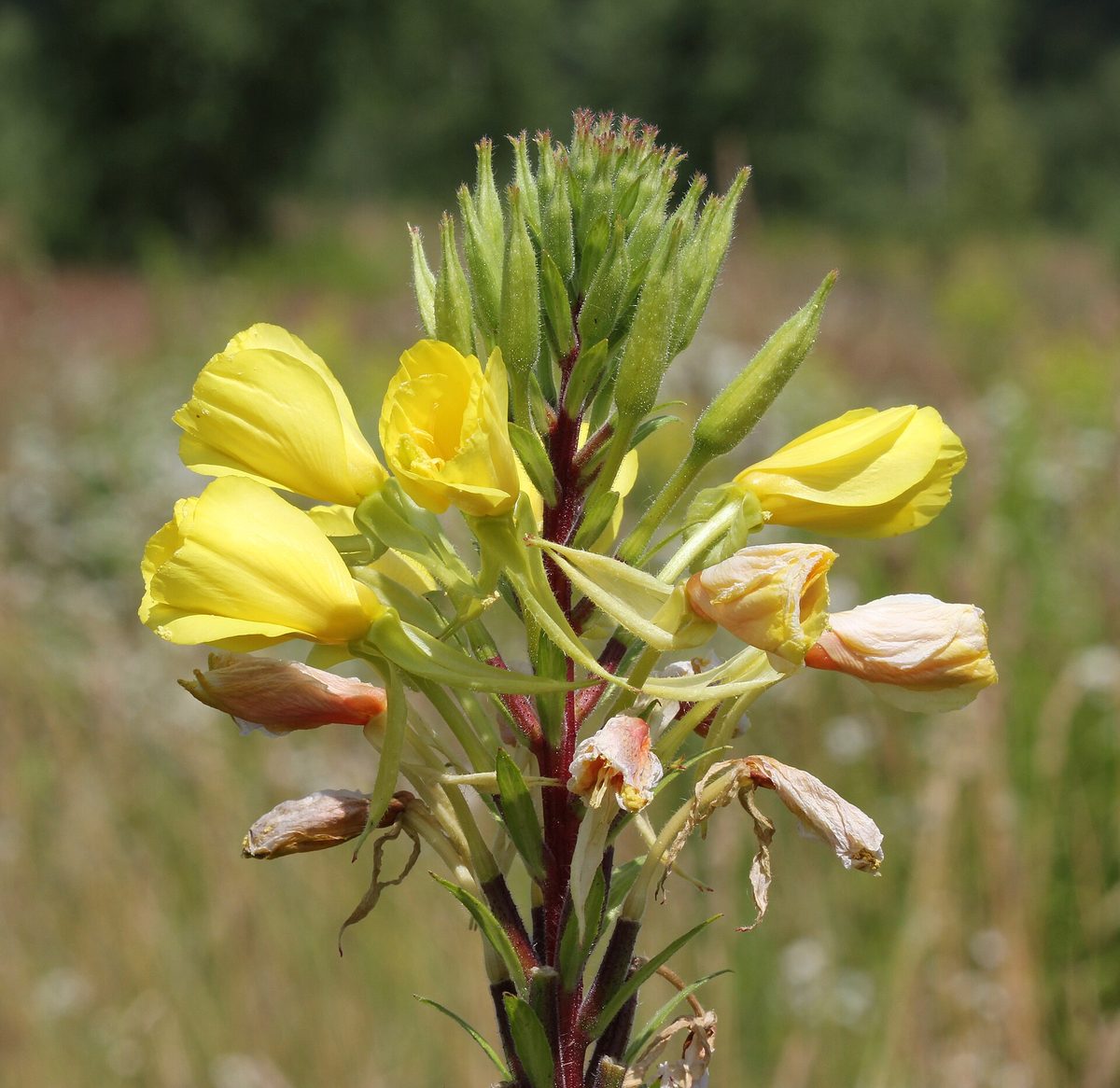
Photo: George Chernilevsky, Public domain via Wikimedia Commons

Quick facts
| Light: | Full sun, part shade and full shade (full sun preferred)12 |
|---|---|
| Water: | Dry to medium12 |
| Soil: | Well drained and occasionally dry11 source |
| Hardiness: | Zones 4a–9b11 source |
| Size: | 2–6 ft (0.61–1.83 m) × 2–3 ft (0.61–0.91 m)12 |
| Growth rate: | Rapid11 source |
| Bloom: | Jun–Sep, Yellow121 source |
| Cats: | Not documented by major sources |
| Dogs: | Not documented by major sources |
| Native range: | ABT, ALA, ARK, BRC, CAL, CNT, DEL, FLA, GEO, IDA, ILL, INI, IOW, KAN, KTY, LOU, MAI, MAN, MAS, MIC, MIN, MNT, MRY, MSI, MSO, MXC, MXE, NBR, NCA, NDA, NEB, NEV, NSC, NWH, NWJ, NWY, OHI, OKL, ONT, ORE, PEI, PEN, QUE, RHO, SAS, SCA, SDA, TEN, TEX, VER, VRG, WAS, WDC, WIS, WVA3 |
| Family: | Onagraceae |
How much light does a Common Evening Primrose need?
Give this plant a spot in full sun, meaning six or more hours of direct sunlight a day. Full sun is the preferred exposure. The plant is also listed for part shade and for full shade. Those three conditions cover the full range of light listed for it.
How often to water a Common Evening Primrose
Plan on dry to medium water for this plant. It does best in medium moisture, well drained, sandy soil. Water use is rated medium. Dry is the lowest level listed, and medium is the highest. Drainage is listed as well drained and occasionally dry.
Best soil for a Common Evening Primrose
Soil for this plant should be well drained and occasionally dry. The plant does best in medium moisture, well drained, sandy soil. Good drainage is named for this plant. A bed that drains well and sometimes dries out matches both drainage terms listed. Sandy soil is named among its preferred conditions. Medium moisture is named alongside it. No soil pH range is documented for this plant.
- Soil drainage: Well drained and occasionally dry1
Hardiness and temperature
The hardiness range listed for this plant is Zones 4a–9b. Zone 4a is the coldest zone in that range. Zone 9b is the warmest zone in that range. Check your own USDA zone against that span before you plant. Gardeners in zone 3 or colder fall outside the listed range. Gardeners in zone 10 or warmer also fall outside it. No minimum temperature is documented for this plant.
- Hardiness: Zones 4a–9b1
How to plant a Common Evening Primrose
Your planting site should fall within Zones 4a–9b. Full sun is the preferred exposure. Plants reach 2–6 ft (0.61–1.83 m) tall and 2–3 ft (0.61–0.91 m) wide, so leave room for that spread. It is described as an erect biennial. Growth rate is listed as rapid. The flowers are yellow and appear from summer into fall. The plant is listed as native in the lower 48 US states.
- Hardiness: Zones 4a–9b1
Winter care
Winter hardiness for this plant is listed as Zones 4a–9b. Zone 4a is the coldest zone listed. Zone 9b is the warmest zone listed. Gardeners in zone 3 or colder are outside that range. Gardeners in zone 10 or warmer are also outside that range. Compare your own USDA zone with the listed span before winter. Protection, mulching and cutting back are not documented for this plant.
- Hardiness: Zones 4a–9b1
How to propagate a Common Evening Primrose
You can raise new plants from seed or from stem cuttings. Seed is the recommended propagation strategy. Tip cuttings can be taken in spring. Seed and stem cuttings are the two methods documented for Oenothera biennis. Stem cuttings are the second documented method. Seed is the first documented method. Sowing depth and rooting medium are not documented for this plant.
Common problems
Insect pests are not a documented concern for this plant, and its list of common pests is empty. The plant is described as having no serious insect or disease problems. Two diseases may still occur, leaf spot and powdery mildew. Leaf spot and powdery mildew are the diseases named for it.
| Problem | Kind |
|---|---|
| Leaf spot | Disease |
| Powdery mildew | Disease |
Is Common Evening Primrose toxic to cats and dogs?
Recommended supplies
- Soil: a free-draining mix, and a pot with a drainage hole.
Questions and answers
- How much sun does common evening primrose need?
- It prefers full sun, meaning six or more hours of direct sunlight a day. It is also listed for part shade and full shade. Full sun is the preferred exposure of the three.
- How tall does common evening primrose grow?
- It reaches 2–6 ft (0.61–1.83 m) tall and 2–3 ft (0.61–0.91 m) wide. It is described as an erect biennial. The growth rate is listed as rapid.
- Does common evening primrose have pests or diseases?
- No serious insect or disease problems are described, and the list of common pests is empty. Leaf spot and powdery mildew may occur. These two diseases are the problems named for it.
Sources
- NC State Extension Gardener Plant Toolbox. https://plants.ces.ncsu.edu/plants/oenothera-biennis/. Accessed 14 October 2026.
- Lady Bird Johnson Wildflower Center. https://www.wildflower.org/plants/result.php?id_plant=OEBI. Accessed 14 October 2026.
- Royal Botanic Gardens, Kew (World Checklist of Vascular Plants). https://sftp.kew.org/pub/data-repositories/WCVP/wcvp.zip. Accessed 4 June 2026.
How this page was made
- Written with AI assistance from the sources listed on this page. AI is never the source of a fact.