Jewelweed (Impatiens capensis)
Formerly Impatiens biflora, Impatiens fulva, Balsamina fulva
Give jewelweed part shade and medium water to keep it healthy. Plant it in moist soil. It is a native annual. Full shade is also listed for it. Plants reach 2–5 ft (0.61–1.52 m) tall. The flowers are orange, yellow and brown. Toxicity to cats and dogs is not documented on this page.
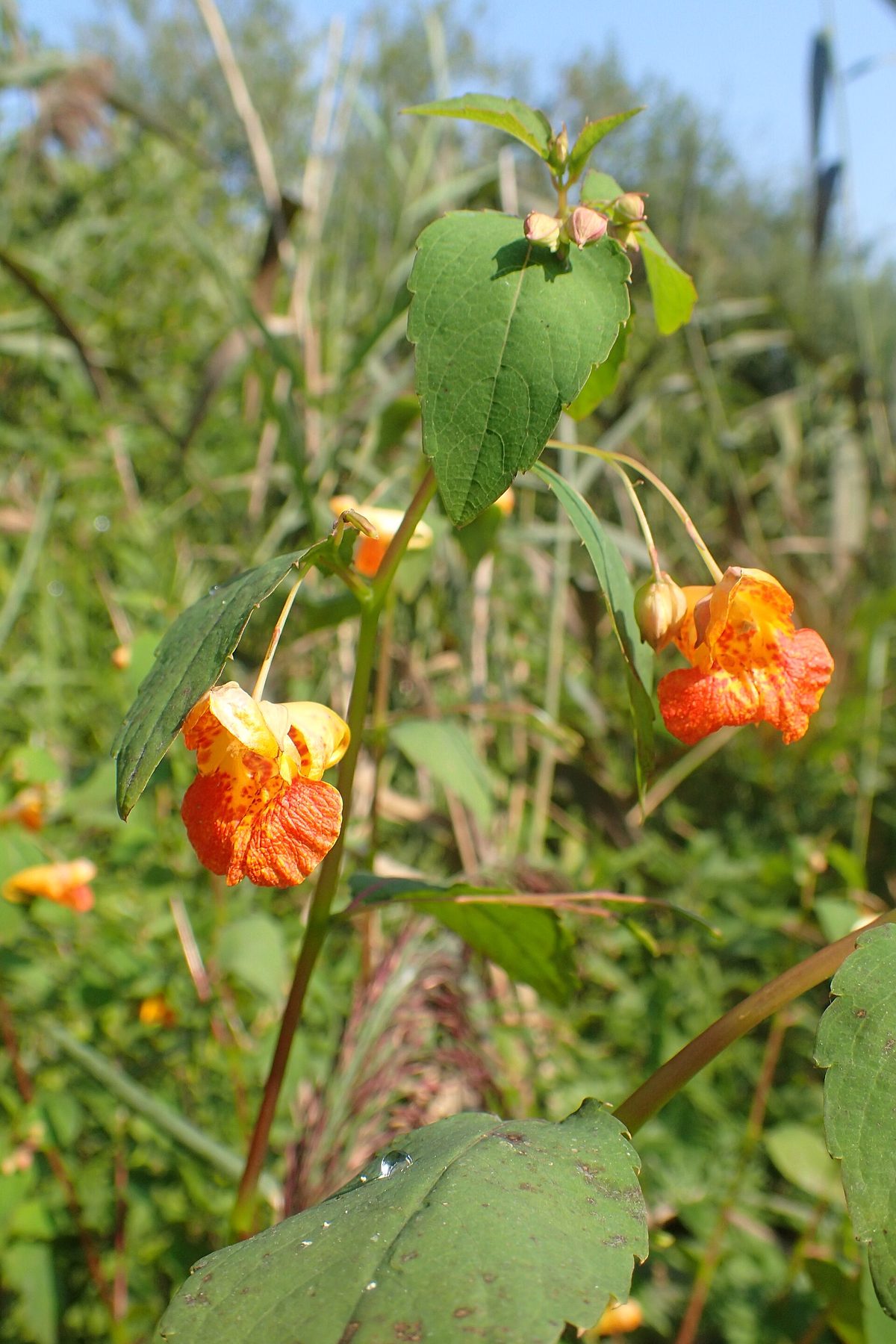
Photo: Krzysztof Ziarnek, Kenraiz, CC BY-SA 4.0 via Wikimedia Commons

Quick facts
| Light: | Part shade and full shade (part shade preferred)12 |
|---|---|
| Water: | Medium32 |
| Soil: | Moist and occasionally wet14 |
| Hardiness: | Zones 2a–11b11 source |
| Size: | 2–5 ft (0.61–1.52 m) × 1–3 ft (0.3–0.91 m)12 |
| Bloom: | Jul–Oct, Orange, yellow and brown314 |
| Cats: | Not documented by major sources |
| Dogs: | Not documented by major sources |
| Native range: | ABT, ALA, ARK, CNT, COL, DEL, FLA, GEO, ILL, INI, IOW, KAN, KTY, LOU, MAI, MAN, MAS, MIC, MIN, MRY, MSI, MSO, NBR, NCA, NDA, NEB, NFL, NSC, NWH, NWJ, NWY, OHI, OKL, ONT, PEI, PEN, QUE, RHO, SAS, SCA, SDA, TEN, TEX, VER, VRG, WDC, WIS, WVA5 |
| Family: | Balsaminaceae |
How much light does a Jewelweed need?
Jewelweed prefers part shade outdoors, and full shade is also listed for it. One source describes deep shade as less than 2 hours of direct sunlight, down to none. Another source says the plant grows best in moist, organic matter rich soil in partial to full shade.
A spot with less than 2 hours of direct sun fits that deep shade description. Part shade remains the preferred condition of the two.
How often to water a Jewelweed
Water use for jewelweed is rated medium. One source says it grows best in moist, organic matter rich soil in partial to full shade. The drainage record lists moist and occasionally wet soil.
Another description calls for moist to wet, humus soils. Medium is both the lowest and the highest water use listed.
Best soil for a Jewelweed
Jewelweed grows in moist soil that is occasionally wet. One source says it prefers moist to wet, humus soils. Another says it grows best in moist, organic matter rich soil in partial to full shade.
Its water use is rated medium. The drainage record names two conditions, moist and occasionally wet. Part shade is the preferred light, and full shade is also listed.
Hardiness and temperature
Jewelweed is listed for USDA hardiness zones 2a to 11b. One source describes it as winter hardy from zones 2 to 11. Zone 2a sits at the cold end of the listed range and zone 11b at the warm end.
The plant type on record is annual.
- Hardiness: Zones 2a–11b1
How to plant a Jewelweed
Plant jewelweed in USDA zones 2a to 11b, the hardiness range listed for it. Part shade is the preferred light, and full shade is also listed. Pick ground that is moist and occasionally wet.
Allow for a mature spread of 1–3 ft (0.3–0.91 m) and a height of 2–5 ft (0.61–1.52 m). Sowing seed outdoors in fall in the desired location is described as the easiest way to establish plants. The flowers come in orange, yellow and brown.
- Hardiness: Zones 2a–11b1
Winter care
Winter hardiness for jewelweed is listed as USDA zones 2a to 11b. One source describes it as winter hardy from zones 2 to 11. Zone 2a is the coldest zone in the listed range.
The plant type on record is annual. Seed is the propagation method listed, and sowing outdoors in fall in the desired location is described as the easiest way to establish plants.
- Hardiness: Zones 2a–11b1
How to propagate a Jewelweed
Seed is the propagation method listed for jewelweed. One source gives the recommended propagation strategy as seed. Another says it is easiest to establish plants from seed by sowing outdoors in fall in the desired location.
That means sowing in the place where you want the plants to grow. No cutting or division method is listed.
Common problems
Jewelweed has no significant insect or disease issues on record. The list of common pests is empty. The list of common diseases is empty as well.
The same listing describes a plant that prefers part shade and moist to wet soil. It reaches 2–5 ft (0.61–1.52 m) tall with a spread of 1–3 ft (0.3–0.91 m).
Is Jewelweed toxic to cats and dogs?
Recommended supplies
- Soil: a mix that holds moisture without staying wet.
Questions and answers
- How much light does jewelweed need?
- Jewelweed prefers part shade, and full shade is also listed. One source describes deep shade as less than 2 hours of direct sunlight, down to none. Another says it grows best in moist, organic matter rich soil in partial to full shade.
- When does jewelweed bloom, and what color are the flowers?
- The bloom season is listed as July through October. The bloom color is recorded as orange, yellow and brown. Mature plants reach 2–5 ft (0.61–1.52 m) tall.
- Is jewelweed native to the United States?
- Its native status is listed as native for the lower 48 United States. Its recorded native range includes Ontario, Quebec and Texas. It is recorded as an annual.
Sources
- NC State Extension Gardener Plant Toolbox. https://plants.ces.ncsu.edu/plants/impatiens-capensis/. Accessed 14 October 2026.
- University of Wisconsin-Madison Division of Extension (Wisconsin Horticulture). https://hort.extension.wisc.edu/articles/jewelweed-impatiens-capensis/. Accessed 14 October 2026.
- Lady Bird Johnson Wildflower Center (Native Plant Database). https://www.wildflower.org/plants/result.php?id_plant=IMCA. Accessed 14 October 2026.
- Lady Bird Johnson Wildflower Center (Native Plant Database). https://www.wildflower.org/plants/result.php?id_plant=imca. Accessed 15 October 2026.
- Royal Botanic Gardens, Kew (World Checklist of Vascular Plants). https://sftp.kew.org/pub/data-repositories/WCVP/wcvp.zip. Accessed 4 June 2026.
How this page was made
- Written with AI assistance from the sources listed on this page. AI is never the source of a fact.