Eyebane (Euphorbia maculata)
Formerly Xamesike maculata, Chamaesyce maculata, Xamesike supina
Give eyebane full sun to part shade and let the soil dry out between waterings, since it only thrives in dry conditions. This low, fast-spreading plant is toxic to both cats and dogs, so keep pets from chewing on it.
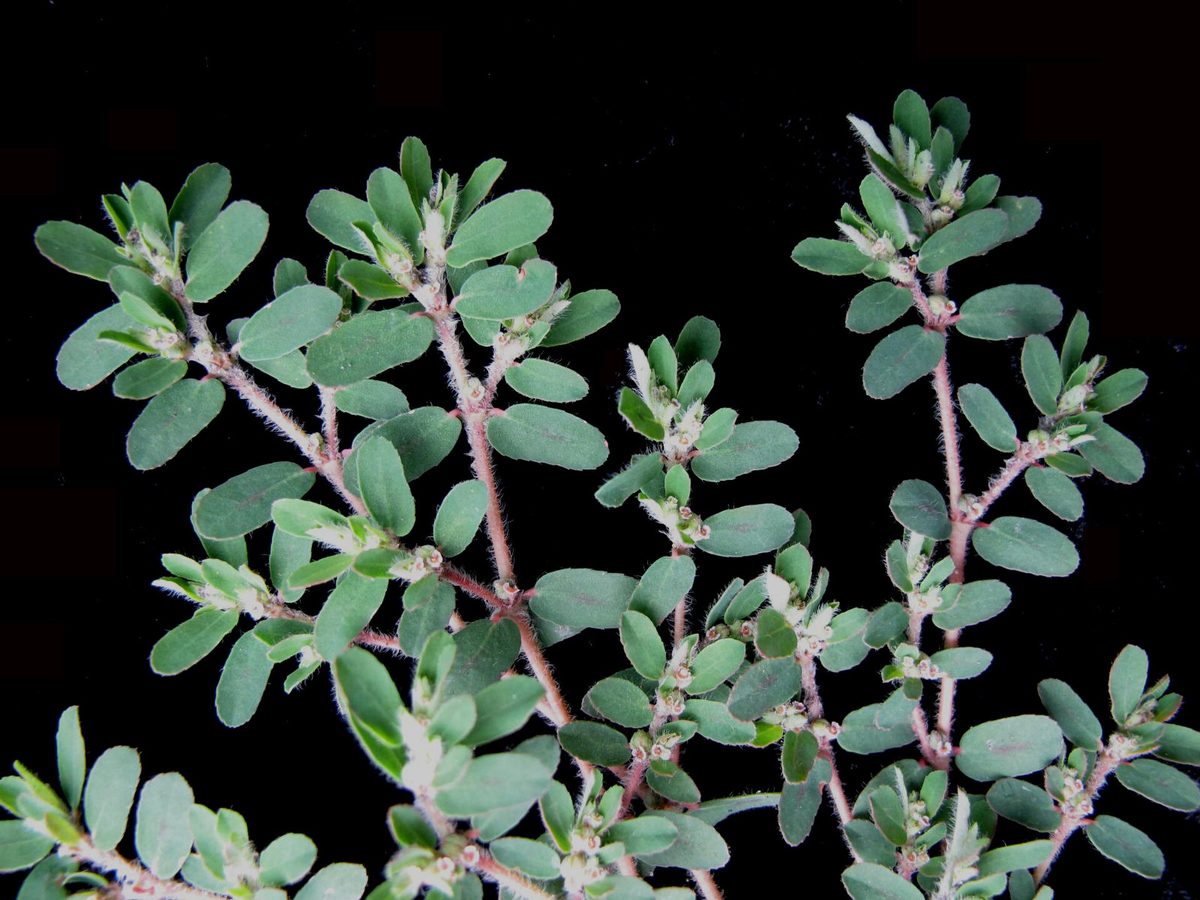
Photo: Wikimedia Commons contributor, CC BY-SA 4.0 via Wikimedia Commons

Quick facts
| Light: | Full sun and part shade (full sun preferred)12 |
|---|---|
| Water: | Dry21 source |
| Soil: | Well drained12 |
| Hardiness: | Zones 5a–9b11 source |
| Size: | 0.1–0.3 ft (0.03–0.1 m) × 0.5–3 ft (0.15–0.91 m)131 source |
| Growth rate: | Rapid1212 |
| Bloom: | Green, pink and white14 |
| Cats: | Toxic to cats (1 source) 1 |
| Dogs: | Toxic to dogs (1 source) 1 |
| Native range: | ALA, ARI, ARK, BAH, BLZ, CNT, CUB, DEL, FLA, GEO, IDA, ILL, INI, IOW, KAN, KTY, LOU, MAI, MAS, MIC, MIN, MNT, MRY, MSI, MSO, MXE, MXG, MXN, MXS, MXT, NBR, NCA, NDA, NEB, NWH, NWJ, NWM, NWY, OHI, OKL, ONT, PEN, QUE, RHO, SCA, SDA, TEN, TEX, VER, VRG, WDC, WIS, WVA, WYO5 |
| Family: | Euphorbiaceae |
How much light does an Eyebane need?
Pick a spot for eyebane that gets full sun for most of the day. It tolerates part shade too, so a site with some shade during part of the day still lets it grow. Full sun is the preferred setting for strong, fast growth. Part shade works as a fallback where full sun is not available. Outdoors, pick an open bed, a sunny path edge, or a gap between pavers where light reaches the soil for several hours a day. Avoid deep, all-day shade under dense trees or shrubs, since that is outside the range this plant tolerates. A plant that gets too little light for most of the day will grow more slowly and spread less densely.
How often to water an Eyebane
Eyebane prefers dry soil and does not need regular watering once it is established. Water it only after the soil has fully dried out, rather than keeping it evenly moist. This plant is suited to dry conditions, so it handles missed waterings better than soggy soil. Check the top inch or two of soil before you water again, and hold off if it still feels dry. Since this plant's water need stays on the dry side year-round, err on the side of underwatering rather than overwatering. A plant that sits in constantly wet soil is more likely to develop problems than one that is kept on the dry side.
- Water: Dry2
Best soil for an Eyebane
Eyebane needs soil that drains well and dries out between waterings. It struggles in heavy, waterlogged clay that stays wet after rain. Sandy, gravelly, or disturbed soil, including cracks in pavement, suits it fine. If your soil holds water for long after a storm, work in sand or grit before planting. Raised beds also help where drainage is naturally poor. No cited source gives a preferred soil pH range for this plant, so that detail is not documented here. Treat drainage as the priority, since it is the soil factor with a clear, documented need. A simple squeeze test on damp soil shows if it drains fast enough.
Hardiness and temperature
Eyebane grows outdoors in USDA zones 5a through 9b. That range runs from cool temperate areas to warm, humid subtropical ones. In the cooler end of that range, frost kills the plant back each year. It then regrows from seed the following season. No cited source gives a specific minimum temperature this plant can survive. Use your zone number, not a single temperature, as the guide to how it behaves where you live. Warmer zones within that range let it persist and reseed more reliably year after year.
- Hardiness: Zones 5a–9b1
How to plant an Eyebane
This plant does well outdoors across USDA zones 5a through 9b. That range covers cool temperate climates on one end and warm, subtropical ones on the other. Within that range, start new plants once your soil has warmed and the risk of frost has passed for the season. In the warmer zones toward 9b, it establishes and spreads over a longer growing season than it does near 5a. If you garden colder than zone 5a, treat this plant as a warm-season annual that finishes its cycle before the first fall frost. Check your specific zone before you plant, since timing and how reliably it returns each year both depend on where in that range you garden.
- Hardiness: Zones 5a–9b1
Winter care
In USDA zones 5a through 9b, eyebane usually dies back each fall as an annual. It needs no winter protection in most of that range. No cited source gives a minimum temperature this plant can tolerate. Instead, let a few seed heads mature and drop before cleanup. This plant grows back from seed on its own where conditions allow. Near zone 5a, the cold end of its range, it acts as a one-season annual. Check your zone to see how reliably it returns each year.
- Hardiness: Zones 5a–9b1
How to propagate an Eyebane
The only documented way to propagate eyebane is from seed. This plant produces seed readily and often self-sows on its own near the parent plant. To collect seed yourself, let a few plants mature and gather the seed before the pods split open and scatter it. No other propagation method, such as division or stem cuttings, is documented for this species. Save seed from healthy plants each year so you always have a fresh supply for next season.
Common problems
No cited source lists specific pests that commonly affect eyebane. No cited source lists specific diseases for it either. That gap reflects what has been documented, not a guarantee that this plant is free of every pest or disease. Watch new growth as you would with any outdoor planting, since general problems can still appear even where none are recorded here.
Is Eyebane toxic to cats and dogs?
Eyebane is toxic to cats. It is also toxic to dogs. Because both of your pets are at risk, keep them from chewing on any leaves, stems, or sap. If a cat or dog chews or swallows part of this plant, contact your vet or a pet poison line right away. Toxicity has been documented for this species in both cats and dogs, so treat any part of the plant as off-limits for pets. Keep pets away from areas outdoors where this plant has been allowed to spread or self-seed. Treat every part of this plant, including any sap, as something to keep out of reach of cats and dogs.
Pet-safe alternatives
Recommended supplies
- Soil: a free-draining mix, and a pot with a drainage hole.
Questions and answers
- Is eyebane toxic to dogs and cats?
- Eyebane is toxic to dogs. It is also toxic to cats. Keep both pets from chewing on it, and contact your vet or a pet poison line if they do.
- How much sun does eyebane need?
- Eyebane grows best in full sun but also tolerates part shade. Full sun gives it the strongest, fastest growth of the two options. Choose a spot that gets sun for most of the day if you can.
- How do I grow more eyebane plants?
- Seed is the only documented way to propagate eyebane. Let a few plants mature and drop seed, since this plant often returns on its own from seed where conditions allow.
Sources
- NC State Extension Gardener Plant Toolbox. https://plants.ces.ncsu.edu/plants/euphorbia-maculata/. Accessed 12 October 2026.
- University of Florida IFAS Extension (EDIS). https://ask.ifas.ufl.edu/publication/HS1529. Accessed 12 October 2026.
- Clemson Cooperative Extension Home & Garden Information Center. https://hgic.clemson.edu/weed-of-the-month-prostrate-spurge/. Accessed 12 October 2026.
- Lady Bird Johnson Wildflower Center (Native Plant Database). https://www.wildflower.org/plants/result.php?id_plant=CHMA15. Accessed 12 October 2026.
- Royal Botanic Gardens, Kew (World Checklist of Vascular Plants). https://sftp.kew.org/pub/data-repositories/WCVP/wcvp.zip. Accessed 4 June 2026.
How this page was made
- Written with AI assistance from the sources listed on this page. AI is never the source of a fact.