Watermelon (Citrullus lanatus)
Formerly Citrullus vulgaris, Cucumis citrullus, Citrullus battich
Give watermelon full sun and well-drained soil. Keep the soil moist but not soggy. Aim for a soil pH of 6 to 6.5. It is a warm-season annual grown from seed. Fruit ripens 80–100 days from transplant. Pet toxicity for cats and dogs is not documented on this page. Plan for six or more hours of direct sunlight a day.
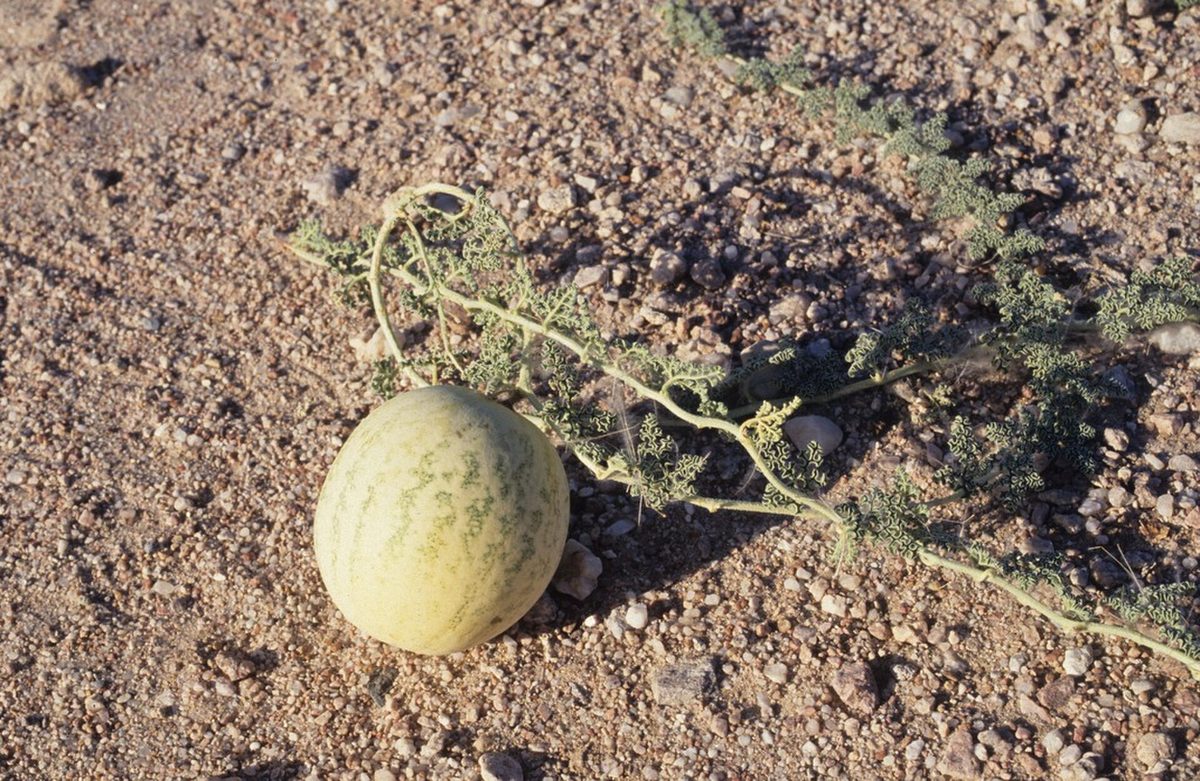
Photo: Derek Keats from Johannesburg, South Africa, CC BY 2.0 via Wikimedia Commons

Quick facts
| Light: | Full sun12 |
|---|---|
| Water: | Medium11 source |
| Soil: | Well drained; pH 6–6.51234 |
| Size: | 0.3–0.7 ft (0.1–0.2 m) × 5–10 ft (1.52–3.05 m)11 source |
| Growth rate: | Moderate111 source |
| Bloom: | Yellow11 source |
| Cats: | Not documented by major sources |
| Dogs: | Not documented by major sources |
| Native range: | EGY, ETH, LBY, SUD9 |
| Family: | Cucurbitaceae |
How much light does a Watermelon need?
Full sun is what outdoor watermelon needs. Full sun means six or more hours of direct sunlight a day. Choose a site in your garden that receives full sun. Count the hours of direct light a spot gets before you decide, and look for six or more. Full sun is the only outdoor light level recorded for this plant.
How often to water a Watermelon
Keep the soil moist but not soggy. The recorded water need is medium, at both the low and the high end. Pair that watering with well-drained soil, the drainage this plant prefers. The condition to check is the soil itself, which should feel moist rather than wet through.
- Water: Medium1
Best soil for a Watermelon
Watermelons prefer organic, rich, well-drained, sandy soils. Good drainage is the recorded drainage need. The optimum pH range is 6.0 to 6.5. A slightly acidic soil with a pH of 6 to 6.5 is ideal for watermelon production. The plant will tolerate soils with a pH as low as 5. Aim for the 6 to 6.5 band rather than the lower limit.
When to plant Watermelon
Transplant at your last spring frost date, once the soil is at least 60 °F (16 °C). Measure the soil temperature 3 inches (8 cm) beneath the surface. Watermelon is a warm-season crop that grows best at average air temperatures between 70 and 85 °F (21 and 29 °C).
- Transplant: at last spring frost, soil at least 60.1 °F (15.6 °C)5
| Step | When |
|---|---|
| Transplant | at last spring frost, soil at least 60.1 °F (15.6 °C) |
When and how to harvest Watermelon
Check the underside of the fruit, where it rests on the ground. Ripe fruit turns from greenish white to a buttery yellow or cream color there. The top skin also loses its shine and becomes dull when ripe. Count 80–100 days from transplant for the fruit to mature.
How to propagate a Watermelon
Seed is the method used to start new watermelon plants. It is the only propagation method recorded for this plant. The plant is classed as an annual. No cuttings or division are recorded for it. Maturity is counted from transplanting. The seed-grown plant is a warm-season crop.
- Propagation: Seed1
Common problems
Aphids and cucumber beetles are the pests recorded for watermelon. Plants are also susceptible to mites, squash vine borers, squash bugs, stink bugs, cutworms and pickleworm. Powdery mildew, wilt diseases and viral diseases are the recorded diseases. Cucurbit viruses are among the most difficult pests to manage in Florida.
| Problem | Kind |
|---|---|
| Aphids | Pest |
| Cucumber beetles | Pest |
| Powdery mildew | Disease |
| Wilt diseases | Disease |
| Viral diseases | Disease |
Is Watermelon toxic to cats and dogs?
Recommended supplies
- Soil: a free-draining mix, and a pot with a drainage hole.
Questions and answers
- How much sun does watermelon need?
- Watermelon takes full sun, which means six or more hours of direct sunlight a day. Choose a garden site that receives full sun. Full sun is the only outdoor light level recorded for this plant. Its growth rate is moderate and its maintenance level is medium.
- What soil and pH does watermelon like?
- Watermelons prefer organic, rich, well-drained, sandy soils. The ideal pH is 6 to 6.5, and the plant tolerates soil with a pH as low as 5. Keep the soil moist but not soggy.
- How do you know when a watermelon is ripe?
- Look at the underside of the fruit where it rests on the ground. It turns from greenish white to a buttery yellow or cream color, and the top skin becomes dull. Expect 80–100 days from transplant as the time to maturity.
Sources
- NC State Extension Gardener Plant Toolbox. https://plants.ces.ncsu.edu/plants/citrullus-lanatus/. Accessed 14 October 2026.
- Utah State University Extension. https://extension.usu.edu/yardandgarden/research/watermelon-in-the-garden. Accessed 14 October 2026.
- University of Florida IFAS Extension (EDIS). https://ask.ifas.ufl.edu/publication/PI031. Accessed 14 October 2026.
- Oregon State University Extension Service. https://extension.oregonstate.edu/catalog/pub/pnw741?reference=catalog. Accessed 14 October 2026.
- Penn State Extension. https://extension.psu.edu/watermelon-production. Accessed 28 October 2026.
- Iowa State University Extension and Outreach (Yard and Garden). https://yardandgarden.extension.iastate.edu/faq/how-do-i-know-when-watermelon-ready-harvest. Accessed 14 October 2026.
- University of Maryland Extension. https://extension.umd.edu/resource/growing-melons-home-garden. Accessed 14 October 2026.
- University of Florida IFAS Extension (EDIS). https://ask.ifas.ufl.edu/pi031. Accessed 15 October 2026.
- Royal Botanic Gardens, Kew (World Checklist of Vascular Plants). https://sftp.kew.org/pub/data-repositories/WCVP/wcvp.zip. Accessed 4 June 2026.
How this page was made
- Written with AI assistance from the sources listed on this page. AI is never the source of a fact.