Redosier Dogwood (Cornus sericea)
Formerly Cornus stolonifera, Swida sericea, Swida stolonifera
Redosier dogwood grows best in full sun outdoors. It also tolerates part shade and full shade. Give it medium to wet soil for the best results. This shrub also tolerates drought. Its soil can range from occasionally dry to occasionally wet. It produces white flowers in May and June, and again in July and August. No cited source lists a cat or dog toxicity record for this plant.
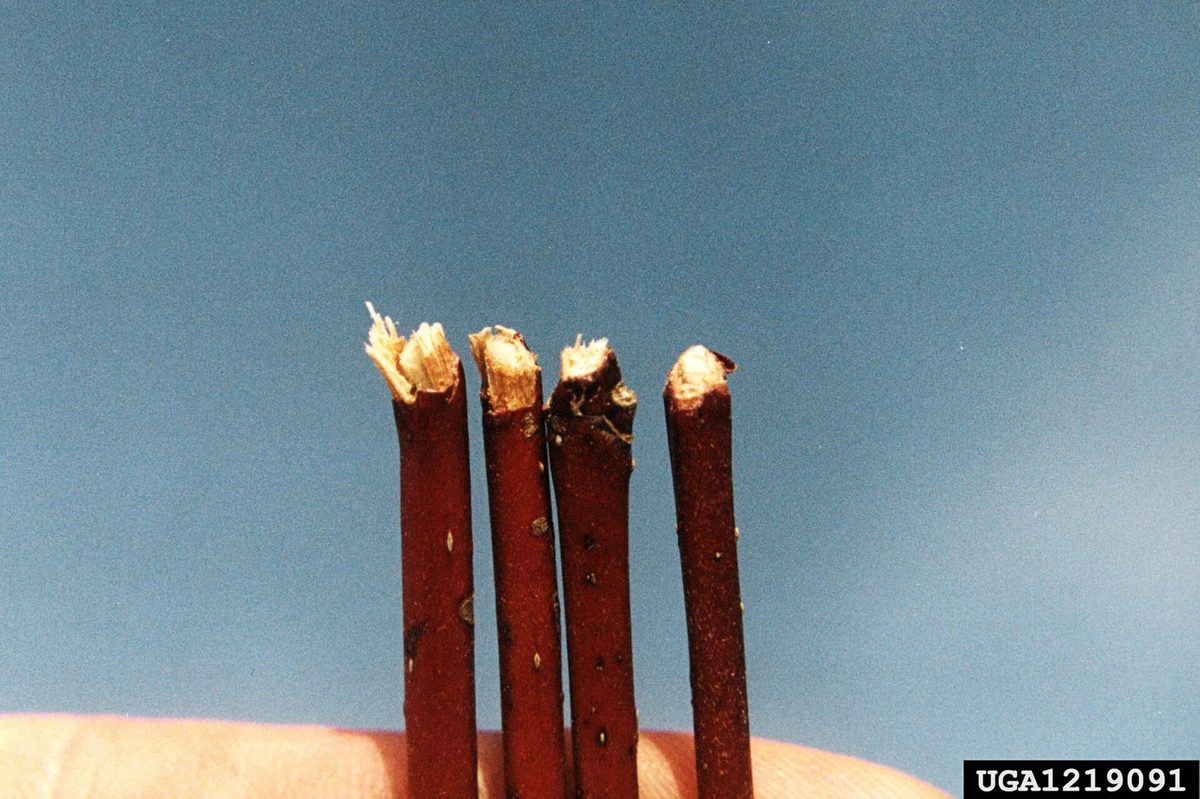
Photo: Bill Cook, Michigan State University, Bugwood.org, CC BY 3.0 via Wikimedia Commons

Quick facts
| Light: | Full sun, part shade and full shade (full sun preferred)11 source |
|---|---|
| Water: | Medium to wet21 source |
| Soil: | Well drained, moist, occasionally dry, occasionally wet and poorly drained; pH 6.1–8.532 |
| Hardiness: | Zones 2a–7b41 source |
| Size: | 5–9 ft (1.52–2.74 m) × 5–10 ft (1.52–3.05 m)41 source |
| Growth rate: | Rapid43 |
| Bloom: | May–Jun and Jul–Aug, White231 |
| Cats: | Not documented by major sources |
| Dogs: | Not documented by major sources |
| Family: | Cornaceae |
How much light does a Redosier Dogwood need?
Outdoors, redosier dogwood grows best with full sun, the light level it prefers. It also tolerates part shade and full shade, so a full-sun spot outdoors is not the only site that works when you are deciding exactly where to place this shrub in the landscape.
- Light: Full sun, part shade and full shade (full sun preferred)1
How often to water a Redosier Dogwood
Outdoors, this shrub needs soil moisture in the medium to wet range to do well. It also tolerates drought, handling soil that dries out as well as soil that stays wet. The soil can be well drained, moist, occasionally dry, occasionally wet or poorly drained, and this shrub tolerates all of those conditions.
- Water: Medium to wet2
Best soil for a Redosier Dogwood
This shrub does best in soil that is rich and moist, and it does well even where drainage runs poor. It also adapts to soil ranging from very poorly drained to well drained, and it tolerates soil that has been compacted. Beyond that, this shrub also tolerates soil that runs occasionally dry or occasionally wet. Aim for a soil pH between 6.1 and 8.5, the range this species is documented to grow in.
Hardiness and temperature
USDA lists this shrub as hardy in zones 2a, 2b, 3a, 3b, 4a, 4b, 5a, 5b, 6a, 6b, 7a and 7b. That range runs from the coldest zone, 2a, to the mildest zone it is listed for, 7b, covering a broad band of outdoor winter conditions.
- Hardiness: Zones 2a–7b4
Pruning a Redosier Dogwood
Redosier dogwood needs basal, hard renewal pruning, where you cut the oldest stems back hard near the base of the plant. Do this in early spring, since that is when cutting back the oldest stems keeps the plant's stems bright red.
- Pruning: Hard renewal pruning5
How to plant a Redosier Dogwood
Redosier dogwood can be planted outdoors in USDA zones 2a through 7b. At maturity, it reaches 5 to 9 ft (1.52-2.74 m) in height and spreads 5 to 10 ft (1.52-3.05 m) wide outdoors, so give it enough room to spread when you decide where to place it in the yard.
- Hardiness: Zones 2a–7b4
Winter care
Outdoors, redosier dogwood is winter hardy in USDA zones 2a through 7b, a range that includes some of the coldest zones used for garden plants in the United States. This shrub is also deciduous. That span runs from zone 2a, its coldest limit, to zone 7b, its mildest.
- Hardiness: Zones 2a–7b4
How to propagate a Redosier Dogwood
You can propagate redosier dogwood from seed outdoors, since it reproduces sexually that way in the wild. It also spreads and regenerates on its own outdoors through stolons, through layering, and through root crown sprouts. For a garden setting, taking stem cuttings is also listed as a way to propagate this shrub outdoors.
Common problems
Borers are documented as a serious pest problem for this shrub, particularly when the plant is already weak or under stress. Documented diseases for this shrub include crown canker, flower and leaf blight, and leaf spot. No other pests are listed for this species.
| Problem | Kind |
|---|---|
| Borers | Pest |
| Crown canker | Disease |
| Flower and leaf blight | Disease |
| Leaf spot | Disease |
Is Redosier Dogwood toxic to cats and dogs?
Recommended supplies
- Soil: a free-draining mix, and a pot with a drainage hole.
Questions and answers
- How big does redosier dogwood get, and how fast does it grow?
- Redosier dogwood is documented as a rapid grower. At maturity, it reaches 5 to 9 ft (1.52-2.74 m) in height and spreads 5 to 10 ft (1.52-3.05 m) wide.
- What kind of soil does redosier dogwood need?
- This shrub grows best in soil that is rich and moist, and it also tolerates soil that drains poorly. It does well across a soil pH range of 6.1 to 8.5.
- When does redosier dogwood bloom, and what color are the flowers?
- Redosier dogwood produces white flowers. It blooms first from May to June, and then again from July to August.
Sources
- Lady Bird Johnson Wildflower Center. https://www.wildflower.org/plants/result.php?id_plant=coses. Accessed 15 November 2026.
- University of Minnesota Extension. https://extension.umn.edu/garden-and-home/yard-and-garden/lawns-and-landscapes-in-minnesota/trees-and-shrubs/redosier-dogwood. Accessed 15 November 2026.
- USDA Forest Service Fire Effects Information System. https://www.fs.usda.gov/database/feis/plants/shrub/corser/all.html. Accessed 15 November 2026.
- NC State Extension Gardener Plant Toolbox. https://plants.ces.ncsu.edu/plants/cornus-sericea/. Accessed 15 November 2026.
- Cornell University CALS Woody Plants Database. https://woodyplants.cals.cornell.edu/plant/61. Accessed 15 November 2026.
How this page was made
- Written with AI assistance from the sources listed on this page. AI is never the source of a fact.