Canada Thistle (Cirsium arvense)
Formerly Cnicus arvensis, Cirsium segetum, Cirsium setosum
Canada thistle grows best in full sun. It also grows in part shade. It prefers moist soils. It is recorded for USDA zones 4a to 7b. It reaches 3 to 5 ft (0.91 to 1.52 m) tall. It is a herbaceous perennial. No cited source records a pet-toxicity position for this plant.
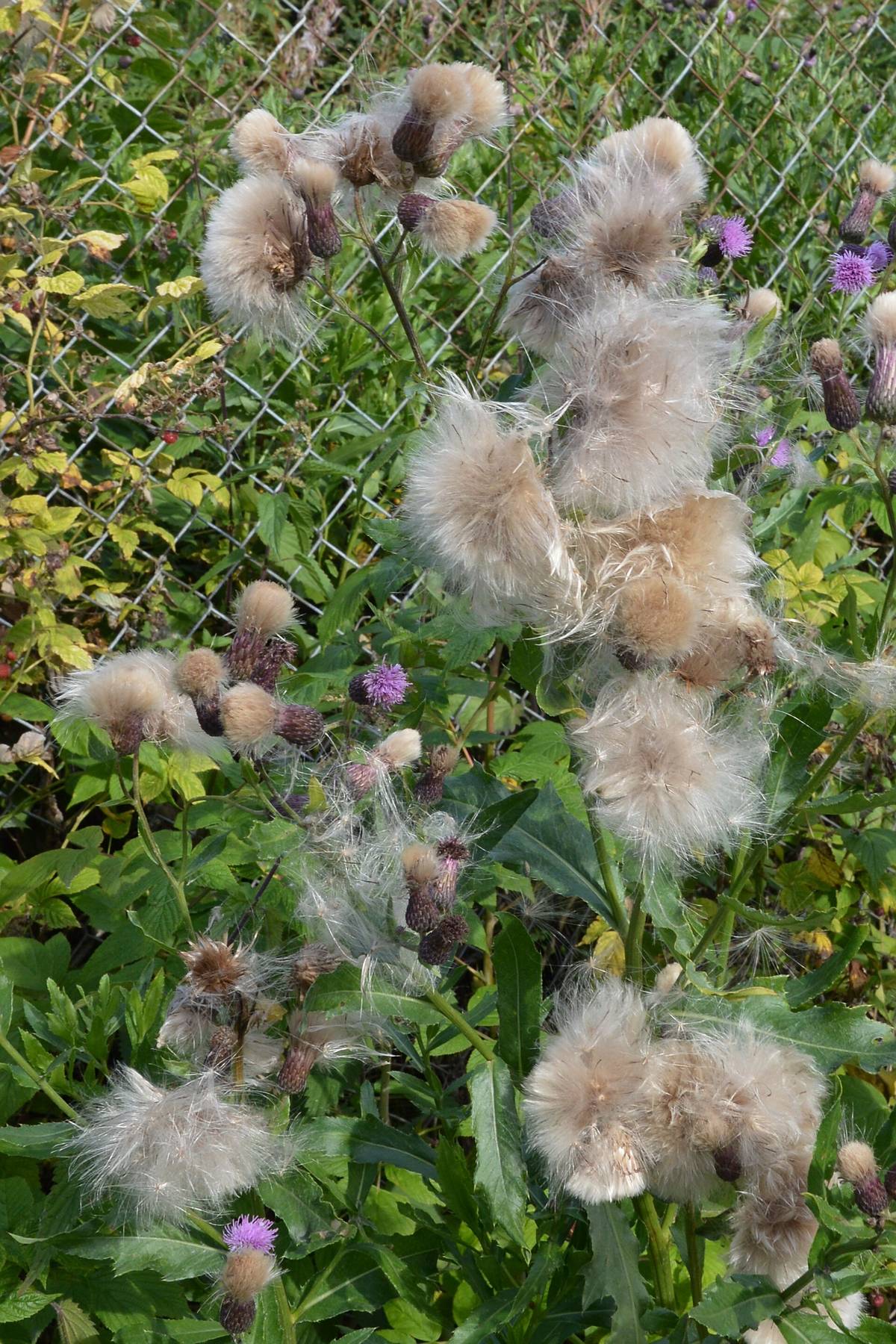
Photo: Ryan Hodnett, CC BY-SA 4.0 via Wikimedia Commons

Quick facts
| Light: | Full sun and part shade (full sun preferred)12 |
|---|---|
| Soil: | Moist and occasionally wet321 source |
| Hardiness: | Zones 4a–7b11 source |
| Size: | 3–5 ft (0.91–1.52 m)31 source |
| Growth rate: | Rapid11 source |
| Bloom: | Jun–Aug, Pink, purple and white131 source |
| Cats: | Not documented by major sources |
| Dogs: | Not documented by major sources |
| Native range: | AFG, ALB, ALG, ALT, AMU, ASS, AUT, AZO, BAL, BAN, BGM, BLR, BLT, BRY, BUL, CHC, CHI, CHM, CHN, CHQ, CHS, CHT, CHX, COR, CYP, CZE, DEN, EHM, FIN, FOR, FRA, GER, GRB, GRC, HUN, IND, IRE, IRN, IRQ, ITA, JAP, KAM, KAZ, KGZ, KHA, KOR, KRA, KRY, KUR, LBS, MAG, MON, NCS, NEP, NET, NOR, PAK, PAL, POL, POR, PRM, ROM, RUC, RUE, RUN, RUS, RUW, SAK, SAR, SIC, SIN, SPA, SWE, SWI, TCS, TKM, TUE, TUR, TVA, TZK, UKR, UZB, WHM, WSB, YAK, YUG5 |
| Family: | Asteraceae |
How much light does a Canada Thistle need?
Canada thistle does best in full sun, which the source defines as six or more hours of direct sunlight a day. It also grows in part shade, where it gets direct sun for only part of the day, about 2 to 6 hours. The recorded minimum is 2 hours of sun a day. It prefers full, direct sun together with moist soils.
Best soil for a Canada Thistle
Canada thistle prefers moist soils. Its recorded drainage range runs from moist to occasionally wet. It favors wet areas such as streambanks, sedge meadows and wet prairies. The same source pairs those moist soils with full, direct sun. A preferred soil pH is not recorded in the facts for this page.
Hardiness and temperature
Canada thistle is recorded for USDA hardiness zones 4a to 7b. The listing names eight half-zones: 4a, 4b, 5a, 5b, 6a, 6b, 7a and 7b. Zone 4a is the cold end of that range, and zone 7b is the warm end. A gardener in zone 4, 5, 6 or 7 falls inside the recorded range.
- Hardiness: Zones 4a–7b1
How to plant a Canada Thistle
Before you plant, check that your USDA zone falls between 4a and 7b. Choose a spot with full sun, meaning six or more hours of direct sunlight a day. Allow for a mature height of 3 to 5 ft (0.91 to 1.52 m). Moist soil suits it, and wet places such as streambanks are where it prefers to grow. Its habit is erect and its growth rate is rapid. Seed and root cuttings are both recorded ways to start new plants. Its US native status is introduced in both the lower 48 states and Alaska.
- Hardiness: Zones 4a–7b1
Winter care
Canada thistle is a herbaceous perennial. Its coldest listed hardiness zone is 4a. Zones 5a through 7b are also listed. Zone 7b is the warmest zone listed for it. The recorded range reaches from zone 4a to zone 7b. If you live in zone 8 or warmer, the recorded range does not include your zone.
- Hardiness: Zones 4a–7b1
How to propagate a Canada Thistle
Canada thistle is propagated by seed and by root cuttings. Seed is the recommended propagation strategy. Small root pieces, only several millimeters long, can produce new plants. Seed is one method and root pieces are the other. This herbaceous perennial is recorded with both methods.
Common problems
Four pests are recorded for Canada thistle: the stem gall fly, stem weevil, seed head weevil and seed head fly. The stem gall fly is Urophora cardui. Two of these pests are named for the stem and two for the seed head. The recorded disease is thistle rust, caused by the rust pathogen Puccinia punctiformis.
| Problem | Kind |
|---|---|
| Stem gall fly | Pest |
| Stem weevil | Pest |
| Seed head weevil | Pest |
| Seed head fly | Pest |
| Thistle rust | Disease |
Is Canada Thistle toxic to cats and dogs?
Recommended supplies
- Soil: a mix that holds moisture without staying wet.
Questions and answers
- What light does Canada thistle need?
- It does best in full sun, which means six or more hours of direct sunlight a day. It also grows in part shade, with direct sun for about 2 to 6 hours.
- Which USDA zones is Canada thistle recorded for?
- It is recorded for zones 4a to 7b. It is a herbaceous perennial with an erect habit. Its mature height is 3 to 5 ft (0.91 to 1.52 m).
- How is Canada thistle propagated?
- Seed is the recommended propagation strategy, and root cuttings are also recorded. Small root pieces, only several millimeters long, can produce new plants. Its recorded growth rate is rapid.
Sources
- NC State Extension Gardener Plant Toolbox. https://plants.ces.ncsu.edu/plants/cirsium-arvense/. Accessed 14 October 2026.
- University of Minnesota Extension. https://extension.umn.edu/identify-invasive-species/canada-thistle. Accessed 14 October 2026.
- University of Minnesota Extension. https://extension.umn.edu/natural-resources/forestry-and-wildlife/invasive-species/canada-thistle. Accessed 21 October 2026.
- UC Statewide Integrated Pest Management Program (WeedCUT). https://weedcut.ipm.ucanr.edu/biological-control/canada-thistle/. Accessed 21 October 2026.
- Royal Botanic Gardens, Kew (World Checklist of Vascular Plants). https://sftp.kew.org/pub/data-repositories/WCVP/wcvp.zip. Accessed 4 June 2026.
How this page was made
- Written with AI assistance from the sources listed on this page. AI is never the source of a fact.