Common Asparagus Fern (Asparagus setaceus)
Formerly Asparagus plumosus, Protasparagus setaceus, Asparagus lujae
Keep common asparagus fern in bright, indirect light and high humidity, and it grows rapidly. It is a bushy evergreen and twining vine. As a houseplant, its mature height is 2 to 3 feet (0.61–0.91 m). The ASPCA lists the plant as toxic to both cats and dogs.
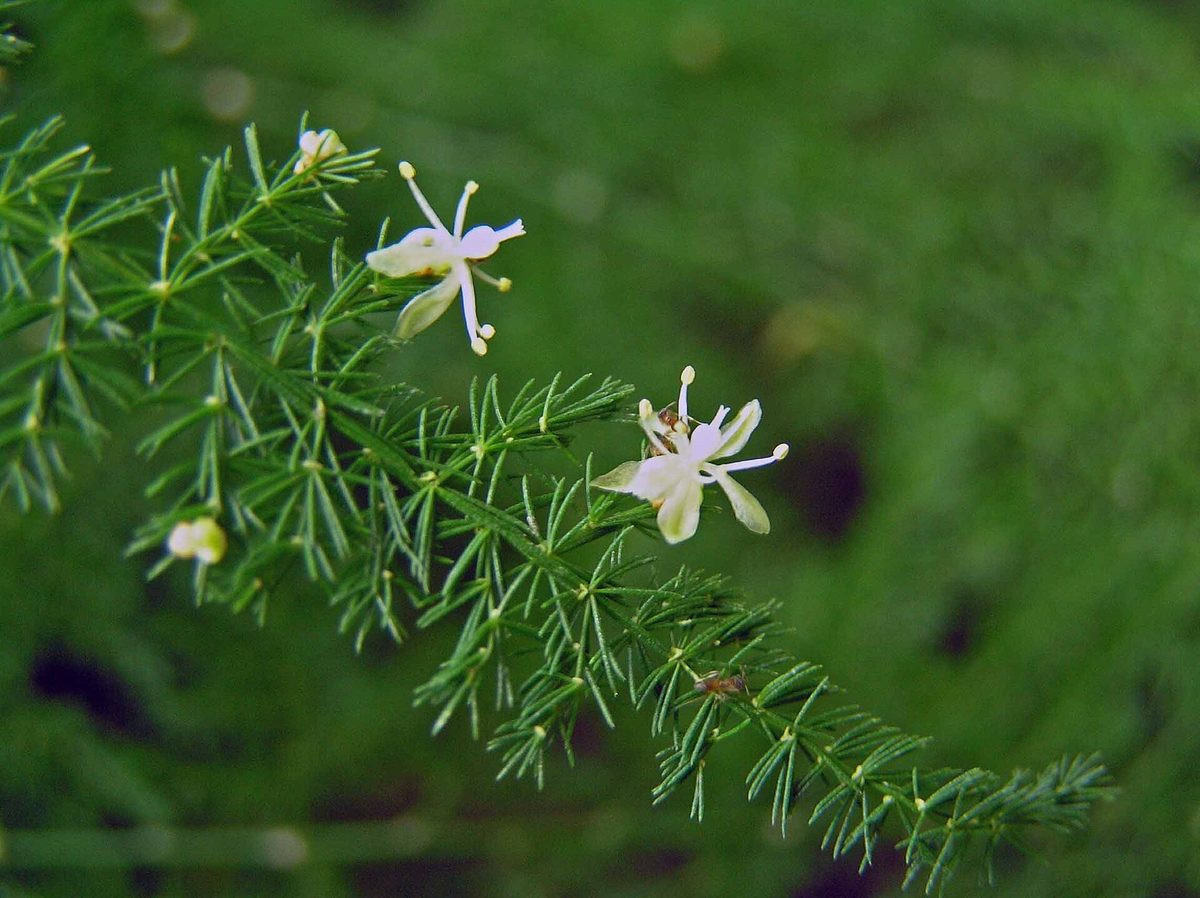
Photo: 阿橋 HQ, CC BY-SA 2.0 via Wikimedia Commons

Quick facts
| Light: | Bright, indirect light11 source |
|---|---|
| Soil: | Well drained and moist11 source |
| Minimum temperature: | 55.4 °F (13 °C)11 source |
| Size: | 2–3 ft (0.61–0.91 m) × 2–3 ft (0.61–0.91 m)11 source |
| Growth rate: | Rapid111 source |
| Bloom: | White13 |
| Cats: | Toxic to cats (1 source) 2 |
| Dogs: | Toxic to dogs (1 source) 2 |
| Native range: | BOT, COM, CPP, ETH, KEN, LES, MLW, MOZ, NAT, OFS, SWZ, TAN, TVL, ZAM, ZIM4 |
| Family: | Asparagaceae |
How much light does a Common Asparagus Fern need?
Bright, indirect light is the indoor requirement for this fern. Outdoors, part shade is preferred, meaning direct sunlight for only part of the day, about 2 to 6 hours. Full shade is also listed, which the source describes as dappled sunlight through the upper canopy all day. You can grow it outdoors in USDA hardiness zones 9a to 12b.
- Light: Bright, indirect light1
Best soil for a Common Asparagus Fern
Well drained and moist describes the soil conditions listed for this fern. The source gives good drainage as its entry on the point. Root rot is one of the listed diseases. The source says it can occur from overwatering. Check that the soil is moist and also drains well before you plant. Moisture is listed as one of two soil conditions, alongside drainage. Soil pH is not documented for this plant, so no range is given.
- Soil drainage: Well drained and moist1
Temperature and humidity
Bring the plant back indoors when temperatures drop to near 55 °F (13 °C). The 55.4 °F (13 °C) figure is the minimum temperature given for this fern. The source describes the plant as needing high humidity alongside bright indirect light. Humidity is listed as high, which is the only humidity level given. Keep it where the air stays humid. In USDA hardiness zones 9 to 12, the plant can be grown outdoors.
How to propagate a Common Asparagus Fern
Division and seed are the two propagation methods listed. The source says the plant is best propagated by division or seeds. Seed is one method, and division is the other. Cuttings are not among the listed methods. Both methods are listed for Asparagus setaceus, the common asparagus fern. As a houseplant, each plant reaches a spread of 2 to 3 feet (0.61–0.91 m).
- Propagation: Seed and division1
Common problems
Potential insect pests include slugs, mealybugs, spider mites and aphids. Root rot and leaf spot are the common diseases listed. Root rot can occur from overwatering. Deer resistance is reported, and the plant is listed as particularly resistant to deer.
| Problem | Kind |
|---|---|
| Slugs and snails | Pest |
| Mealybugs | Pest |
| Spider mites | Pest |
| Aphids | Pest |
| Root rot | Disease |
| Leaf spot | Disease |
Is Common Asparagus Fern toxic to cats and dogs?
For cats, the ASPCA lists the plant as toxic. For dogs, the ASPCA also lists it as toxic. Keep the plant away from both cats and dogs. Both entries come from the ASPCA Animal Poison Control Center. The listing is for Asparagus setaceus, the common asparagus fern. That means the position for cats and the position for dogs are the same: toxic. No cited source here records which parts of the plant are toxic or what severity to expect.
Pet-safe alternatives
Recommended supplies
- Light: bright, indirect light, such as near an east window; a full-spectrum grow light substitutes where no window does.
- Soil: a free-draining mix, and a pot with a drainage hole.
- Humidity: it wants humid air; a pebble tray or a humidifier is the usual fix.
Questions and answers
- Is common asparagus fern toxic to cats and dogs?
- The ASPCA lists it as toxic to cats and also as toxic to dogs. The position is the same for cats as for dogs. Keep the plant away from both animals.
- How much light does an asparagus fern need indoors?
- Indoors it needs bright, indirect light. The source pairs that need with high humidity. Outdoors, part shade is preferred.
- How big does common asparagus fern get?
- As a houseplant, its mature height is 2 to 3 feet (0.61–0.91 m). Its spread is also 2 to 3 feet (0.61–0.91 m). It grows rapidly.
Sources
- NC State Extension Gardener Plant Toolbox. https://plants.ces.ncsu.edu/plants/asparagus-setaceus/. Accessed 14 October 2026.
- ASPCA Animal Poison Control Center. https://www.aspca.org/pet-care/aspca-poison-control/toxic-and-non-toxic-plants/plumosa-fern. Accessed 14 October 2026.
- Chicago Botanic Garden. https://www.chicagobotanic.org/plant-information/plant-finder/asparagus-setaceus-lace-fern. Accessed 14 October 2026.
- Royal Botanic Gardens, Kew (World Checklist of Vascular Plants). https://sftp.kew.org/pub/data-repositories/WCVP/wcvp.zip. Accessed 4 June 2026.
How this page was made
- Written with AI assistance from the sources listed on this page. AI is never the source of a fact.