Chameleon (Houttuynia cordata)
Formerly Polypara cordata, Houttuynia foetida, Houttuynia emeiensis
Give chameleon plant full sun, its preferred light, or part shade or full shade. Keep its water supply medium to wet. It grows at a rapid rate. It reaches 0.5–1.7 ft (0.15–0.51 m) tall. It is listed for hardiness zones 4a–10b. Its flowers are green and white. Toxicity to cats and to dogs is not documented here.
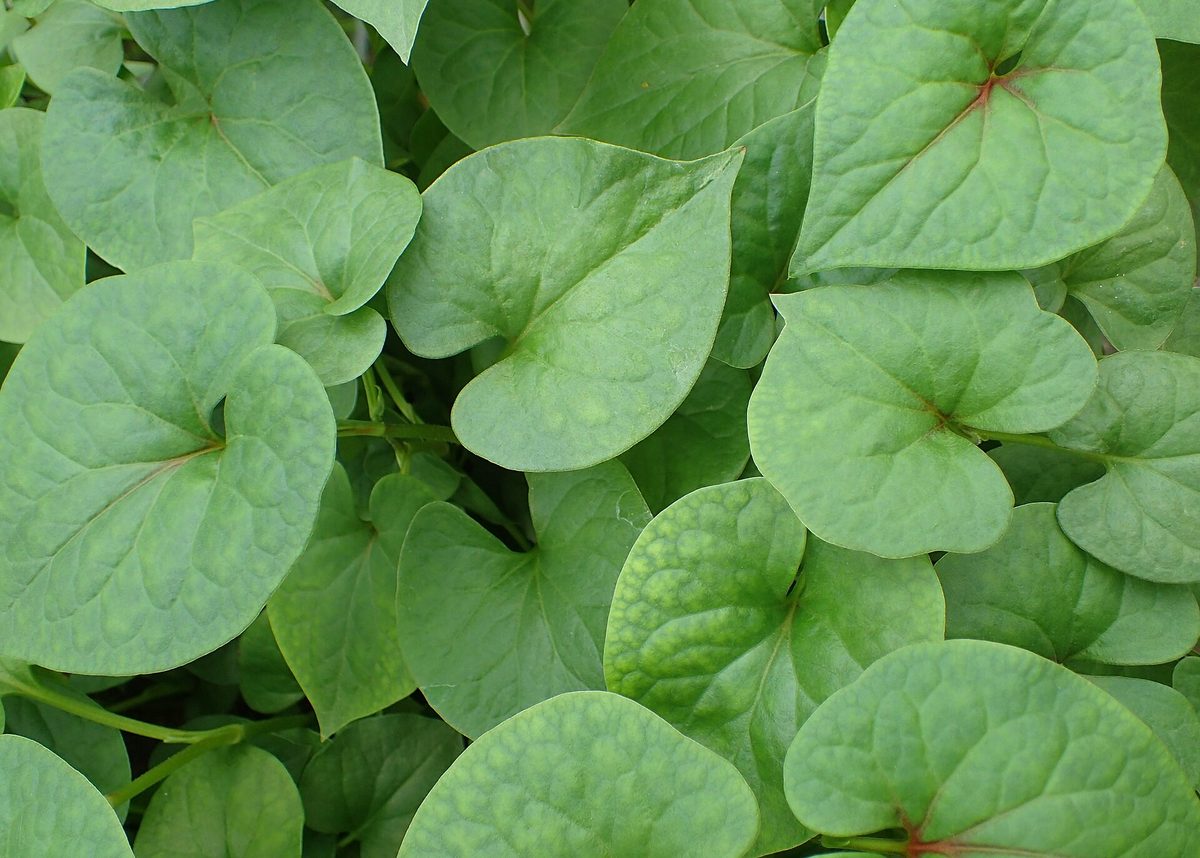
Photo: Krzysztof Ziarnek, Kenraiz, CC BY-SA 4.0 via Wikimedia Commons

Quick facts
| Light: | Full sun, part shade and full shade (full sun preferred)11 source |
|---|---|
| Water: | Medium to wet11 source |
| Soil: | Moist, occasionally wet and poorly drained12 |
| Hardiness: | Zones 4a–10b11 source |
| Size: | 0.5–1.7 ft (0.15–0.51 m) × 1–10 ft (0.3–3.05 m)12 |
| Growth rate: | Rapid111 source |
| Bloom: | May–Jun, Green and white311 source |
| Cats: | Not documented by major sources |
| Dogs: | Not documented by major sources |
| Native range: | ASS, BAN, CBD, CHC, CHH, CHN, CHS, CHT, EHM, JAP, KOR, MYA, NEP, OGA, TAI, THA, VIE, WHM4 |
| Family: | Saururaceae |
How much light does a Chameleon need?
Full sun, meaning six or more hours of direct sunlight a day, is the preferred exposure for this plant. The plant is also listed for part shade and for full shade. Choose a sunny spot if you have one, and treat the shadier exposures as conditions it accepts.
- Light: Full sun, part shade and full shade (full sun preferred)1
How often to water a Chameleon
Water needs run from medium to wet. The plant does best in moist soil, and it also grows in shallow standing water about 1–2 in (2.5–5 cm) deep. Check the soil rather than the calendar, and look for moisture. A site that is occasionally wet or poorly drained also suits it. Dry soil falls outside the listed water range.
- Water: Medium to wet1
Best soil for a Chameleon
The listed soil drainage conditions are moist, occasionally wet and poorly drained. The plant shows a definite liking for moist to wet soils. It does best in moist soil, and it will grow with shallow standing water of 1–2 in (2.5–5 cm). A wet corner of the garden, which many other plants avoid, is therefore a fit for this one. Its water range runs from medium to wet, which matches the soil conditions listed here.
Hardiness and temperature
The listed hardiness range is zones 4a to 10b. That range includes every half-zone from 4a, 4b and 5a up through 9b, 10a and 10b. Zone 4a marks the colder end of the list, and zone 10b marks the warmer end. Find your own USDA zone and compare it with this range. The plant is a herbaceous perennial with a rapid growth rate.
- Hardiness: Zones 4a–10b1
How to plant a Chameleon
Check your hardiness zone first, because the listed range is zones 4a to 10b. Give each plant room, since its mature spread is listed as 1–10 ft (0.3–3.05 m). Choose a spot with moist soil, where full sun is preferred and part shade or full shade is also listed. A site that is occasionally wet or poorly drained is on the list of soil conditions. In the lower 48 US states its native status is introduced.
- Hardiness: Zones 4a–10b1
Winter care
The plant is listed for hardiness zones 4a through 10b. It is a herbaceous perennial. Gardeners at the colder edge of that range, in zone 4a, and those at the warmer edge, in zone 10b, both fall inside the listing. A section of rhizome left in the ground will grow again from dormant nodes.
- Hardiness: Zones 4a–10b1
How to propagate a Chameleon
Division is the propagation method on file for this plant. Any little section of a rhizome left untouched will grow again from dormant nodes. The plant spreads quickly by rhizomes that can grow from any segment of its foliage. Its mature spread is listed as 1–10 ft (0.3–3.05 m), so expect a wide patch.
Common problems
Aphids, slugs and snails can be problematic for this plant. These three pests are the ones recorded for it. The plant grows at a rapid rate and spreads quickly by rhizomes. It reaches 0.5–1.7 ft (0.15–0.51 m) tall at maturity.
- Common pests: aphids, slugs and snails1
| Problem | Kind |
|---|---|
| Aphids | Pest |
| Slugs and snails | Pest |
| Snails | Pest |
Is Chameleon toxic to cats and dogs?
Recommended supplies
- Soil: a mix that holds moisture without staying wet.
Questions and answers
- Does chameleon plant need sun or shade?
- Full sun is the preferred exposure, meaning six or more hours of direct sunlight a day. Part shade and full shade are also listed for the plant.
- How tall and wide does chameleon plant get?
- Its mature height is listed as 0.5–1.7 ft (0.15–0.51 m). Its mature spread is listed as 1–10 ft (0.3–3.05 m). It grows at a rapid rate.
- What color are the flowers, and when do they bloom?
- The tiny flowers are green and white, set on lime green spikes surrounded by four white bracts. The bloom season is listed as May–Jun.
Sources
- NC State Extension Gardener Plant Toolbox. https://plants.ces.ncsu.edu/plants/houttuynia-cordata/. Accessed 12 October 2026.
- Penn State Extension. https://extension.psu.edu/chameleon-plant-looks-can-be-deceiving. Accessed 12 October 2026.
- Chicago Botanic Garden. https://www.chicagobotanic.org/plant-information/plant-finder/houttuynia-cordata-chameleon-chameleon-houttuynia. Accessed 30 October 2026.
- Royal Botanic Gardens, Kew (World Checklist of Vascular Plants). https://sftp.kew.org/pub/data-repositories/WCVP/wcvp.zip. Accessed 4 June 2026.
How this page was made
- Written with AI assistance from the sources listed on this page. AI is never the source of a fact.