Muscadine (Vitis rotundifolia)
Formerly Muscadinia rotundifolia, Vitis callosa, Vitis peltata
Muscadine grows best in full sun with medium water, and it also tolerates part shade. It is a deciduous climbing vine documented for USDA zones 5a to 9b. Muscadine is listed as toxic for dogs. Toxicity for cats is not documented on this page.
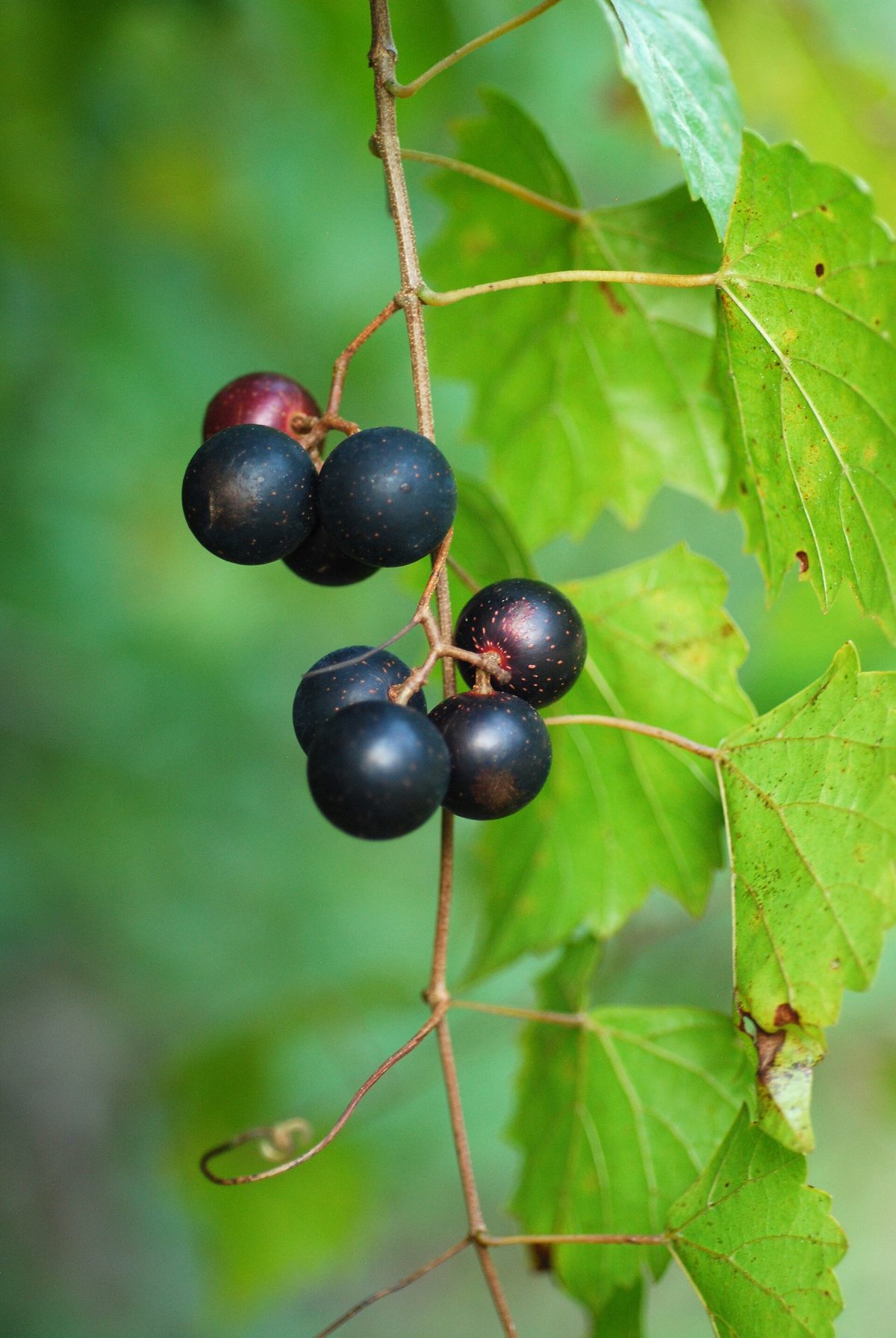
Photo: Douglas Goldman, CC BY-SA 4.0 via Wikimedia Commons

Quick facts
| Light: | Full sun and part shade (full sun preferred)12 |
|---|---|
| Water: | Medium31 source |
| Soil: | Well drained, moist, occasionally dry and occasionally wet; pH 6–6.5121 source |
| Hardiness: | Zones 5a–9b11 source |
| Size: | 90 ft (27.43 m) × 6 ft (1.83 m)321 source |
| Growth rate: | Rapid11 source |
| Bloom: | May–Jun (North Carolina), Yellow, green and white11 source |
| Cats: | Not documented by major sources |
| Dogs: | Toxic to dogs 56 |
| Native range: | ALA, ARK, BAH, DEL, FLA, GEO, KTY, LOU, MRY, MSI, MSO, MXE, MXG, MXN, MXS, NCA, OKL, SCA, TEN, TEX, VRG, WVA7 |
| Family: | Vitaceae |
How much light does a Muscadine need?
Muscadines do best in full sun for most of the day. Full sun here means six or more hours of direct sunlight a day. The plant also tolerates part shade, though full sun is the preferred exposure. It is a woody, deciduous, climbing vine native to the southern United States.
How often to water a Muscadine
Muscadine is rated for medium water use. The soil it grows in can be well drained or moist. It also accepts soil that is occasionally dry or occasionally wet, including occasional flooding. Medium is the only water rating recorded, with no separate minimum or maximum.
- Water: Medium3
Best soil for a Muscadine
Aim for a soil pH between 6.0 and 6.5. The documented guidance is to adjust the soil pH into that band. A pH of 6.0 is the low end of the range, and 6.5 is the high end. Muscadine accepts well drained soil and moist soil. It also accepts soil that is occasionally dry or occasionally wet. Occasional flooding is on the documented list too. Together, drainage and pH are the two soil facts recorded for this vine.
Hardiness and temperature
Muscadine is documented for USDA zones 5a to 9b. The listed zones are 5a, 5b, 6a, 6b, 7a, 7b, 8a, 8b, 9a and 9b. The recorded minimum temperature is 10.4 °F (-12 °C). Acclimated vines tolerate temperatures down to about 10 °F (-12 °C) without injury. That tolerance is stated for acclimated vines, so keep the word in mind when you read the figure. The vine is deciduous. It is a climbing vine native to the southern United States.
Fertilizing a Muscadine
A light annual feeding is documented for muscadine. The named blend is premium quality 10-10-10, at 3 to 5 pounds (1.4 to 2.3 kg) per plant. The frequency is once a year, and the amount is described as light. That yearly amount is the whole feeding plan the facts record for this vine.
- Fertilizer: Light, once a year (Mar, Jun)2
Pruning a Muscadine
The pruning type recorded for muscadine is hard renewal. The best time to prune is late winter. Both the type and the timing are recorded for this vine, and no second pruning type is listed. Muscadine is a deciduous vine that grows at a rapid rate.
- Pruning: Hard renewal pruning (Jan–Mar)4
How to plant a Muscadine
Plant muscadine where your zone falls between 5a and 9b. Give each vine a space at least 20 ft (6.1 m) long and 6 ft (1.83 m) wide. The vine can climb or sprawl up to about 90 ft (27.4 m) long. Its growth rate is rapid. Full sun suits it best at the planting spot.
- Hardiness: Zones 5a–9b1
Winter care
Winter hardiness is the main cold-season fact recorded for muscadine. A vine that has acclimated can take about 10 °F (-12 °C) without injury. The coldest zones listed are 5a and 5b. The warmest zones listed are 9a and 9b. The vine is deciduous, and the best pruning time is late winter. Hard renewal pruning is the recorded type.
Care calendar
| Task | Jan | Feb | Mar | Apr | May | Jun | Jul | Aug | Sep | Oct | Nov | Dec |
|---|---|---|---|---|---|---|---|---|---|---|---|---|
| Fertilize | Fertilize in Mar | Fertilize in Jun | ||||||||||
| Prune | Prune in Jan | Prune in Feb | Prune in Mar | |||||||||
| Bloom North Carolina | Bloom in May | Bloom in Jun |
How to propagate a Muscadine
Four propagation methods are documented for muscadine. You can start new plants from seed, stem cuttings, leaf cuttings or root cuttings. Cuttings can be taken from stems, leaves or roots. Each of the four methods is listed without a ranking, and none is documented as best. Muscadine is a vine, and these are the four ways recorded to make more of it.
- Propagation: Seed, stem cuttings, leaf cuttings and root cuttings1
Common problems
Several insect pests are documented for muscadine: aphids, thrips, Japanese beetle, grape berry moth and grape root borer. Japanese beetle, grape berry moth and grape root borer are named as the most common insect pests. Diseases may include powdery mildew, black rot, bitter rot and leaf spot. Macrophoma rot, angular leaf spot and ripe rot are also recorded.
| Problem | Kind |
|---|---|
| Aphids | Pest |
| Thrips | Pest |
| Japanese beetle | Pest |
| Grape berry moth | Pest |
| Grape root borer | Pest |
| Powdery mildew | Disease |
| Black rot | Disease |
| Bitter rot | Disease |
| Leaf spot | Disease |
| Macrophoma rot | Disease |
| Angular leaf spot | Disease |
| Ripe rot | Disease |
Is Muscadine toxic to cats and dogs?
The recorded position for dogs is toxic. The Pet Poison Helpline lists Vitis plants, including muscadine, as toxic for dogs. The ASPCA says dogs cannot process tartaric acid, and exposure to grapes or raisins can lead to kidney damage. Raisins are named alongside muscadine in the Pet Poison Helpline listing. Sultana, Zante currant and Corinthian currant are named in that listing too. Grapes and raisins are the exposures the ASPCA entry describes. For cats, toxicity is not documented on this page.
Pet-safe alternatives
Recommended supplies
- Soil: a free-draining mix, and a pot with a drainage hole.
Questions and answers
- Is muscadine toxic to dogs?
- Muscadine is listed as toxic for dogs by the Pet Poison Helpline. The ASPCA says exposure to grapes or raisins can lead to kidney damage in dogs. Common grape and raisin are named in the same listing.
- How much sun does a muscadine need?
- Full sun for most of the day suits muscadine best. Part shade is also tolerated, with full sun preferred. Full sun means six or more hours of direct sunlight each day.
- How big does muscadine get?
- It can climb or sprawl to about 90 ft (27.4 m) in length. Allow a space of at least 20 ft (6.1 m) by 6 ft (1.83 m) for each vine. Its growth rate is rapid.
Sources
- NC State Extension Gardener Plant Toolbox. https://plants.ces.ncsu.edu/plants/vitis-rotundifolia/. Accessed 15 October 2026.
- Clemson Cooperative Extension HGIC. https://hgic.clemson.edu/factsheet/muscadine-grape/. Accessed 15 October 2026.
- Lady Bird Johnson Wildflower Center. https://www.wildflower.org/plants/result.php?id_plant=viro3. Accessed 15 October 2026.
- University of Florida IFAS Extension (EDIS). https://ask.ifas.ufl.edu/publication/HS100. Accessed 15 October 2026.
- Pet Poison Helpline. https://www.petpoisonhelpline.com/poison/grapes/. Accessed 15 October 2026.
- ASPCA Animal Poison Control Center. https://www.aspca.org/pet-care/aspca-poison-control/people-foods-avoid-feeding-your-pets. Accessed 15 October 2026.
- Royal Botanic Gardens, Kew (World Checklist of Vascular Plants). https://sftp.kew.org/pub/data-repositories/WCVP/wcvp.zip. Accessed 4 June 2026.
How this page was made
- Written with AI assistance from the sources listed on this page. AI is never the source of a fact.