Red Maple (Acer rubrum)
Formerly Rufacer rubrum, Acer fulgens, Acer glaucum
Red maple grows in full sun to part shade and wants medium to wet soil. The ASPCA lists it as non-toxic to both cats and dogs. Hardy in zones 4a to 9b, it is a deciduous tree that grows at a rapid rate. It is more commonly 40 to 70 ft (12.19 to 21.34 m) high at maturity.
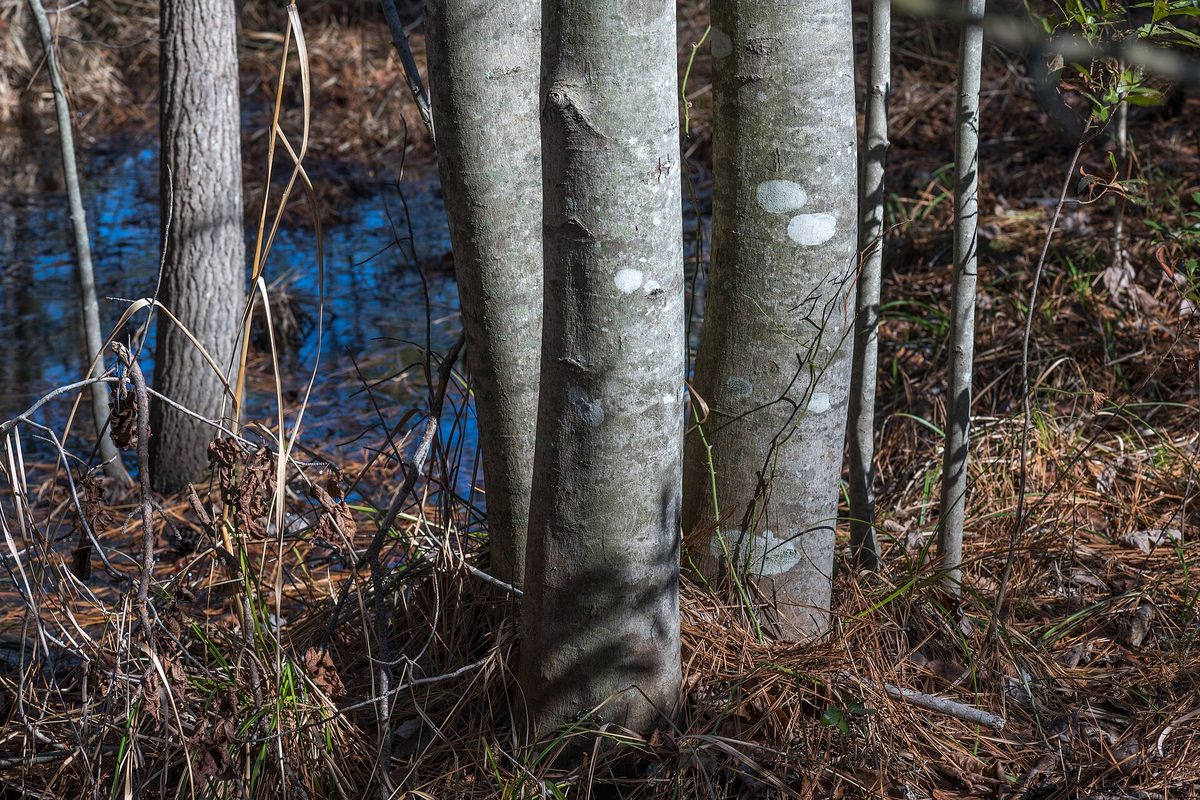
Photo: PumpkinSky, CC BY-SA 3.0 via Wikimedia Commons

Quick facts
| Light: | Full sun and part shade (full sun preferred)11 source |
|---|---|
| Water: | Medium to wet12 |
| Soil: | Well drained, moist, occasionally dry, occasionally wet and poorly drained; pH 4.5–6.5131 source |
| Hardiness: | Zones 4a–9b41 source |
| Size: | 40–70 ft (12.19–21.34 m) × 25–35 ft (7.62–10.67 m)1741 source |
| Growth rate: | Rapid14178 |
| Bloom: | Jan–Mar (North Carolina), Mar–Apr, Apr and Jan, Red, yellow and pink159107 |
| Cats: | Non-toxic to cats 61 |
| Dogs: | Non-toxic to dogs 61 |
| Native range: | ALA, ARK, CNT, DEL, FLA, GEO, ILL, INI, IOW, KTY, LOU, MAI, MAS, MIC, MIN, MRY, MSI, MSO, NBR, NCA, NDA, NFL, NSC, NWH, NWJ, NWM, NWY, OHI, OKL, ONT, PEI, PEN, QUE, RHO, SCA, SDA, TEN, TEX, VER, VRG, WDC, WIS, WVA11 |
| Family: | Sapindaceae |
How much light does a Red Maple need?
Red maple takes full sun to part shade, and full sun is the preferred setting. Both settings are listed for it outdoors, with full sun ahead of part shade. Pick a spot that suits a tree commonly 40 to 70 ft (12.19 to 21.34 m) high and 25 to 35 ft (7.62 to 10.67 m) wide.
- Light: Full sun and part shade (full sun preferred)1
How often to water a Red Maple
Red maple is easy to grow in average, medium to wet, well-drained soil in full sun to partial shade. Its water range runs from medium to wet. The soil drainage listed for it includes occasionally dry and occasionally wet conditions. The drainage record also names well drained, moist and poorly drained soil.
Best soil for a Red Maple
Soil drainage for red maple is recorded as well drained, moist, occasionally dry, occasionally wet and poorly drained. The listed pH range is 4.5 to 6.5. A pH of 4.5 is the low end of that range and 6.5 is the high end. Good drainage is among the conditions listed for it. Both the drainage list and the water range cover wet conditions, from occasionally wet to wet.
Hardiness and temperature
Red maple is hardy in USDA zones 4a through 9b. The range runs from zone 4a at one end to zone 9b at the other. No cited source records a minimum temperature for it, so this page gives zones only. Humidity is not documented for this page. It is a deciduous tree.
- Hardiness: Zones 4a–9b4
How to plant a Red Maple
Plant red maple where your climate falls within USDA zones 4a to 9b. Give it room for a mature spread of 25 to 35 ft (7.62 to 10.67 m). Leave space overhead too, as the tree is more commonly 40 to 70 ft (12.19 to 21.34 m) high. The growth rate is rapid. Full sun is preferred, and part shade is also listed.
- Hardiness: Zones 4a–9b4
Winter care
Red maple is a deciduous tree. It is hardy in zones 4a through 9b. No cited source records a minimum temperature, so this page gives no cold threshold. Winter protection steps, such as mulching or wrapping, are not documented for this tree. A site outside zones 4a to 9b falls outside the range given for this tree.
- Hardiness: Zones 4a–9b4
Care calendar
| Task | Jan | Feb | Mar | Apr | May | Jun | Jul | Aug | Sep | Oct | Nov | Dec |
|---|---|---|---|---|---|---|---|---|---|---|---|---|
| Prune | Prune in Aug | Prune in Sep | ||||||||||
| Bloom North Carolina | Bloom in Jan | Bloom in Feb | Bloom in Mar | Bloom in Apr |
How to propagate a Red Maple
Red maple can be propagated by seed and by stem cuttings. Softwood cuttings root readily with hormone. Seed is the other listed method. Details for sowing seed, such as timing or depth, are not documented here. Steps for rooting cuttings, such as cutting length or timing, are not documented either. Red maple is a tree, and a rapid grower.
- Propagation: Seed and stem cuttings5
Common problems
Watch red maple for aphids, leafhoppers, borers, scale insects and caterpillars. The pest list also includes woolly alder aphid. Diseases on record are verticillium wilt, canker, leaf spot and root rot. Verticillium wilt attacks the vascular system and can be fatal. Fungal leaf spot, canker and root rots may also occur.
| Problem | Kind |
|---|---|
| Aphids | Pest |
| Leafhoppers | Pest |
| Borers | Pest |
| Scale insects | Pest |
| Caterpillars | Pest |
| Woolly alder aphid | Pest |
| Verticillium wilt | Disease |
| Canker | Disease |
| Leaf spot | Disease |
| Root rot | Disease |
Is Red Maple toxic to cats and dogs?
The ASPCA entry for red maple reads non-toxic to dogs and non-toxic to cats. For cats, the position is non-toxic, and NC State Extension Gardener Plant Toolbox gives the same position. For dogs, the position is non-toxic, and NC State Extension Gardener Plant Toolbox gives the same position. Both entries give the same position for cats and for dogs. Neither entry names a toxic part. This page covers cats and dogs only.
Recommended supplies
- Soil: a free-draining mix, and a pot with a drainage hole.
Questions and answers
- Is red maple toxic to cats or dogs?
- The ASPCA lists red maple as non-toxic to both cats and dogs. NC State Extension Gardener Plant Toolbox describes it as non-toxic for cats and non-toxic for dogs as well.
- What conditions does red maple like?
- Red maple takes full sun to part shade, and full sun is preferred. Its water range is medium to wet. The listed soil pH range is 4.5 to 6.5.
- How big does red maple get?
- Red maple is more commonly 40 to 70 ft (12.19 to 21.34 m) high, with a spread of 25 to 35 ft (7.62 to 10.67 m). It grows at a rapid rate.
Sources
- NC State Extension Gardener Plant Toolbox. https://plants.ces.ncsu.edu/plants/acer-rubrum/. Accessed 14 October 2026.
- Penn State Extension. https://extension.psu.edu/rain-garden-plants-red-maple. Accessed 14 October 2026.
- University of Minnesota Extension. https://extension.umn.edu/garden-and-home/yard-and-garden/lawns-and-landscapes-in-minnesota/red-maple. Accessed 14 October 2026.
- University of Florida IFAS Extension (EDIS). https://ask.ifas.ufl.edu/publication/st041. Accessed 14 October 2026.
- Lady Bird Johnson Wildflower Center. https://www.wildflower.org/plants/result.php?id_plant=acru. Accessed 14 October 2026.
- ASPCA. https://www.aspca.org/pet-care/aspca-poison-control/toxic-and-non-toxic-plants/red-maple. Accessed 14 October 2026.
- Clemson Cooperative Extension HGIC. https://hgic.clemson.edu/factsheet/maple/. Accessed 14 October 2026.
- University of Florida IFAS Extension (EDIS). https://ask.ifas.ufl.edu/publication/ST041. Accessed 30 October 2026.
- Chicago Botanic Garden. https://www.chicagobotanic.org/plant-information/plant-finder/acer-rubrum-red-maple. Accessed 21 October 2026.
- University of Minnesota Extension. https://extension.umn.edu/garden-and-home/yard-and-garden/lawns-and-landscapes-in-minnesota/trees-and-shrubs-for-pollinators. Accessed 21 October 2026.
- Royal Botanic Gardens, Kew (World Checklist of Vascular Plants). https://sftp.kew.org/pub/data-repositories/WCVP/wcvp.zip. Accessed 4 June 2026.
How this page was made
- Written with AI assistance from the sources listed on this page. AI is never the source of a fact.