Tara Vine (Actinidia arguta)
Formerly Actinidia giraldii, Actinidia japonica, Actinidia purpurea
Keep tara vine alive outdoors with full sun to part shade and steady, medium moisture. It is a vigorous, fast-growing vine. It suits USDA zones 3a through 8b. At maturity it can spread 20-30 ft (6.1-9.1 m) wide. It bears small green and white flowers. Soil should stay well-drained and moist, but not soggy. No cited source lists a toxicity rating for cats or dogs for this plant.
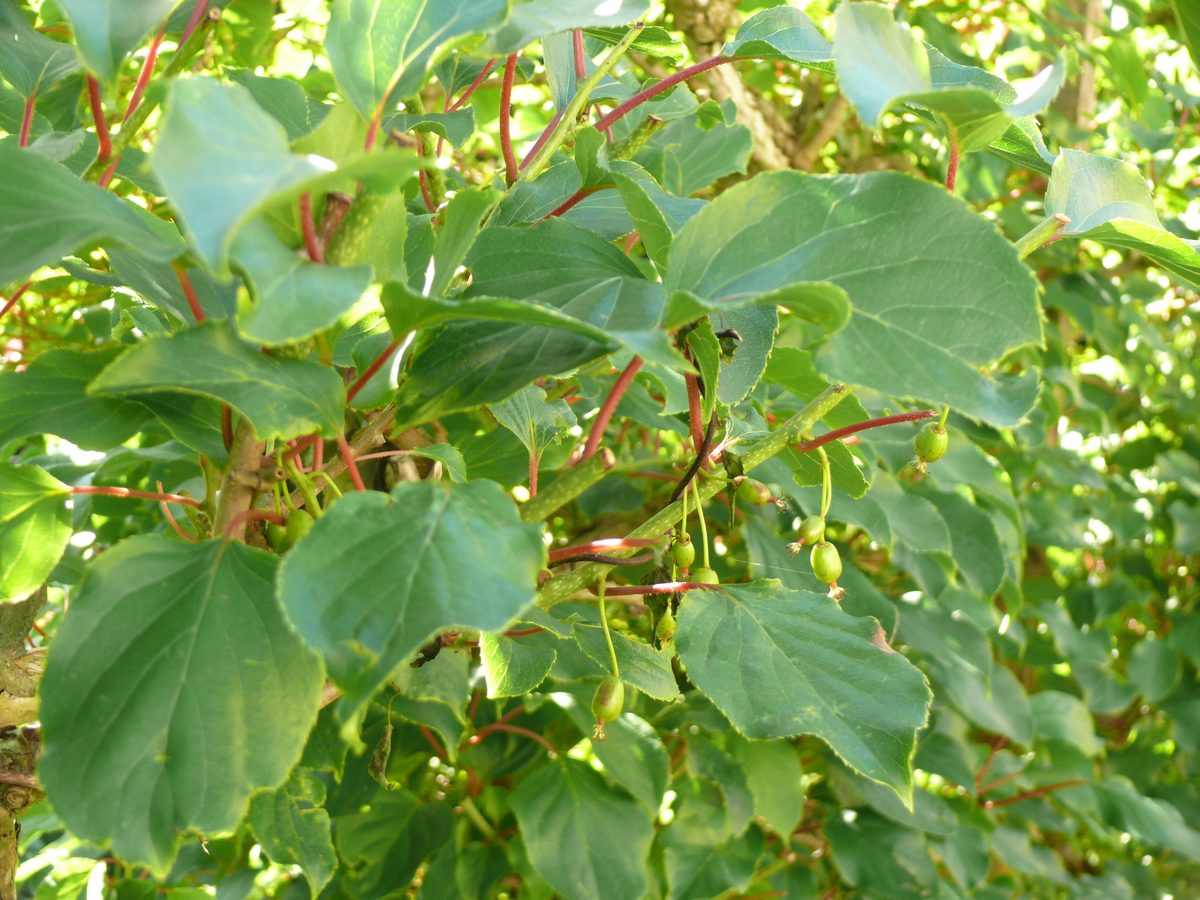
Photo: Martinus KE, CC BY-SA 4.0 via Wikimedia Commons

Quick facts
| Light: | Full sun and part shade (full sun preferred)123 |
|---|---|
| Water: | Medium21 source |
| Soil: | Well drained, moist and occasionally dry; pH 5.6–6.531245 |
| Hardiness: | Zones 3a–8b11 source |
| Size: | Sources differ: University of Wisconsin-Madison Division of Extension (Wisconsin Horticulture); University of Wisconsin-Madison Division of Extension (Wisconsin Horticulture) × 20–30 ft (6.1–9.14 m)3614Sources differ |
| Growth rate: | Rapid111 source |
| Bloom: | Green and white16 |
| Cats: | Not documented by major sources |
| Dogs: | Not documented by major sources |
| Native range: | CHC, CHM, CHN, CHS, JAP, KOR, KUR, PRM, SAK, TAI7 |
| Family: | Actinidiaceae |
How much light does a Tara Vine need?
This vine does best in full sun outdoors. Full sun is the light level it is documented to prefer. It also tolerates part shade, so a site with a few shaded hours each day still works. If you can choose, pick the sunnier spot, since full sun gives the strongest documented results. Part shade is the fallback option, not the first choice. Deep, all-day shade falls outside the range this plant is documented to tolerate. A container on a sunny patio can meet this same light need outdoors.
How often to water a Tara Vine
Medium water suits tara vine best outdoors. Both the low and high end of its documented water need sit at the same medium level. Medium water means the soil around the roots should stay evenly damp between waterings. Check the top few inches of soil with your finger and water once it starts to feel dry. Avoid letting the root zone sit in standing water, since that level of moisture is above what this plant needs. This medium level applies through the growing season outdoors, not just after planting. A steady, medium supply suits it better than occasional heavy soaking followed by long dry spells.
- Water: Medium2
Best soil for a Tara Vine
Well-drained soil that still holds some moisture is what this vine needs most. It also tolerates soil that turns occasionally dry between waterings. Avoid heavy soil that stays wet for long stretches, since that is outside the drainage range this plant is documented to handle. Soil pH should fall between 5.6 and 6.5, a mildly acidic range. This pH range covers most garden soils that are not strongly alkaline. Good drainage combined with that acidic range gives the roots the conditions this vine is documented to prefer. Test your soil before planting if you are unsure where it falls in that range.
Hardiness and temperature
USDA zones 3a through 8b cover the range where tara vine is documented as cold-hardy. That span covers gardens from cold northern winters to mild southern ones. Zone 3a is the coldest zone this vine is documented to survive outdoors. Zone 8b is the warmest zone it is documented to handle. If your area falls within that zone range, winter cold alone should not kill an established plant. If your zone is colder than 3a, choose a different vine for that spot. No cited source lists a specific minimum temperature in degrees for this plant, so use your zone rating as the guide instead.
Fertilizing a Tara Vine
As a heavy feeder, tara vine needs fertilizing more often than a typical garden plant. Feed it through the growing season to keep pace with its demand for nutrients. Because it is a vigorous, fast-growing vine, it draws on soil nutrients quickly. A heavy feeder like this one is more likely to show thin growth if feeding is skipped for long stretches.
- Fertilizer: Heavy feeder2
How to plant a Tara Vine
If your garden falls within USDA zones 3a through 8b, tara vine can stay outdoors year-round. Choose a planting site that matches the full sun to part shade and well-drained, evenly moist soil this vine needs. Give it room to spread, since a mature plant can reach 20-30 ft (6.1-9.1 m) wide. A sturdy trellis, fence, or arbor gives this vine something to climb as it grows. Space multiple plants far enough apart to fill that mature spread without crowding each other.
- Hardiness: Zones 3a–8b1
Winter care
Cold is rarely a problem for tara vine within its documented zone range. That range runs from USDA zone 3a through zone 8b. Within it, you can leave an established plant outdoors all winter. No cited source gives a specific minimum temperature in degrees for this plant. Use your USDA zone, not a degree number, to judge winter risk. At the cold edge, zone 3a, treat winter protection as more important than in milder zones. Below zone 3a, this vine is not documented to survive winter outdoors. At the warm end, zone 8b, winter cold is rarely a concern.
How to propagate a Tara Vine
You can propagate tara vine from seed or from stem cuttings. Stem cuttings are a faster way to grow a new plant that matches the parent. Growing from seed is also documented for this species, though it is a slower route to an established plant. Both methods are listed for tara vine, so you can pick whichever starting material you have.
- Propagation: Seed and stem cuttings5
Common problems
No cited source lists pests specific to tara vine. Three diseases are documented for it. One is bacterial canker. Another is root rot. The third is sooty blotch and flyspeck. These three are the only diseases recorded for this plant. Watch for their symptoms during the growing season.
| Problem | Kind |
|---|---|
| Bacterial canker | Disease |
| Root rot | Disease |
| Sooty blotch flyspeck | Disease |
Is Tara Vine toxic to cats and dogs?
Recommended supplies
- Soil: a free-draining mix, and a pot with a drainage hole.
Questions and answers
- What USDA hardiness zones does tara vine grow in outdoors?
- Tara vine is documented as cold-hardy from USDA zone 3a through zone 8b. That range covers most of the continental US, from cold northern winters to mild southern ones.
- Does tara vine need full sun?
- Full sun is the light level this vine does best in outdoors. It also tolerates part shade, so some shade during the day will not stop it from growing.
- How can I propagate tara vine?
- Tara vine can be grown from seed or from stem cuttings. Both methods are documented for this species, so you can pick based on what material you have on hand.
Sources
- NC State Extension Gardener Plant Toolbox. https://plants.ces.ncsu.edu/plants/actinidia-arguta/. Accessed 12 October 2026.
- Penn State Extension. https://extension.psu.edu/programs/master-gardener/counties/adams/news/hardy-kiwi-for-hearty-climes. Accessed 12 October 2026.
- Cornell University CALS Woody Plants Database. https://woodyplants.cals.cornell.edu/plant/15. Accessed 12 October 2026.
- University of Minnesota Extension. https://extension.umn.edu/garden-and-home/yard-and-garden/gardening-in-minnesota/kiwiberry. Accessed 12 October 2026.
- Oregon State University Extension Service. https://extension.oregonstate.edu/catalog/em-9322-growing-kiwifruit-your-home-garden. Accessed 12 October 2026.
- University of Wisconsin-Madison Division of Extension (Wisconsin Horticulture). https://hort.extension.wisc.edu/articles/kiwifruit-actinidia-spp/. Accessed 28 October 2026.
- Royal Botanic Gardens, Kew (World Checklist of Vascular Plants). https://sftp.kew.org/pub/data-repositories/WCVP/wcvp.zip. Accessed 4 June 2026.
How this page was made
- Written with AI assistance from the sources listed on this page. AI is never the source of a fact.